
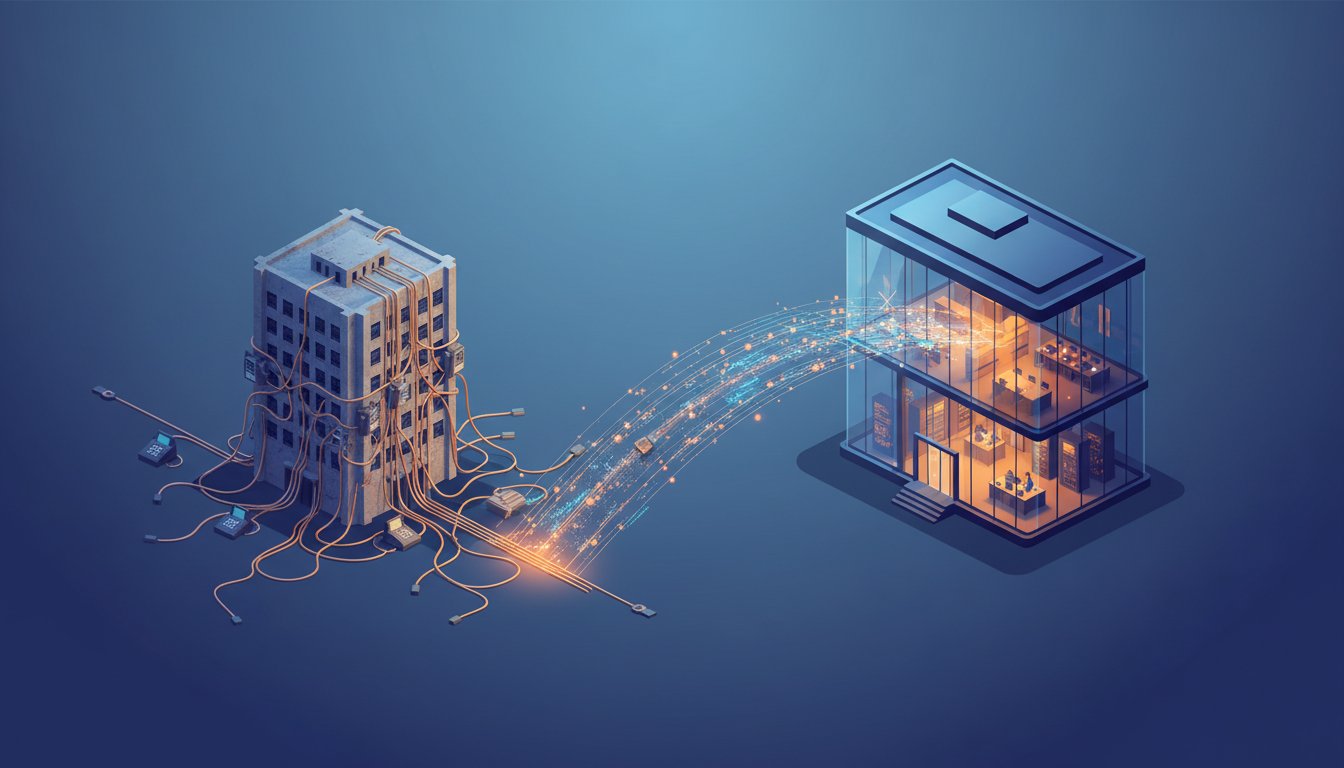
What if the greatest vulnerability in your communication stack isn’t a sophisticated cyber threat, but the aging copper wire connected to your office wall? While the digital transformation of the enterprise has accelerated, the traditional fax often remains a stagnant relic of the analog era. Most executives agree that maintaining these legacy systems is increasingly difficult. Since the FCC issued Order 19-72 in 2019, the deregulation of POTS lines has led to maintenance costs surging by as much as 212% for some organizations. These physical machines create silos that don’t talk to your modern UCaaS platforms, leaving your data fragmented and your budget strained.
This article provides a roadmap to bridge the gap between historical necessity and future-ready infrastructure. You’ll learn how to transition to secure, cloud-integrated virtual solutions that offer both strategic alignment and transformative growth. We’ll examine the specific frameworks for replacing outdated hardware with scalable virtual systems that integrate seamlessly into your unified communications, ensuring your operations remain as elegant as they are efficient.
Key Takeaways
- Understand why highly regulated sectors continue to mandate secure document transmission protocols in a digital-first economy.
- Identify the critical operational risks associated with aging copper infrastructure and the nationwide sunset of traditional phone lines.
- Evaluate the strategic advantages of end-to-end encryption in enterprise-grade fax solutions compared to legacy analog systems.
- Learn a structured framework for auditing legacy endpoints and seamlessly integrating secure communication into your existing UCaaS ecosystem.
- Discover how to transform essential document workflows into a source of competitive advantage through resilient POTS replacement strategies.
The Persistence of Fax in a Digital-First Economy
Modern faxing isn’t defined by the rhythmic whir of a mechanical feeder or the clutter of thermal paper. It’s a secure document transmission protocol that transcends physical hardware, operating as a sophisticated digital handshake between enterprise systems. While critics predicted its demise decades ago, the fax remains an indispensable pillar of global commerce. This endurance stems from the “Legacy Paradox,” where the legal, healthcare, and financial sectors continue to mandate its use in 2026 because of its unique security properties and established evidentiary weight.
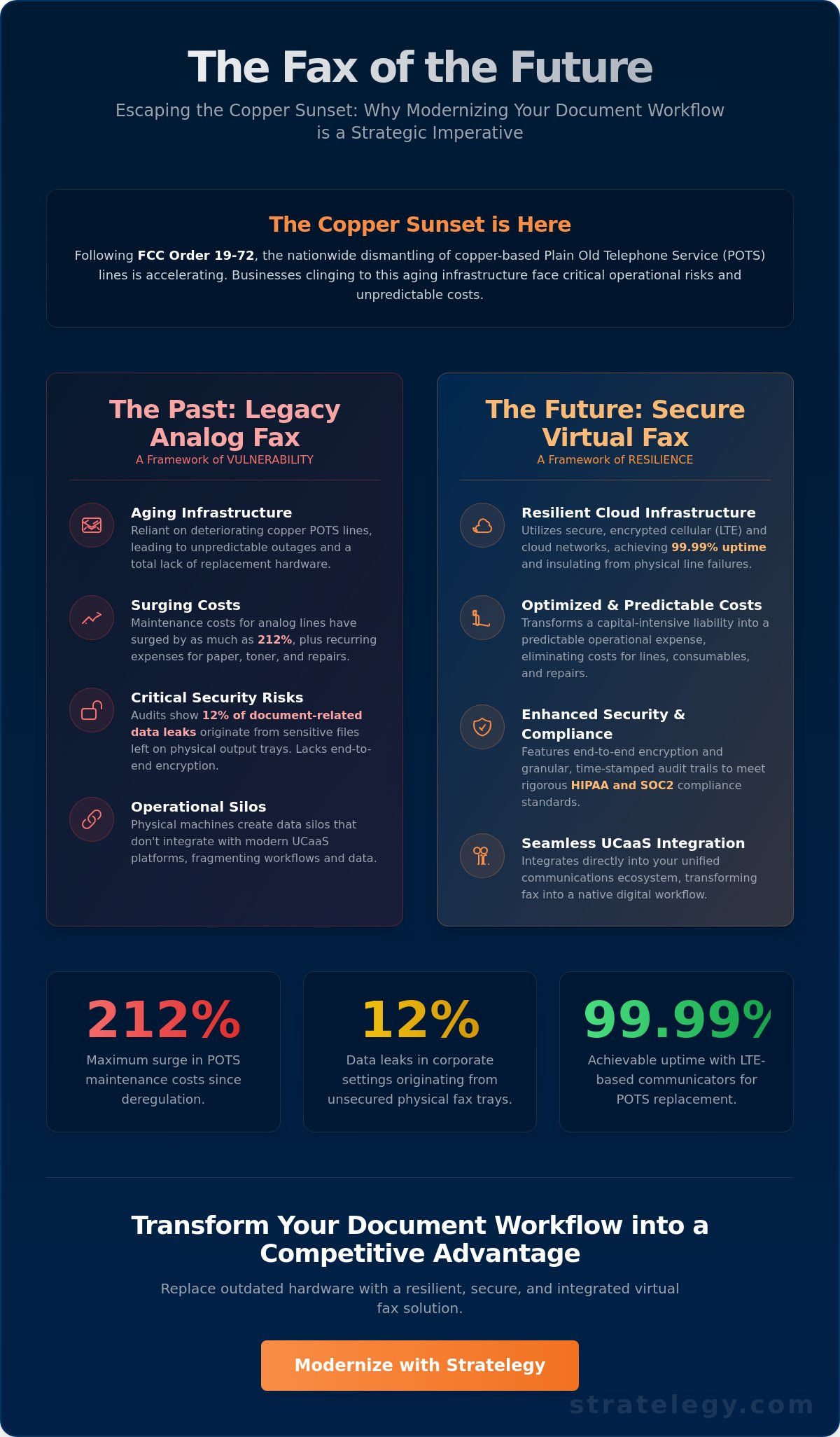
The transition from T.30 analog protocols to T.38 Real-time Fax over IP represents more than a technical upgrade; it’s a strategic migration toward infrastructure resilience. When we examine the history of fax technology, we see a constant drive toward reliability. Today, traditional machines have become a liability. They lack the granular audit trails required by modern governance and create physical vulnerabilities in an otherwise encrypted ecosystem. Security audits in 2024 revealed that 12% of document-related data leaks in corporate settings originated from sensitive files left unattended on physical output trays.
Regulatory Mandates and the “Golden Standard” of Transmission
Legal environments prioritize non-repudiation, a standard that faxing meets more consistently than standard SMTP email. It provides a verified, time-stamped confirmation of receipt that holds significant weight in international court proceedings. For organizations navigating HIPAA or SOC2 compliance, virtual faxing offers a secure, encrypted pathway for sensitive data exchange that meets 2026 encryption standards. Modern workflows have matured; digital signatures and virtual faxing now exist within a single, unified interface, eliminating the friction of manual processing and ensuring every transmission is part of a secure, searchable archive.
The Economic Cost of Maintaining Analog Hardware
Maintaining legacy hardware incurs hidden costs that erode a firm’s bottom line. Dedicated copper lines, often referred to as POTS, have seen price increases exceeding 35% as telecommunications providers like AT&T and Verizon phase out analog infrastructure in favor of fiber. Beyond the direct expense of paper, toner, and mechanical repairs, the environmental footprint of physical faxing contradicts modern corporate sustainability goals. A firm processing 500 pages monthly can reduce its carbon output significantly by removing the need for physical logistics and consumables. Virtual fax stands as a transformative strategic asset that harmonizes operational agility with the rigorous demands of modern regulatory frameworks.
Transitioning from Legacy POTS to Secure Virtual Faxing
The nationwide dismantling of copper-based Plain Old Telephone Service (POTS) isn’t a theoretical concern; it’s a regulatory reality that demands immediate attention. Following the FCC Order 19-72, telecommunications providers have accelerated the “copper sunset,” leading to maintenance cost increases exceeding 300% for analog lines in many urban markets since August 2022. Businesses clinging to these aging circuits face significant operational risks, including unpredictable outages and a total lack of replacement hardware for central office switches. For the modern enterprise, maintaining a legacy fax machine on a deteriorating wire is a liability that threatens both security and business continuity.
As organizations evaluate their communication frameworks, many are looking toward modern faxing solutions to bridge the gap between traditional reliability and digital agility. This transition isn’t merely about avoiding obsolescence; it’s about creating a resilient foundation for document exchange that isn’t tethered to the physical decay of 20th-century infrastructure. A well-executed migration turns a technical necessity into a strategic advantage by reducing overhead and increasing transmission speed.
The Technical Architecture of POTS Replacement
To solve the sunset dilemma, “POTS in a Box” solutions act as a sophisticated bridge. These devices convert analog signals from existing hardware into digital packets transmitted over secure, encrypted cellular networks. By utilizing LTE-based communicators, enterprises achieve 99.99% uptime, effectively insulating their document transmission from the failures of physical copper wires. This transition requires a strategic alignment of LTE POTS Replacement services to ensure that fire, life safety, and communication systems remain synchronized. The result is a refined, cellular-backed connectivity model that offers the same reliability as a hardwired line without the associated physical vulnerabilities.
Mitigating Disruption During Infrastructure Migration
Decommissioning analog lines requires a phased, deliberate approach to prevent data loss or service gaps. Organizations must ensure exact parity between legacy dial-tones and modern digital signaling to maintain the specific handshake protocols essential for successful transmissions. A successful migration avoids the “rip and replace” chaos by layering digital interfaces over existing workflows, allowing the fax to remain a reliable pillar of the business architecture. LTE-M or 5G connectivity provides the low-latency signaling required for mission-critical faxing where timing is paramount. This methodical transformation ensures that the organization moves toward a more harmonious digital operation without sacrificing the stability of its core communication channels.
Evaluating Enterprise Fax Solutions: Security and Compliance
Enterprise-grade virtual fax represents a fundamental shift from simple document transmission to a sophisticated data management framework. A 2023 study by the Ponemon Institute found that the average cost of a data breach reached $4.45 million, making the transition from analog lines a strategic necessity rather than a technical upgrade. Traditional analog signals travel across unencrypted public switched telephone networks (PSTN), leaving sensitive data vulnerable to interception; however, virtual solutions utilize end-to-end encryption to ensure information remains shielded from dispatch to delivery.
Strategic alignment requires a centralized management architecture that mirrors your existing IT governance. National organizations often struggle with fragmented communication silos, but a unified virtual platform allows administrators to control user permissions and access levels from a single interface. This level of oversight ensures that only authorized personnel interact with sensitive documents, effectively mitigating internal risks. Digital archiving creates a permanent, tamper-proof audit trail. These logs provide the precise timestamps and delivery confirmations that regulatory bodies demand during rigorous inspections, transforming a legacy process into a transparent, defensible asset.
Security Protocols: AES-256 and TLS Encryption
Virtual platforms protect data at rest with AES-256 bit encryption and secure data in transit via Transport Layer Security (TLS) 1.2 or higher. This dual-layered approach addresses the inherent vulnerability of the printed page. In open office environments, 20% of security incidents involve documents left unattended on physical machines. By digitizing the workflow, enterprises ensure that sensitive files arrive in secure digital inboxes rather than sitting on a public tray. This transition aligns your communication strategy with broader cybersecurity frameworks like NIST or ISO 27001.
Compliance Frameworks: HIPAA, GLBA, and Beyond
Maintaining compliance with the HIPAA Security Rule or the Gramm-Leach-Bliley Act (GLBA) requires more than just secure software; it demands a formal Business Associate Agreement (BAA). Cloud-based providers must sign these agreements to legally assume responsibility for protecting PHI. “Free” fax services represent a significant strategic risk as they often lack the necessary encryption and refuse to sign BAAs, which can lead to fines exceeding $50,000 per violation under HIPAA’s tiered penalty structure. A tailored framework ensures your organization meets these stringent legal requirements without sacrificing operational efficiency.
Implementation Strategy: Integrating Fax into UCaaS Workflows
Modernizing a communication infrastructure requires more than a simple hardware replacement; it demands a disciplined, five-stage methodology to ensure strategic alignment. The transition from legacy systems to a virtualized environment succeeds when it follows a structured path from discovery to optimization.
- Step 1: Auditing Usage. Organizations must first quantify current fax volume and identify every critical legacy endpoint. A 2023 IDC report indicates that 82% of enterprises still rely on this technology for high-stakes documentation, making the discovery phase indispensable for maintaining data integrity.
- Step 2: Platform Selection. Leaders should select a platform that offers native integration with existing UCaaS and CCaaS ecosystems. Compatibility ensures that the new solution functions as a cohesive extension of the enterprise’s digital nervous system.
- Step 3: Number Porting. Migrating existing numbers to a virtual environment preserves brand continuity. It eliminates the need to update contact information across thousands of client touchpoints, preventing operational friction.
- Step 4: Workflow Training. Educating teams on email-to-fax and web-portal transmission workflows is essential. Replacing physical machines with digital interfaces requires clear, hands-on guidance to ensure immediate adoption.
- Step 5: Centralized Analytics. The final stage involves monitoring usage patterns through a single dashboard. Real-time data allows administrators to optimize costs and ensure compliance across all departments.
The Synergy of Fax and Unified Communications
Integrating fax capabilities directly into a UCaaS interface centralizes employee focus and eliminates the cognitive load of switching between disparate tools. When document handling is embedded within CRM or ERP systems, such as Salesforce or SAP, the lifecycle of a document becomes automated and traceable. A 2022 RingCentral study revealed that app-switching can drain up to 32 days of productive time annually; consolidating these functions into a single pane of glass recovers that lost efficiency. This architectural harmony transforms a fragmented process into a streamlined, elegant operation.
Managing the Human Element of Digital Transformation
Technological shifts often meet resistance in traditional departments where physical paper has long been a security blanket. Overcoming this requires a communication strategy that emphasizes the empowerment of the user rather than just the efficiency of the machine. Best practices include phased rollouts and identifying internal “champions” who can demonstrate the ease of the new framework. The elimination of communication silos catalyzes a transformative growth that transcends mere operational efficiency, establishing a foundation for enduring organizational agility. To achieve this level of operational excellence, enterprises must adopt a strategic communication framework that bridges the gap between legacy habits and future-ready solutions.
Stratelegy: Elevating Communication Through Strategic Virtual Faxing
Stratelegy views communication not as a series of disconnected tools, but as a unified ecosystem where every transmission carries strategic weight. While many providers treat fax as an afterthought, we integrate it into a sophisticated communication vision that prioritizes both security and flow. Our approach leverages LTE POTS replacement technology to secure critical document transmissions. This move is essential for the 70% of healthcare organizations that still rely on traditional methods for patient records. We replace failing copper lines with resilient, cellular-backed digital interfaces. This ensures your fax data remains fluid, secure, and compliant with modern standards. Our bespoke frameworks provide enterprise-grade connectivity, allowing your organization to shed the burden of physical hardware while gaining the agility of cloud-native operations.
Bespoke Solutions for Complex Organizational Needs
Generic SaaS platforms often fail the modern enterprise because they ignore the nuances of existing workflows. A 2023 industry survey showed that 64% of enterprises face significant downtime or integration friction during analog-to-digital transitions. Stratelegy rejects the one-size-fits-all model. We employ a rigorous consultative process to ensure your technology aligns with your unique business objectives. By integrating your communication requirements into our broader UCaaS and CCaaS solution pages, we ensure every touchpoint is optimized for performance. We build frameworks that respect your operational history while enabling your future growth. It’s about creating a system that works for you, rather than forcing your team to work around rigid software limitations.
The Path Forward: From Strategy to Eshtetic Operation
A well-designed communication stack creates harmony and order from chaos. When infrastructure is modernized, the friction of legacy systems disappears. This leaves behind an aesthetic operation characterized by efficiency, clarity, and predictable performance. We invite you to a partnership focused on transformative growth through intentional infrastructure modernization. Our team doesn’t just analyze data; we create a vision that supports your long-term success. Shifting from outdated analog lines to virtualized environments represents a strategic evolution for any forward-thinking organization. It’s time to move beyond basic survival and toward a state of operational excellence. Partner with Stratelegy to modernize your infrastructure and experience the difference that intentional, high-level design brings to your enterprise.
Architecting a Resilient Digital Communication Framework
The sunsetting of traditional copper infrastructure isn’t just a technical hurdle; it’s a strategic opportunity to refine your entire operational blueprint. Since the FCC 19-72 mandate removed price caps on legacy lines, organizations have seen costs for analog connections surge by over 400% in many service areas. Transitioning to a virtual fax solution eliminates these escalating expenses while fortifying the security of your most sensitive data transfers. By integrating these protocols into bespoke UCaaS and CCaaS workflows, you create a unified environment where mission-critical life safety and security infrastructure operate with absolute precision.
Stratelegy functions as a dedicated enterprise-grade LTE POTS replacement specialist, transforming fragmented communication into a cohesive, high-performance framework. We don’t just provide tools; we craft the architectural vision necessary for sustained growth in a volatile market. Consult with a Stratelegy expert to design your communication framework and begin the journey toward a more resilient enterprise. Your legacy systems deserve a future that’s as sophisticated as your business goals.
Frequently Asked Questions
Is virtual faxing as secure as a traditional analog fax machine?
Virtual faxing provides superior security compared to analog systems by utilizing AES 256-bit encryption and TLS 1.2 protocols. While analog lines remain vulnerable to physical interception, digital structures offer end-to-end protection for every fax sent. Data from IDC shows that 70% of security incidents in legacy setups involve physical document access, a risk that cloud routing effectively eliminates.
Can I keep my existing fax numbers when moving to a virtual fax solution?
You can retain 100% of your current numbers through Local Number Portability (LNP) protocols. This strategic transition ensures your enterprise maintains its established identity without any service interruption. Our framework supports the migration of both local and toll-free assets, preserving the professional connections you’ve built over decades.
How does virtual faxing help with HIPAA and SOC2 compliance?
Virtual platforms automate compliance by creating immutable audit trails and granular access controls required by HIPAA and SOC2. These systems log every fax with precise timestamps, sender verification, and delivery receipts. According to 2023 industry benchmarks, digital document exchange reduces manual processing errors by 45% compared to traditional paper-based workflows.
What happens to my faxing capability when the copper POTS lines are phased out?
Your communication capability remains secure if you move to a cloud-based architecture before the FCC-mandated decommissioning of copper lines. As carriers retire legacy infrastructure, virtual solutions use IP-based networks to ensure continuous connectivity. Making this shift now avoids the 30% increase in maintenance expenses often seen with deteriorating analog hardware.
Do I need special hardware to send or receive faxes with a virtual solution?
You don’t require any specialized hardware because virtual solutions function through your existing digital ecosystem. This approach removes the need for physical machines, expensive toner, and paper supplies. By eliminating these 3 physical overheads, your organization reduces its hardware footprint and creates a more elegant, streamlined operational environment.
Can virtual faxing be integrated into my existing UCaaS or CRM platform?
Virtual faxing integrates seamlessly into CRM and UCaaS platforms like Salesforce or Microsoft 365 through sophisticated API frameworks. This strategic alignment lets your team manage all documentation within a single, cohesive interface. Research from Gartner indicates that such integrated tools can improve workforce productivity by 20% by minimizing context switching.
Is there a limit to the number of faxes I can send or receive with an enterprise plan?
Enterprise plans provide scalable capacity that’s engineered to manage high-volume traffic without any loss in performance. Most professional providers facilitate the transmission of 100,000 pages or more per month for global operations. This elasticity ensures your infrastructure supports transformative growth while maintaining the high standards of a premium service level.
How does LTE POTS replacement work for legacy fax machines that cannot be replaced?
LTE POTS replacement employs a cellular gateway to transform analog signals into digital packets for 4G or 5G network transmission. This bridge enables your legacy hardware to operate reliably without a traditional copper connection. It’s a tailored framework that delivers 99.9% uptime, protecting your historical investments while you pursue a broader digital vision.