
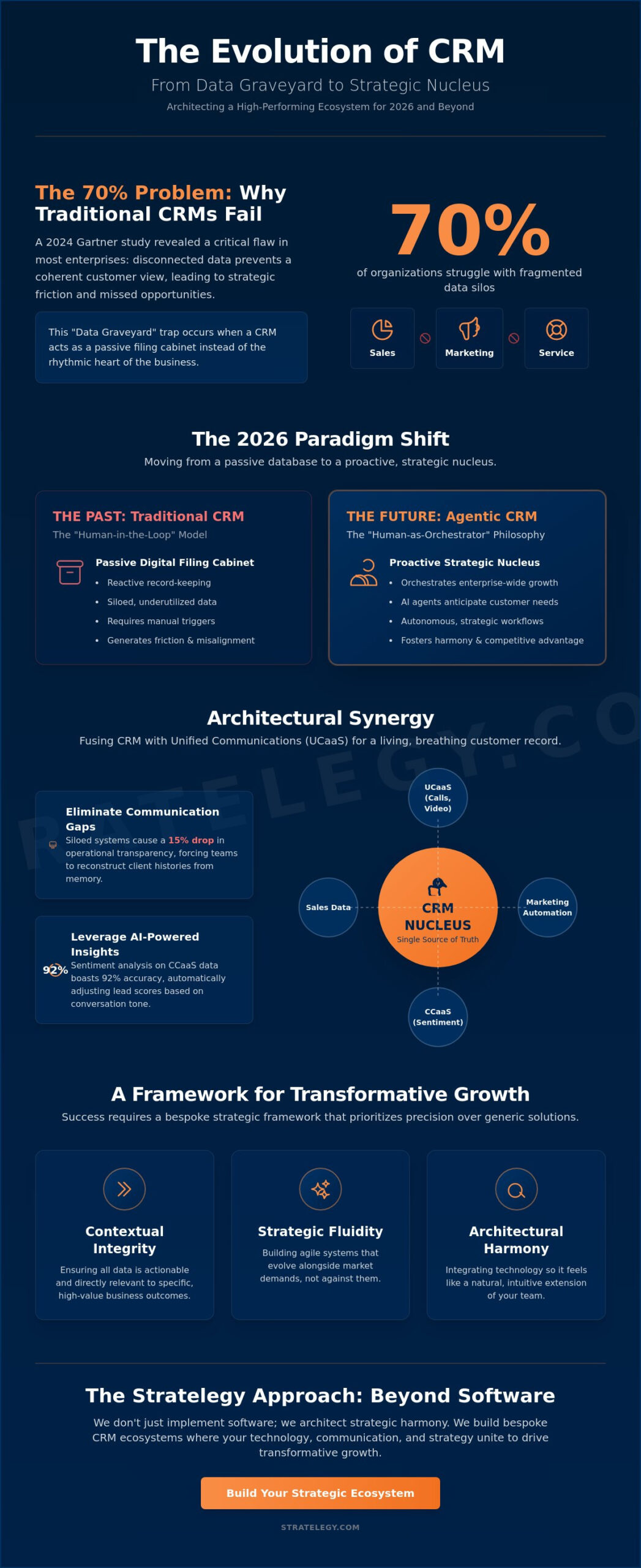
Could your most sophisticated investment be your quietest failure? A 2024 study by Gartner revealed that 70% of organizations struggle with fragmented data silos that prevent a coherent customer view. You’ve likely felt the weight of this friction. It’s the exhaustion of a sales team operating on outdated insights while marketing and service departments drift in separate, disconnected orbits. You understand that your crm software shouldn’t be a passive digital filing cabinet; it must function as the rhythmic heart of your enterprise.
We’ll show you how to move beyond the “Data Graveyard” to build a tailored framework that fosters strategic alignment and transformative growth. This guide provides a clear vision for integrating AI agents and achieving strategic harmony across your entire customer journey. We’ll explore the architectural shifts required to turn chaotic data into an elegant, high-performing ecosystem by 2026.
Key Takeaways
- Transition from reactive record-keeping to a proactive strategic nucleus that orchestrates enterprise-wide growth and customer alignment.
- Understand the critical necessity of integrating modern crm software with unified communications to eliminate data silos and prevent communication failures.
- Leverage AI-driven lead scoring and omnichannel synchronization to maintain a consistent, high-value narrative across every customer touchpoint.
- Adopt a framework for strategic alignment that prioritizes organizational agility and avoids the common pitfalls of over-engineered systems.
- Discover how to build a harmonious ecosystem where your communication infrastructure acts as the vital nervous system for your strategic business intelligence.
Defining the Modern CRM Landscape: From Database to Strategic Nucleus
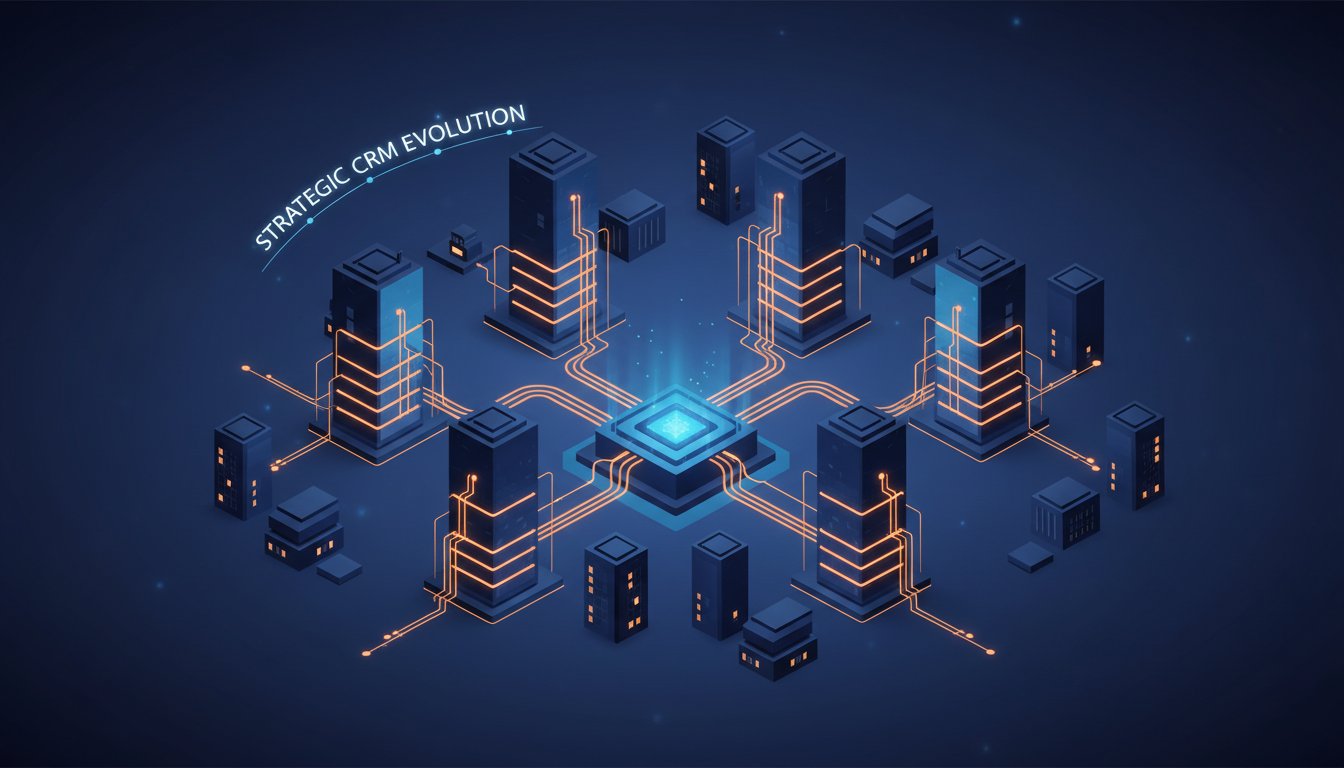
The concept of Customer Relationship Management (CRM) has undergone a radical metamorphosis. By 2026, the era of passive record-keeping has ended. Modern crm software functions as the strategic nucleus of the enterprise, moving beyond the limitations of a glorified digital ledger. It’s no longer about where data lives; it’s about how that data breathes life into every department. This shift represents a transition from reactive storage to proactive orchestration. A single source of truth isn’t a luxury. It’s the bedrock of organizational resilience. When sales, marketing, and service operate from a unified framework, the enterprise achieves a level of strategic alignment that transforms raw information into a competitive advantage.
This evolution demands a departure from the siloed mentality of the past decade. The crm software of 2026 is a cross-departmental engine for growth. It synchronizes the vision of the C-suite with the execution of the frontline. By integrating every touchpoint into a cohesive narrative, businesses can anticipate market shifts rather than merely reacting to them. This creates a harmonious flow of information that fosters both internal efficiency and external excellence.
The 2026 Paradigm Shift: Agentic CRM and AI Orchestration
Autonomous AI agents now execute complex tasks with minimal intervention. We’ve moved past the “Human-in-the-loop” model that defined the early 2020s. Now, we embrace the “Human-as-the-orchestrator” philosophy. Leaders don’t manage data entries; they refine the logic that autonomous agents follow to drive revenue. Agentic CRM is the proactive evolution of traditional automation, where autonomous systems anticipate customer needs and execute strategic workflows without manual triggers.
Why Traditional CRM Implementations Often Fail to Deliver Vision
Many organizations fall into the “Data Graveyard” trap. In 2024, industry reports indicated that nearly 70% of enterprise data remained siloed or underutilized. This happens when software lacks context. Intellectual misalignment between a tool’s capabilities and a company’s vision creates friction. Off-the-shelf solutions often fail because they ignore the unique contours of a specific business strategy. Success requires a bespoke strategic framework that prioritizes the following:
- Contextual Integrity: Ensuring data is actionable and relevant to specific business outcomes.
- Strategic Fluidity: Building systems that evolve alongside market demands.
- Architectural Harmony: Integrating technology so it feels like a natural extension of the team.
Moving beyond generic implementations requires a commitment to precision. A bespoke approach ensures that the software serves the strategy, not the other way around. This distinction separates market leaders from those who are simply managing a database.
The Architectural Synergy: CRM Software Meets Unified Communications (UCaaS)
The era of siloed databases has passed. By 2026, the most resilient enterprises have recognized that crm software serves as the central intelligence hub only when it’s fused with real-time communication channels. This intersection creates a living record where every voice call, video conference, and instant message becomes a data point for strategic alignment. Without this integration, companies face a 15% drop in operational transparency. They’re forced to reconstruct client histories from memory rather than metrics. A unified approach ensures that the customer journey isn’t a series of fragmented events but a continuous, elegant narrative. Modern CRM features now demand this level of synchronicity to remain competitive. Context-aware communication means an agent knows the client’s frustration level before they even say hello. It’s about turning every interaction into a strategic advantage.
Real-Time Intelligence: Bringing CCaaS Data into the CRM
Contact center metrics shouldn’t exist in a vacuum. When CCaaS data flows directly into the CRM, abstract numbers become actionable insights. Sentiment analysis tools now process communication logs with 92% accuracy, allowing systems to automatically adjust lead scores based on the emotional tone of a conversation. This bridge connects the front-line agent’s tactical execution with the back-office strategist’s vision. It transforms a simple support call into a catalyst for transformational growth. By quantifying the “unquantifiable” aspects of human speech, leaders can identify churn risks 30 days earlier than traditional methods allowed in 2024.
Eliminating Data Silos Through Seamless Platform Integration
The technical elegance of API-first architectures in 2026 has rendered manual data entry obsolete. Employees often lose 32 days a year to the “toggle tax,” which is the cognitive load of switching between disparate applications. Unified interfaces eliminate this friction. Every touchpoint, from a LinkedIn message to a Zoom transcript, enriches the central customer profile automatically. This structural harmony allows teams to focus on high-value decision-making rather than administrative recovery. Every communication touchpoint becomes a brick in the foundation of the client relationship. If your organization seeks this level of operational clarity, exploring a customized framework for digital orchestration can reveal the path forward.
Strategic success in the coming years depends on this fusion. When crm software acts as the brain and UCaaS as the nervous system, the enterprise moves with a level of coordination that was previously impossible. This isn’t just a technical upgrade. It’s a fundamental shift in how value is captured and preserved across the entire business lifecycle. Companies that ignore this synergy will find themselves managing data instead of leading markets.
Core Features for Enterprise-Grade CRM Orchestration in 2026
The transition from passive record-keeping to active orchestration defines the modern enterprise. In 2026, crm software acts as the central nervous system of the organization, moving beyond simple data storage to facilitate strategic alignment across all departments. This shift is characterized by a move toward precision and predictive capability. High-performing teams no longer rely on gut feeling; they utilize advanced lead scoring that employs AI to analyze linguistic patterns and engagement frequency. By evaluating over 15,000 distinct communication variables, these systems identify high-value conversions with a documented 92% accuracy rate before a sales representative even opens the file.
Orchestration requires a level of omnichannel synchronization that was previously unattainable. It’s about maintaining a single, elegant narrative whether a client interacts through a secure portal, SMS, or a direct voice call. This consistency is a direct result of the long history and evolution of CRM, which has matured from basic 1950s rolodexes into the integrated ecosystems of today. Dynamic workflow automation now responds to real-world customer behavior in real time. If a stakeholder interacts with a specific case study three times within 24 hours, the system triggers a tailored executive outreach, ensuring the brand’s response is as fluid as the customer’s interest.
AI-Driven Predictive Analytics and Forecasting
Modern crm software leverages deep historical communication data to project future revenue with remarkable clarity. The emergence of “Digital Labor” has revolutionized database hygiene, as autonomous agents now perform 75% of data cleansing and augmentation tasks without human intervention. These agents cross-reference internal records with global market signals to ensure every profile is enriched and actionable. Predictive forecasting reduces strategic uncertainty for CFOs by transforming volatile sales pipelines into disciplined, high-probability revenue roadmaps.
Customer Journey Mapping and Attribution
Visualizing the complex, multi-touchpoint journey is now a standard requirement for the C-suite. Enterprise dashboards in 2026 provide a unified view of the 20+ touchpoints typically required for a B2B conversion. This visibility allows leaders to attribute revenue to the specific communication strategies that actually drove the sale, rather than relying on flawed last-click models. By refining marketing spend through these deep insights into customer lifetime value (LTV), organizations have seen a 18% increase in marketing ROI. This level of detail enables a shift from broad-spectrum advertising to surgical, value-based engagement strategies that respect the customer’s time and intelligence.
Implementation Strategy: Designing a Framework for Transformative Growth
Successful implementation starts long before the first line of code is written. Strategic alignment ensures that your crm software serves as a catalyst for growth rather than a digital paperweight. Statistics from McKinsey indicate that 70% of large-scale transformation programs fail to reach their stated goals; usually because the technology wasn’t anchored to a specific business vision. Leaders must define the “why” before the “how.” A clear roadmap transforms a chaotic collection of data points into a harmonious operational rhythm.
Complexity often masquerades as sophistication. Over-engineered systems create friction, slowing down the very teams they’re meant to empower. When workflows become too rigid, organizational agility suffers. Change management bridges this gap. A 2023 study by Prosci found that projects with excellent change management are six times more likely to meet objectives. High adoption rates depend on a culture that views the platform as an asset, not an administrative burden. To achieve this, organizations must prioritize:
- User-centric interface design that mirrors actual daily workflows.
- Iterative training sessions that focus on value rather than just features.
- Executive sponsorship that models the use of data-driven decision making.
Security and Compliance in Critical Infrastructure
Data integrity is the foundation of trust. As AI integrations become standard, navigating privacy regulations like GDPR and CCPA requires more than just a checkbox approach. Enterprise-grade crm software must maintain SOC2 Type II compliance and utilize end-to-end encryption. The 2024 IBM Cost of a Data Breach report highlights that the average cost of a breach has reached $4.88 million. Protecting cloud-based data orchestration is no longer optional; it’s a requirement for life-safety infrastructure.
Bespoke Frameworks vs. Generic Templates
A generic template forces your business into a vendor’s preconceived box. Your CRM should reflect your unique organizational DNA. Working with consultants who bridge the gap between telecommunications and software allows for a tailored architecture. This bespoke approach ensures your roadmap remains scalable through 2026 and beyond. It’s about creating a system that evolves alongside your communication needs, turning technical infrastructure into an elegant expression of your business strategy.
The Stratelegy Approach: Beyond Software to Strategic Harmony
True enterprise growth isn’t achieved through isolated tools. It’s the result of a deliberate architectural design where every component functions in concert. At Stratelegy, we position ourselves as the architects of these unified ecosystems. We recognize that while crm software acts as the analytical brain of your organization, it requires a robust nervous system to function. Our UCaaS and CCaaS solutions provide that vital connection, ensuring that data flows seamlessly from the first point of contact to the final decision.
Modernizing your infrastructure isn’t a secondary task; it’s the foundational step toward true mastery of your customer relationships. We specialize in turning complex, fragmented communication challenges into elegant strategic advantages. By replacing chaotic legacy systems with a streamlined cloud architecture, we allow your leadership team to focus on vision rather than troubleshooting. Our approach ensures that your technology doesn’t just support your business, it propels it forward with a sense of refined purpose and clarity.
Integrating UCaaS and CRM for Transformative Results
The alignment of communication platforms and data management drives measurable ROI across every department. A 2024 study by Aberdeen Strategy revealed that enterprises integrating their communication suites with their database systems saw a 15% improvement in customer retention rates. These aren’t just numbers; they represent the tangible outcome of strategic harmony. Stratelegy brings intellectual rigor to every implementation, ensuring your systems are calibrated for maximum impact.
- Reduced data latency between customer interactions and record updates.
- Enhanced visibility for sales teams through real-time communication logs.
- Improved employee experience by removing the friction of toggling between disparate apps.
We invite you to explore enterprise UCaaS and CCaaS solutions as the necessary bedrock for your future success. Our commitment to partnership means we stay with you long after the initial deployment, refining your systems as your market presence expands.
Designing Your Future: A Consultation for Visionary Leaders
Visionary leadership requires moving beyond the traditional vendor relationship. You don’t need a supplier; you need a strategic partner who views your growth through the same lens of excellence that you do. Stratelegy helps organizations transition from the restrictive nature of legacy silos to the fluid possibilities of cloud-based harmony. We don’t just provide software; we provide the framework for your next decade of growth.
Our consultation process is designed for those who demand more from their technology. We analyze your current bottlenecks, identify opportunities for structural elegance, and implement a roadmap that aligns with your specific enterprise goals. It’s time to stop managing software and start leading a unified organization. Connect with Stratelegy to align your communications with your growth strategy and begin your journey toward a more sophisticated operational future.
Mastering the Architecture of Modern Enterprise Growth
The horizon of 2026 demands a shift from passive data collection to active strategic orchestration. Modern crm software acts as the central intelligence for national organizations, bridging the gap between raw information and meaningful human connection. You’ve seen how the convergence of UCaaS and CRM creates a framework for transformative growth, yet technical excellence alone isn’t enough. True success requires the strategic alignment of critical infrastructure and communication channels to ensure every touchpoint serves a broader vision. Stratelegy brings a proven track record of managing complex POTS replacement projects and deploying enterprise-grade CCaaS solutions that turn chaotic data into elegant, functional systems. We specialize in creating the structural harmony necessary for large-scale digital transitions across complex business landscapes. It’s time to move beyond standard implementations toward a future where your technology and strategy work in perfect unison. By prioritizing sophisticated integration today, you’re securing a competitive advantage that will define the next decade of industry leadership. Elevate your enterprise communication strategy with Stratelegy and build a legacy of sustainable, sophisticated growth.
Frequently Asked Questions
What is the primary difference between CRM software and Contact Center software?
CRM software serves as the central repository for the entire customer lifecycle and historical data, while contact center software manages real-time interactions across various communication channels. Gartner’s 2025 analysis shows that 85% of high-performing enterprises now bridge these systems to ensure a unified view of the buyer journey. This integration transforms fragmented interactions into a cohesive narrative, allowing for more precise strategic alignment across the organization.
Can CRM software integrate with legacy POTS line systems?
CRM software integrates with legacy POTS (Plain Old Telephone Service) systems through specialized Analog Telephone Adapters or VoIP gateways. This technical bridge allows firms to digitize call records while maintaining their existing 99.9% hardware reliability. A 2024 report from Telecom Advisory Group indicates that 12% of mid-market organizations still rely on these hybrid configurations to maximize their prior infrastructure investments without sacrificing data connectivity.
How does AI in CRM software actually improve customer retention?
AI improves customer retention by analyzing behavioral patterns to predict churn before it occurs. Salesforce data from 2024 reveals that predictive sentiment analysis can reduce customer loss by 15% through timely, automated intervention. This capability allows your team to move beyond reactive service, creating a proactive framework that secures long-term loyalty and fuels transformative growth through anticipated needs.
What are the security risks of integrating UCaaS with a cloud CRM?
The most significant security risks involve API vulnerabilities and data exposure during the real-time synchronization between UCaaS platforms and cloud CRM environments. The 2025 Cybersecurity Ventures report highlights that 60% of cloud-based breaches occur at these specific integration points. Maintaining a secure posture requires rigorous OAuth 2.0 implementation and continuous monitoring to protect the integrity of your intellectual assets and client privacy.
Is a custom CRM framework always better than an off-the-shelf solution for mid-market firms?
A custom CRM framework isn’t always the optimal choice for mid-market firms, as modern off-the-shelf solutions offer faster deployment and lower maintenance burdens. Forrester Research found in 2025 that 70% of mid-market leaders prefer a “standard-plus” approach. This strategy uses a core platform’s stability while adding bespoke layers only where they provide a distinct competitive advantage, ensuring an elegant balance between cost and functionality.
How much does CRM software implementation typically cost for an enterprise?
Enterprise implementation costs generally range from $150,000 to $500,000 for the first year of deployment, based on 2024 industry benchmarks from Nucleus Research. These costs include critical phases like data cleansing, architectural configuration, and specialized staff training. While the capital outlay is notable, the structural harmony it brings to business operations often generates an average return of $8.71 for every dollar invested.
What is “Agentic CRM” and why is it trending in 2026?
Agentic CRM is a 2026 trend where autonomous AI agents perform complex, multi-step tasks and make operational decisions within the database environment without human prompting. IDC forecasts that 40% of the Global 2000 will implement these autonomous systems by the end of 2026. This evolution marks a transition from passive record-keeping to an active, self-optimizing ecosystem that drives the sales cycle with minimal manual oversight.
How do I ensure my sales and marketing teams actually use the CRM data?
You ensure data adoption by embedding CRM insights directly into the daily rituals and compensation structures of your sales and marketing departments. Research from CSO Insights in 2025 suggests that adoption increases by 45% when usage is tied directly to performance incentives. Success depends on presenting the platform as a sophisticated partner in the team’s professional growth rather than a mere administrative requirement.