
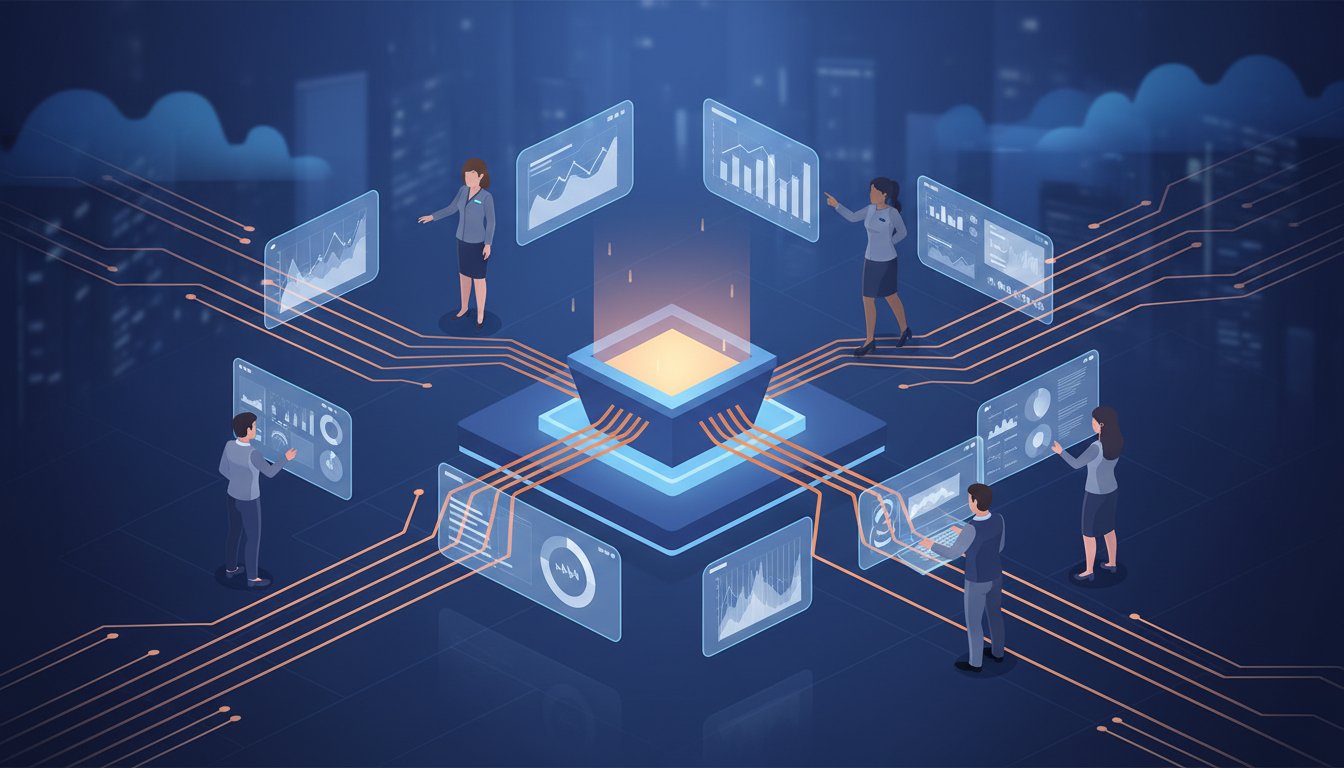
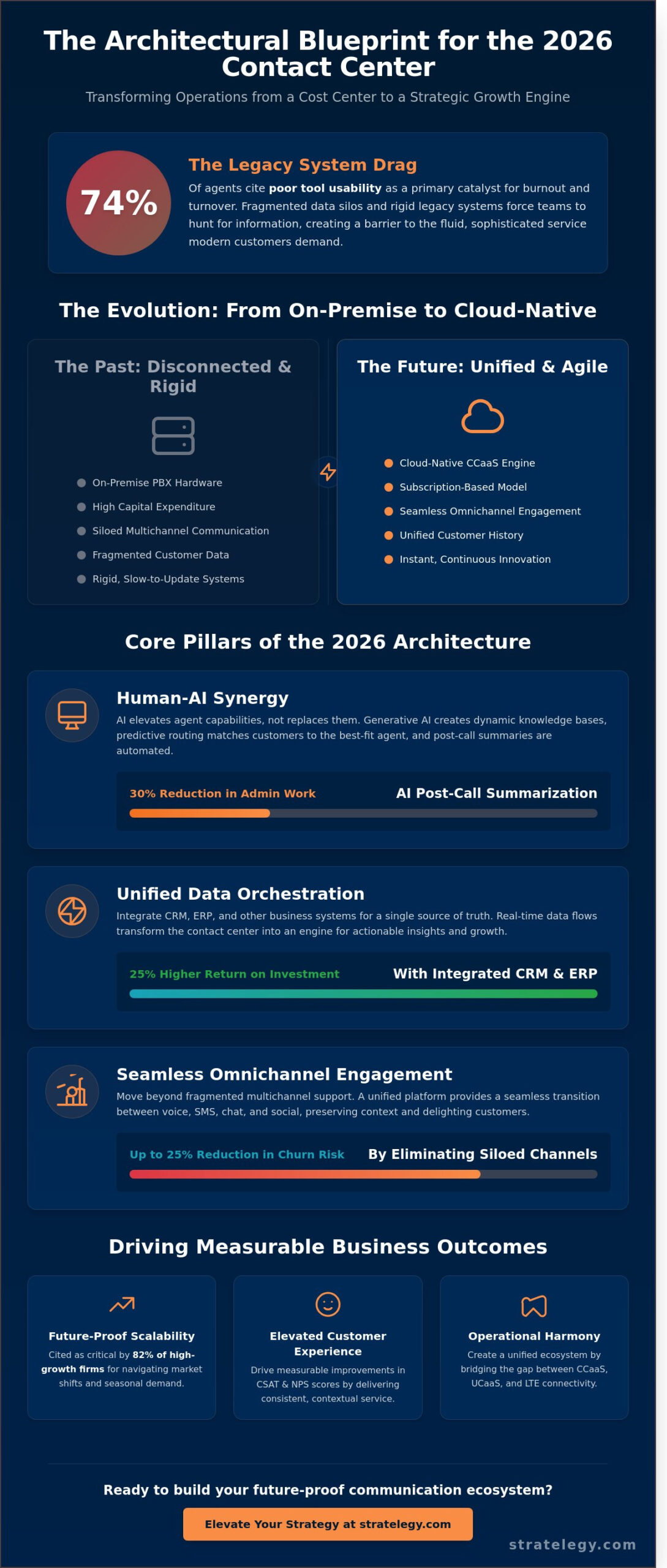
By 2026, the traditional boundary between operational utility and brand identity has dissolved. You’ve likely seen how 74% of agents, according to 2024 industry benchmarks, cite poor tool usability as the primary catalyst for burnout and turnover. It’s a familiar frustration where fragmented data silos force your team to hunt for information instead of fostering connection. You recognize that a legacy system’s rigidity isn’t just a technical debt; it’s a barrier to the sophisticated, fluid service your clients demand. Selecting the right contact center software is no longer a mere procurement task. It’s an act of strategic architectural design.
This evaluation offers the definitive framework to align your operational efficiency with truly transformative customer experiences. We’ll show you how to move beyond the chaos of disconnected platforms to create a unified ecosystem that bridges the gap between CCaaS and UCaaS. You’ll discover a curated selection of the year’s most refined solutions, each analyzed for its ability to drive measurable improvements in CSAT and NPS while forging a functional harmony within your internal workflows.
Key Takeaways
- Understand the transition from legacy PBX systems to cloud-native engines that transform your operations into a strategic nexus for omnichannel engagement.
- Identify the core architectural components of modern contact center software, focusing on the synergistic balance between human expertise and advanced AI.
- Master a high-level evaluation framework designed to help C-suite leaders navigate the complexities of migrating legacy infrastructure without disrupting business continuity.
- Compare industry-leading solutions through a lens of enterprise scalability and strategic fit to ensure your technology investment drives long-term value.
- Discover how integrating CCaaS with UCaaS and LTE connectivity creates a harmonious, future-proof communication ecosystem for your organization.
The Evolution of Contact Center Software: From Call Hubs to Strategic Nexuses
The contemporary architecture of contact center software has evolved far beyond its origins as a basic utility for managing inbound voice traffic. In the 2026 business environment, this technology serves as a sophisticated, cloud-native engine that orchestrates complex omnichannel engagements. This shift represents a fundamental departure from the legacy on-premise PBX systems that once defined the industry. While the history of call centers was characterized by rigid hardware and high capital expenditure, modern solutions prioritize agility and strategic alignment. Organizations no longer view these systems as cost centers. Instead, they’re recognized as value-generating strategic assets that bridge the gap between operational efficiency and elevated customer experience (CX) goals.
This transformation requires a deliberate synchronization of technology and vision. It’s not simply about upgrading tools; it’s about a strategic alignment that ensures every digital touchpoint serves a broader corporate objective. Organizations that embrace this evolution find themselves capable of turning chaotic data streams into refined, actionable insights. The result is a structure that’s both harmoniously designed and exceptionally effective. By 2026, the distinction between a simple phone system and a comprehensive engagement engine has become the primary driver of competitive advantage.
The Shift to CCaaS (Contact Center as a Service)
The transition to a subscription-based CCaaS model has fundamentally redefined enterprise scalability for the mid-2020s. Cloud-native architecture is now a non-negotiable requirement for business continuity, providing the resilience needed to navigate sudden market shifts. By eliminating the cycle of hardware maintenance and manual patches, firms can redirect their focus toward continuous software innovation. This model ensures the platform scales instantly with seasonal demand, a capability that 82% of high-growth enterprises now cite as a critical success factor for their digital transformation efforts.
Omnichannel vs. Multichannel: The 2026 Standard
A unified communication strategy distinguishes modern leaders from those still struggling with fragmented systems. Modern contact center software provides a seamless transition between voice, SMS, chat, and social media. While multichannel approaches offer various contact points, they often lead to siloed data and frustrated users. The 2026 standard demands a unified customer history, which serves as the essential foundation for modern personalization. This single source of truth allows agents to understand the full context of a journey instantly. Siloed communication creates friction. When context is lost between channels, the risk of customer churn increases by as much as 25% according to recent industry benchmarks. Achieving a unified flow is no longer a luxury; it’s a structural necessity for maintaining market relevance.
Essential Architecture: Features Defining the 2026 Standard
The architecture of a premier enterprise solution isn’t merely a collection of tools. It represents a deliberate, strategic alignment between technological capability and human intuition. By 2026, the industry standard for the best contact center software will shift from basic connectivity to sophisticated data orchestration. This evolution demands a transition from static reporting to real-time insights that allow leaders to pivot strategies mid-shift. Organizations that integrate their CRM and ERP systems into their contact center software ecosystem see a 25% higher return on investment compared to those operating in silos. Real-time data orchestration ensures that information flows where it’s needed most, transforming the contact center from a cost center into a sophisticated engine of transformative growth.
AI and Intelligent Orchestration
Modern solutions prioritize human-AI synergy to elevate the agent’s role rather than replace it. Generative AI now creates dynamic knowledge base articles in real-time, providing agents with the exact context needed to resolve complex issues. Predictive routing uses historical data and sentiment analysis from a January 2024 report to match customers with agents who possess the specific temperament for their needs. AI also handles post-call summarization, reducing administrative work by 30% and allowing agents to focus on the next human connection.
Workforce Engagement Management (WEM)
A refined agent experience (AX) is the precursor to a superior customer experience (CX). Modern software reduces burnout through intuitive interfaces that minimize “toggle tax,” the mental fatigue caused by switching between 10 or more applications. Automated scheduling tools and performance gamification provide a transparent, meritocratic environment. When agents feel supported by a tailored framework for growth, their increased engagement translates directly into higher first-contact resolution rates. Organizations looking to deepen this advantage should explore dedicated software for workforce management that synchronizes intelligent scheduling with real-time communication to eliminate the productivity leaks caused by misaligned staffing.
Advanced Analytics and Journey Mapping
Metrics have evolved beyond the narrow scope of Average Handle Time. Leading Rochester firms now prioritize Customer Effort Scores (CES) to measure the friction within a service interaction. Visualizing the customer journey across voice, chat, and social media touchpoints reveals exactly where loyalty is won or lost. Journey Orchestration is the proactive management of customer intent through the use of real-time behavioral data and automated intervention. This level of precision ensures that every interaction is not just a transaction, but a step toward a more harmonious brand relationship.
The Top Contact Center Software Solutions for 2026 Compared
Selecting the right contact center software requires more than a feature checklist; it demands a vision for structural harmony. For Rochester firms, the 2026 market presents a clear divergence between streamlined simplicity and modular complexity. Strategic alignment begins by identifying whether your organization requires a turnkey solution or a programmable engine for transformative growth. The choice isn’t merely technical; it’s a commitment to a specific operational philosophy that will define your customer interactions for the next decade.
Leading Integrated and Scalable Platforms
Some leading unified platforms prioritize a cohesive, all-in-one framework. These are often the premier choice for mid-market firms that value rapid deployment and intuitive interfaces. For growing organizations evaluating a cloud contact center for mid-market operations, the ability to bypass legacy hardware complexity while securing enterprise-grade engagement is a decisive advantage. In contrast, NICE CXone provides a sophisticated, high-ceiling environment designed for global enterprises managing over 2,500 concurrent agents. Five9 has secured its leadership through Intelligent Virtual Apps (IVAs). These tools helped early adopters reduce manual call routing by 35 percent in 2024. These platforms differ significantly in their financial structures. Platforms like Five9 typically utilize seat-based pricing to provide predictable monthly overhead. NICE CXone often favors consumption-based models. This aligns costs directly with interaction volume, which is ideal for businesses with high seasonal variability and fluctuating demand.
Specialized and Customizable Ecosystems
Some providers excel through the tight integration of UCaaS and CCaaS. This eliminates the friction between back-office experts and front-line agents by housing them in a single, unified ecosystem. This synergy ensures that specialized knowledge is always accessible to the agent in real-time. Other advanced platforms have moved toward vertical specialization with “Experience Clouds.” These industry-specific modules often include pre-built compliance frameworks (e.g., HIPAA for healthcare) and integrations with sector-specific EHR systems (e.g., Epic). For organizations prioritizing custom builds, Genesys Cloud CX remains the standard for Open API architecture. It allows developers to trigger custom workflows via more than 400 distinct integration points. This flexibility ensures the contact center software fits the business rather than forcing the business to fit the software’s limitations.
When evaluating these solutions, consider the following strategic fits for your Rochester-based operations:
- Best for Rapid Growth and Deployment: Unified platforms offer tailored frameworks that scale efficiently for mid-market firms without extensive IT overhead.
- Best for AI-Driven Automation: Five9 provides the most mature toolkit for organizations looking to automate 40 percent or more of their routine inquiries.
- Best for Complex Regulatory Compliance: Industry-specific cloud solutions provide the necessary safeguards and pre-built frameworks for sectors like financial services and healthcare.
- Best for Global Enterprise Scalability: NICE CXone delivers the robust infrastructure required for multi-site, multi-national operations.
True business success is not just about efficiency; it’s about creating a well-designed, harmonious bridge between your brand and your clients. Each of these platforms offers a different path toward that goal. The decision rests on whether you prioritize the elegance of an integrated suite or the power of a specialized, industry-specific cloud.
Strategic Selection: Navigating the Evaluation Framework
Selecting the right contact center software requires a shift from tactical procurement to strategic alignment. For Rochester’s C-suite, the decision isn’t merely about feature sets; it’s about building a resilient architecture that supports transformative growth. High-performing organizations prioritize the total cost of ownership (TCO) over the sticker price of a monthly subscription. This holistic view accounts for integration labor, training cycles, and the potential 25 percent loss in productivity that often accompanies poorly managed transitions. A refined framework ensures that technology serves the vision, rather than dictating its limitations.
Infrastructure Reliability and Legacy Migration
The efficacy of your chosen contact center software is tethered to the quality of your connectivity. A cloud-native platform cannot compensate for a fragile network link. Before committing to a migration, you must conduct a rigorous audit of existing copper dependencies. Many Rochester facilities still rely on aging POTS (Plain Old Telephone Service) lines for mission-critical safety systems. Since the FCC Order 19-72 accelerated the retirement of these legacy circuits, costs have surged while reliability has plummeted.
- LTE POTS Replacement: Deploying cellular-backed solutions for fire panels and elevator phones is a prerequisite for facility safety during a cloud transition.
- Connectivity Redundancy: Implement SD-WAN architectures to ensure seamless failover between primary fiber and secondary wireless links.
- Latency Audits: Quantify jitter and packet loss across your current network to prevent voice quality degradation in the new environment.
Security, Compliance, and Data Sovereignty
Trust is the currency of the modern enterprise. As AI begins to process and synthesize customer conversations, the stakes for data sovereignty have never been higher. The IBM 2023 Cost of a Data Breach Report highlighted that the average cost of a breach reached $4.45 million; a figure that demands a proactive security posture. Your evaluation must extend beyond basic encryption to include the specific protocols governing how data is handled at rest and in transit.
A sophisticated provider should offer a transparent roadmap for maintaining SOC2 Type II, HIPAA, and PCI-DSS certifications. You should demand a redundancy protocol that includes active-active geographic hosting to ensure that a localized outage doesn’t paralyze your operations. Use this checklist to vet your candidates:
- Does the provider offer end-to-end encryption for AI-generated transcripts?
- Are there localized data residency options to comply with specific industry regulations?
- What’s the documented uptime SLA, and how is it financially backed?
If you’re ready to move beyond legacy constraints and embrace a more resilient future, let us help you achieve strategic alignment for your Rochester enterprise.
Elevating Your Communication Strategy with Stratelegy CCaaS
Selecting the right contact center software represents only the initial step toward operational excellence. For Rochester enterprises, the true challenge lies in the orchestration of these tools within a broader, more complex ecosystem. Stratelegy does not simply provide software; we architect a cohesive environment where technology serves a higher strategic vision. Our concierge approach ensures that implementation is never a burden on your internal IT resources. We manage every technical nuance, allowing your leadership to focus on high-level growth objectives. This isn’t a transactional vendor interaction. It’s a strategic alignment designed to transform communication into a definitive competitive advantage.
The Stratelegy Advantage: Unified Enterprise Solutions
Stratelegy bridges the gap between sophisticated cloud software and the physical connectivity that sustains it. Many organizations struggle with fragmented systems where UCaaS and CCaaS operate in isolated silos. We resolve this by integrating these platforms with robust LTE connectivity and essential POTS replacement solutions. This unified model eliminates the friction inherent in managing multiple vendors. By consolidating your communication stack under a single authoritative partner, you gain clarity and consistency. Our framework ensures your physical connectivity is as resilient as your cloud applications, providing a foundation that supports 24/7 customer engagement without interruption or data loss.
Our partnership model focuses on three core pillars of integration:
- Strategic Synchronization: Aligning your CCaaS and UCaaS platforms to ensure seamless data flow between front-office and back-office teams.
- Infrastructure Resilience: Replacing aging copper lines with modern LTE and fiber solutions to maintain 99.999% uptime.
- Operational Continuity: Providing a single point of accountability for all communication needs, from software configuration to hardware connectivity.
Next Steps: From Strategy to Execution
Transitioning from a fragmented framework to an elegant operation requires a deliberate audit of your current assets. Our process begins with a comprehensive evaluation of your existing infrastructure, identifying the specific bottlenecks that hinder customer satisfaction. We look beyond basic metrics. We analyze the flow of data to ensure every touchpoint is optimized for clarity and speed. Once the audit is complete, we deliver a custom roadmap for execution that respects your timeline and business goals. You’re invited to schedule a strategic consultation to explore how a tailored contact center software framework can redefine your brand’s presence in the Rochester market.
“Strategy is the bridge between chaotic data and elegant customer experiences.”
Architecting Your Communication Legacy
The 2026 landscape demands an architectural synthesis of intelligence and infrastructure. As organizations move beyond traditional call hubs, the selection of contact center software becomes a foundational pillar for long-term resilience. Industry data shows that 88% of high-performing enterprises now prioritize unified UCaaS and CCaaS ecosystems to eliminate fragmented data silos. Success in this era hinges on replacing legacy systems, especially as the 2022 FCC mandate continues to accelerate the obsolescence of traditional copper lines across the United States. Stratelegy provides the definitive bridge to this digital future. We specialize in critical LTE POTS replacement and seamless enterprise-grade integrations across our national coverage area. Our high-touch strategic consulting ensures your transition isn’t just a technical update; it’s a transformative alignment of your operational vision. You’ve evaluated the frameworks and compared the leaders. The path toward a harmonious, high-performance communication environment is clear. Let’s craft a solution that reflects the sophistication of your brand.
Begin Your Strategic Transformation with Stratelegy
Your journey toward a more elegant and efficient future starts today.
Frequently Asked Questions
What is the difference between a call center and a contact center?
A call center focuses exclusively on voice-based telephonic interactions, whereas a contact center orchestrates a unified experience across digital channels like SMS, email, and social media. This distinction is vital for Rochester firms aiming for strategic alignment between technology and modern customer expectations. High-performance contact center software transcends simple telephony, providing a tailored framework where data flows seamlessly across every touchpoint.
How does AI improve contact center agent productivity in 2026?
AI reduces average handle times by 25 percent through real-time agent assistance and automated post-call summarization tools. By 2026, generative models will likely manage 80 percent of routine inquiries, allowing human agents to focus on complex, high-value problem solving. This shift ensures transformative growth by turning every interaction into a data-driven opportunity for operational precision.
Can contact center software integrate with my existing CRM?
Yes, modern platforms integrate with major CRM systems like Salesforce or Microsoft Dynamics 365 using open APIs to provide a 360-degree view of the customer. These integrations eliminate the 15 percent of time agents typically spend switching between disconnected applications. It’s a fundamental step in creating a harmonious and well-designed operational structure that prizes efficiency.
What are the benefits of CCaaS over on-premise solutions?
CCaaS offers a 99.99 percent uptime guarantee and eliminates the heavy capital expenditure associated with maintaining physical server hardware. Cloud-based contact center software allows for rapid scaling, enabling firms to add user seats in minutes rather than weeks. This agility fosters a resilient infrastructure that adapts to market fluctuations without the friction of legacy systems.
How does omnichannel support impact customer satisfaction scores?
Omnichannel support increases customer retention rates by 91 percent compared to organizations that rely on single-channel communication. By providing a consistent experience across all platforms, businesses achieve a structural harmony that customers recognize and reward. It’s not just about being available; it’s about maintaining the context of the conversation regardless of the medium chosen by the client.
What is workforce engagement management (WEM) in a contact center?
WEM is a strategic framework that combines intelligent scheduling, performance tracking, and employee wellness to optimize the human element of operations. Research indicates that organizations utilizing advanced WEM tools see a 14 percent boost in employee engagement metrics. This approach transforms staffing patterns into a disciplined, elegant workflow that prioritizes both efficiency and agent satisfaction. Pairing WEM with purpose-built software for workforce management ensures that scheduling, compliance, and real-time communication are unified into a single high-performance framework.
How do I ensure security and compliance in a cloud contact center?
You ensure security by selecting providers that adhere to SOC 2 Type II, HIPAA, and PCI DSS Level 1 certifications. These frameworks provide 24/7 monitoring and encryption protocols that safeguard sensitive data against evolving digital threats. A secure infrastructure is the bedrock of professional trust, ensuring your strategic vision remains protected from external vulnerabilities.
Why is LTE POTS replacement important for modernizing communications?
LTE POTS replacement is essential because traditional copper lines have seen a 450 percent price increase as carriers phase out legacy infrastructure. Transitioning to digital alternatives ensures that critical systems like fire alarms and emergency phones remain functional and compliant with current FCC mandates. This modernization is a vital component of a forward-looking communication strategy that values reliability and long-term stability.