
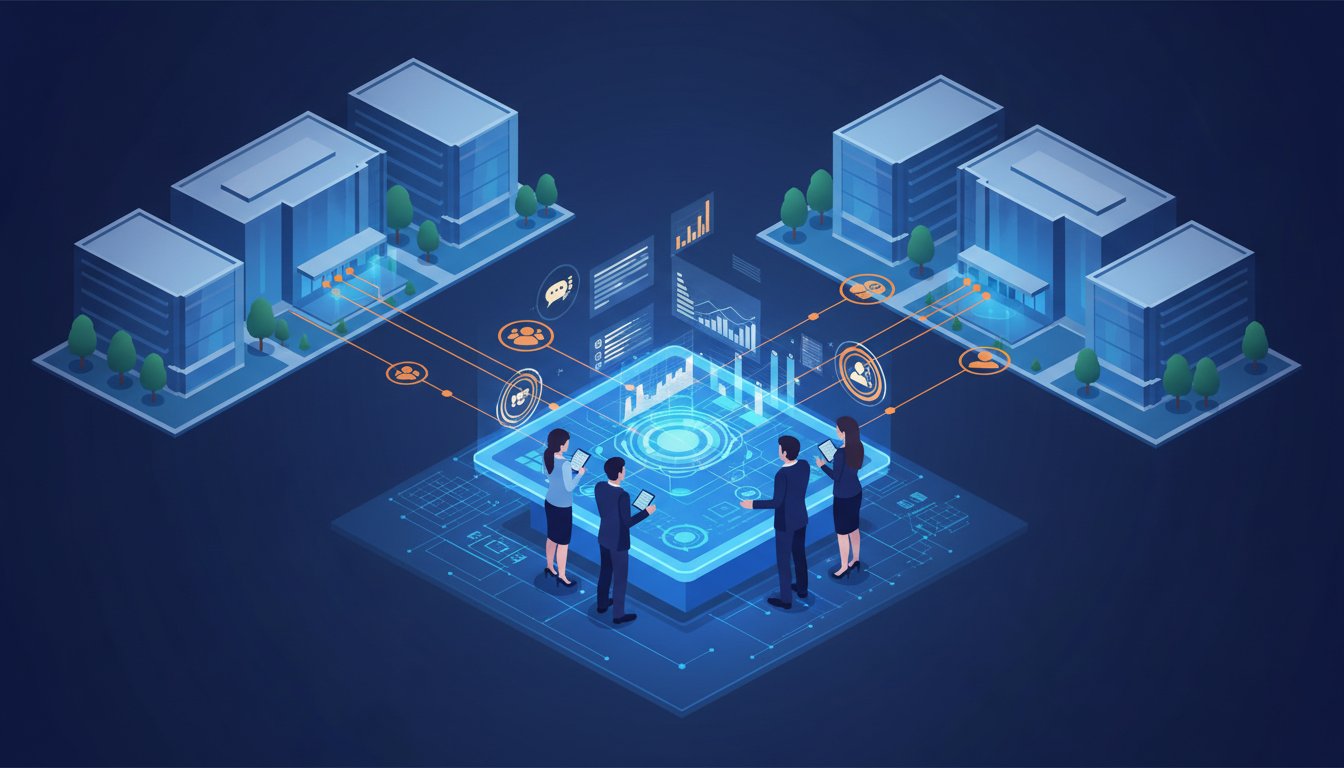
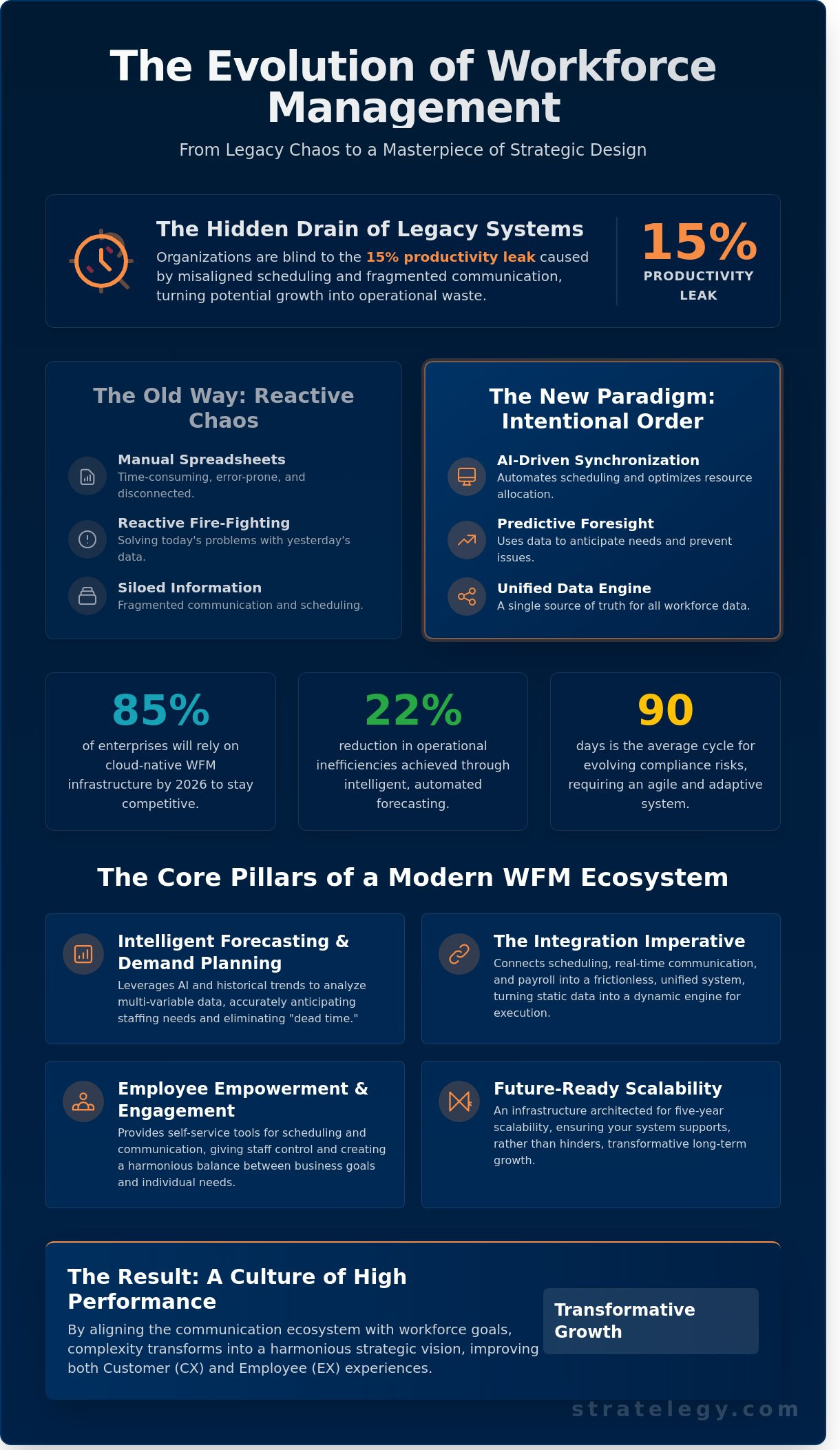
The era of treating human capital as a mere operational expense is officially over; by 2026, the most resilient organizations will treat labor as a masterpiece of strategic design. Leaders often find that legacy systems leave them blind to the 15% productivity leak caused by misaligned scheduling and fragmented communication. Implementing the right software for workforce management is no longer about tracking hours. It’s about creating a sophisticated framework where every shift and every interaction contributes to transformative growth.
You understand the frustration of escalating labor costs and the constant pressure of compliance risks that evolve every 90 days. It’s clear that a unified view of productivity is the only way to move from reactive chaos to intentional order. This article provides a visionary roadmap to help you transcend basic administrative tasks and build a culture of high performance. We will examine how to synchronize scheduling with real-time communication to ensure your operational strategy is as elegant as it is effective.
Key Takeaways
- Transition from legacy manual processes to AI-driven synchronization to redefine your organization’s productivity and strategic potential.
- Discover how advanced software for workforce management creates a sophisticated balance between business requirements and employee preferences to ensure long-term payroll integrity.
- Uncover the “Integration Imperative” where merging communication tools with scheduling transforms static data into a dynamic engine for execution.
- Apply a rigorous executive framework to assess technical debt and ensure your infrastructure is architected for five-year scalability and transformative growth.
- Learn to align your communication ecosystem with your workforce goals, turning organizational complexity into a harmonious and well-designed strategic vision.
What is Software for Workforce Management in the Modern Era?
Modern software for workforce management represents a fundamental shift in how institutions orchestrate human capital. It’s no longer a mere digital ledger for clock-ins; it has evolved into a sophisticated suite designed to optimize institutional productivity through rhythmic, data-driven synchronization. The journey from the manual spreadsheets of 2015 to the AI-driven engines of today reflects a broader move toward operational elegance. By 2026, cloud-native workforce infrastructure will serve as the mandatory foundation for 85% of enterprise organizations seeking to maintain a competitive edge.
The core of Workforce management (WFM) lies in its ability to transform raw data into actionable foresight. While legacy tools focused on the past, modern platforms prioritize real-time adjustments and predictive modeling. This evolution distinguishes basic scheduling from holistic workforce engagement management. It’s the difference between merely filling a shift and strategically positioning a specialized professional where their impact is maximized. This transition creates a harmonious balance between organizational goals and individual employee needs.
The Strategic Importance of Workforce Optimization
Strategic alignment requires a precise calibration of labor resources against fluctuating market demands. Organizations that fail to adapt often suffer from “dead time,” where payroll costs accrue without corresponding output. Data from 2024 industry reports suggests that intelligent forecasting can reduce these inefficiencies by 22% through automated demand signaling. Software for workforce management is the digital nervous system of operational efficiency. By leveraging these tools, leaders can move away from guesswork, ensuring that every hour of labor contributes directly to the bottom line.
Beyond HR: WFM as an Operational Catalyst
Modern operations prove that WFM is a catalyst for both customer experience (CX) and employee experience (EX). When staff levels are optimized, customer wait times drop and service quality remains consistent. Conversely, the cost of administrative friction in legacy systems is high; managers often lose 15% of their weekly capacity to manual corrections and conflict resolution. Transitioning to a proactive framework eliminates this waste. It allows a brand to move from reactive crisis management to a state of transformative growth, where the focus remains on long-term vision rather than short-term fire-fighting.
- Predictive Accuracy: Using historical trends to anticipate staffing needs before they become urgent.
- Frictionless Integration: Connecting payroll, scheduling, and performance metrics into a single source of truth.
- Employee Empowerment: Providing self-service tools that give staff control over their professional lives.
As we approach 2026, the distinction between successful and struggling firms will depend on their digital maturity. A tailored framework doesn’t just manage people; it cultivates an environment where peak performance becomes a natural outcome of the system’s design. It’s a commitment to structural harmony that defines the next generation of business excellence.
The Core Pillars of a Sophisticated WFM Ecosystem
A modern software for workforce management functions as the central nervous system of a high-performance enterprise. It’s no longer sufficient to treat scheduling as a back-office administrative task. Instead, visionary leaders view it as a mechanism for strategic synchronization. By early 2025, the integration of AI-driven tools moved from a competitive advantage to a baseline requirement for operational survival. This shift requires a move toward ecosystems that prioritize payroll integrity through automated time tracking and real-time analytics.
Data silos are the primary enemy of efficiency. When analyzing Gartner reviews of workforce management applications, it’s clear that the market’s most successful platforms are those that bridge the gap between raw operational data and long-term executive vision. These systems don’t just record hours; they provide the predictive modeling necessary to navigate volatile markets with calm professionalism.
Intelligent Forecasting and Demand Planning
Precision in staffing requires more than a cursory glance at last year’s spreadsheets. Advanced software for workforce management leverages machine learning to analyze multi-variable data points, including seasonal foot traffic and regional economic shifts. This scientific approach reduces unnecessary overstaffing by up to 15% while ensuring customer service levels remain steady during peak periods. It’s about building an organizational agility that remains unshaken in the face of unforeseen disruptions. By 2026, 82% of top-tier firms will rely on these predictive models to maintain their competitive edge.
Compliance and Risk Mitigation
Navigating the labyrinth of national and local labor laws requires a system that thinks faster than a legal department. Sophisticated platforms automate the adherence to complex break mandates, overtime caps, and certification tracking. This digital record-keeping creates an audit-ready environment that protects the brand’s reputation. Proactive automation prevents the 20% increase in litigation costs often seen in firms that still rely on fragmented, manual compliance checks. It’s a structured approach to risk that transforms a potential liability into a pillar of operational stability.
Employee Self-Service and Engagement
Retention in the modern era is driven by autonomy and transparency. Mobile-first tools that allow for instant shift-swapping and availability management empower the workforce, reducing the administrative burden on managers. When employees have direct control over their professional lives, turnover rates typically decline by 22% within the first year of implementation. This psychological impact shouldn’t be underestimated; reliable, high-functioning tools signal that a brand values its people. This level of strategic alignment ensures that your most valuable assets remain engaged, productive, and loyal to the firm’s vision.
The Integration Imperative: Why Communication is the Missing Link
Efficiency often fractures where planning meets performance. In many legacy structures, scheduling exists in a vacuum, detached from the pulse of real-time interaction. This fragmentation creates friction that costs organizations an average of 15% in lost productivity annually. When software for workforce management operates in a silo, it merely tracks time; it doesn’t empower people. The strategic shift for 2026 demands a move from passive tracking to active execution through the integration of Unified Communications as a Service (UCaaS) and Contact Center as a Service (CCaaS).
This convergence transforms the operational landscape. By embedding communication directly into the WFM framework, leaders bridge the gap between a theoretical schedule and the chaotic reality of a live service environment. The rise of “Agent Assist” AI within this ecosystem provides a sophisticated layer of support. These AI models analyze live interactions in real time, surfacing relevant data or suggesting responses to agents. This doesn’t just speed up the process. It elevates the quality of the engagement, ensuring that the workforce is as effective as it is efficient. A 2024 analysis of unified platforms showed that organizations adopting this integrated approach reduced response times by 30%, proving that technical harmony leads to measurable speed.
Bridging the Gap Between Scheduling and Voice
Modern contact centers now rely on presence-based routing to eliminate dead air. When workforce data flows into communication streams, the system knows exactly who’s available, what their skill set is, and whether they’re nearing burnout. This real-time visibility ensures that critical alerts reach the right personnel instantly. If a sudden surge in call volume occurs, the system doesn’t wait for a supervisor to notice; it triggers automated notifications to flexible staff members who can pivot to support the queue immediately.
WFM and CCaaS: A Symbiotic Relationship
Optimizing agent occupancy is a delicate art. Pushing occupancy rates above 85% often leads to rapid turnover, yet under-utilization wastes capital. A symbiotic relationship between WFM and CCaaS allows for Workforce Engagement Management (WEM) that prioritizes the human element. By using integrated data, managers can offer “micro-breaks” or training sessions during unexpected lulls, maintaining morale without sacrificing customer satisfaction. Selecting the right contact center software for 2026 is a critical component of this equation, ensuring your communication infrastructure is as strategically refined as your workforce framework. Communication infrastructure represents the critical last mile of software for workforce management, where strategic intent finally meets operational reality. This alignment ensures that every minute of scheduled time is utilized with purpose and precision.
A Selection Framework for Executive Decision-Makers
Selecting the right software for workforce management isn’t a mere procurement task; it’s a commitment to organizational harmony. Leaders must look beyond the immediate feature list to ensure the solution integrates with existing architecture while remaining flexible enough for future shifts. A 2023 McKinsey report indicates that technical debt can account for up to 40% of IT budgets. Executives need to audit legacy systems to prevent integration friction. If your payroll or ERP systems are over a decade old, a modern WFM tool might struggle to synchronize data without costly custom middleware.
Scalability isn’t just about adding users. It’s about handling a 25% increase in operational complexity without degrading performance. True ROI involves more than cost savings. A study by the Aberdeen Group showed that best-in-class WFM users see a 12% improvement in workforce utilization. Factor in a 5% reduction in compliance-related fines to see the full financial picture. High-performing organizations treat software providers as partners rather than vendors. This strategic alignment ensures that the software evolves alongside your specific business logic.
Technical Readiness and Connectivity
Cloud connectivity is non-negotiable for real-time operations. However, reliance on standard copper lines is a significant risk. LTE-based POTS replacement ensures 99.99% uptime for critical systems like time clocks and security hubs. Security considerations are equally paramount. Ensure your chosen software for workforce management meets ISO 27001 standards to protect employee PII. Data encryption at rest and in transit is the minimum requirement for 2026 compliance standards.
User Adoption: The Ultimate Success Metric
If the interface is cumbersome, the project fails. Research shows that 70% of digital transformations miss their targets due to poor employee engagement. Evaluating the UI for both managers and field staff is vital. Comprehensive training and change management programs reduce the “learning tax” on productivity. Identify champion users early in the process. These individuals bridge the gap between executive vision and daily execution, driving buy-in across every level of the hierarchy.
Building a resilient workforce requires a balance of sophisticated technology and human-centric design. Organizations that prioritize this balance don’t just survive market volatility; they thrive within it. Growing enterprises should also evaluate how a cloud contact center for mid-market operations can reduce total cost of ownership while delivering enterprise-grade engagement capabilities. To ensure your organization is prepared for the complexities of the next decade, explore our tailored framework for digital transformation.
Stratelegy: Architecting Your Workforce Future
True operational excellence requires more than high-end software for workforce management; it demands a foundation where communication and strategy converge. Stratelegy doesn’t just provide tools. We architect the infrastructure that allows your human capital to thrive. By aligning your communication framework with overarching business goals, we ensure every interaction serves a strategic purpose. This alignment transforms a standard utility into a competitive advantage, moving beyond simple task completion toward transformative organizational growth.
Modern connectivity is the nervous system of your enterprise. We specialize in moving organizations away from the limitations of legacy systems. Since the FCC Order 19-72, the transition from Plain Old Telephone Service (POTS) to cloud-native solutions has become a necessity for survival. We replace these aging copper lines with resilient, enterprise-grade UCaaS and CCaaS platforms. These modern frameworks provide the stability your software for workforce management requires to process real-time data without the risk of downtime or latency.
Our partnership approach focuses on long-term vision rather than short-term fixes. We don’t just analyze data points; we create a vision for your future operations. By integrating high-level communication tools with your management strategy, we help you forge order out of complexity. This ensures your technology stack isn’t just efficient, but structurally harmonious and aesthetically designed for the modern business world.
Unified Solutions for Complex Organizations
Large enterprises often suffer from fragmented systems that stifle productivity. We eliminate these technical silos through strategic integration, ensuring your communication tools talk to your management platforms. Our commitment to magisterial service means we customize every framework to fit your specific workflows. We provide a 99.999% reliability standard, ensuring your global workforce remains connected and synchronized regardless of geographic distribution.
Next Steps: From Strategy to Execution
Moving from a legacy mindset to a cloud-based future requires a clear, disciplined roadmap. We begin by initiating a comprehensive strategic audit of your current communication and WFM tools to identify hidden inefficiencies. From there, we define a modernization path that prioritizes scalability and security. This process isn’t about rapid change for the sake of it, but about a deliberate evolution toward a more sophisticated operational model. To begin this transformation, you can Connect with a Stratelegy consultant to harmonize your workforce strategy and build a framework designed for 2026 and beyond.
Architecting a Resilient Era of Operational Excellence
The transition toward 2026 demands a departure from fragmented systems. Modern software for workforce management serves as more than a utility; it functions as the structural foundation for organizational harmony. Industry data suggests that enterprises integrating unified communications see a 20% increase in operational speed. This efficiency stems from the seamless alignment of human capital and technical precision. By prioritizing a framework where UCaaS and CCaaS reliability reach the 99.999% industry gold standard, leaders can eliminate the friction of disconnected workflows.
Stratelegy bridges the gap between ambitious vision and functional reality. We provide national coverage for multi-site organizations, ensuring that every branch operates with the same high-level sophistication. Our specialized LTE POTS replacement offers a 100% wireless failover solution for critical uptime, protecting your infrastructure against unforeseen disruptions. It’s time to move beyond mere management and start architecting a future where every connection is purposeful and every system is secure. Design your strategic communication and workforce framework with Stratelegy and transform your operational complexity into a distinct competitive advantage. Your path to a more elegant, efficient future begins with a single, well-placed stone.
Frequently Asked Questions
What is the difference between workforce management and HR software?
HR platforms oversee the employee lifecycle from recruitment to offboarding. In contrast, software for workforce management optimizes daily operations such as scheduling and real-time task allocation. This distinction ensures that while HR handles the human element, WFM focuses on the precision of performance and labor efficiency. It’s the difference between managing a person’s career and managing their daily impact on the bottom line.
How does software for workforce management improve ROI?
Strategic implementation yields a 12% reduction in labor costs by eliminating overstaffing and idle time. It transforms payroll accuracy to 99.9%, removing the financial leakage associated with manual errors. This level of precision converts operational overhead into a lean, value-driving engine. You’ll see the investment pay for itself within the first 12 months of active use through these concrete efficiency gains.
Can WFM software integrate with my existing CCaaS or UCaaS platform?
Integration is a core pillar of modern digital ecosystems; 95% of enterprise WFM platforms now offer native API connectors for CCaaS and UCaaS systems. These links allow for the seamless flow of interaction data. You’ll achieve a unified view of performance without the friction of siloed information. It’s a harmonious connection that preserves the integrity of your existing technology stack while enhancing visibility.
Is workforce management software suitable for remote and hybrid teams?
WFM solutions are essential for remote and hybrid models, providing 100% visibility into productivity across diverse geographic locations. They replace physical oversight with digital transparency. Leaders can coordinate global teams with the same rhythmic precision as an on-site department. This ensures no loss in operational momentum, regardless of where your talent is physically located, by maintaining a consistent framework for accountability.
What are the most critical features to look for in a 2026 WFM solution?
The 2026 framework demands predictive AI forecasting with a 98% accuracy rate and robust self-service mobile capabilities. These features empower employees while maintaining strict organizational control. You should prioritize platforms that offer real-time intraday automation to handle sudden shifts in demand. This creates a resilient operation that adapts to market volatility with grace and speed, ensuring your strategy remains evergreen.
How does WFM software handle complex compliance and labor laws?
Modern systems embed 1,000+ global labor laws directly into their scheduling logic to prevent costly compliance breaches. They automatically flag potential violations of overtime or rest period mandates before they occur. This proactive guardrail protects the organization from legal risks. It’s a sophisticated layer of defense that ensures your operations remain ethically and legally sound without requiring manual oversight of every shift.
What is the typical implementation timeline for enterprise WFM software?
An enterprise-grade deployment usually follows a 12 to 24 week roadmap to ensure total strategic alignment. This timeline includes data migration, system configuration, and comprehensive user training. A phased approach allows for the graceful adoption of new workflows. It’s a deliberate process designed to transform your operational culture without causing unnecessary friction or downtime during the transition period.
Does workforce management software require specialized hardware?
Specialized hardware is no longer a requirement because 100% of leading solutions have migrated to cloud contact center and cloud-native architectures. Employees access the platform through standard mobile devices or web browsers. This shift eliminates the need for expensive on-site servers. It reduces the total cost of ownership while providing a more flexible, accessible environment for your entire workforce, regardless of their hardware preferences.