
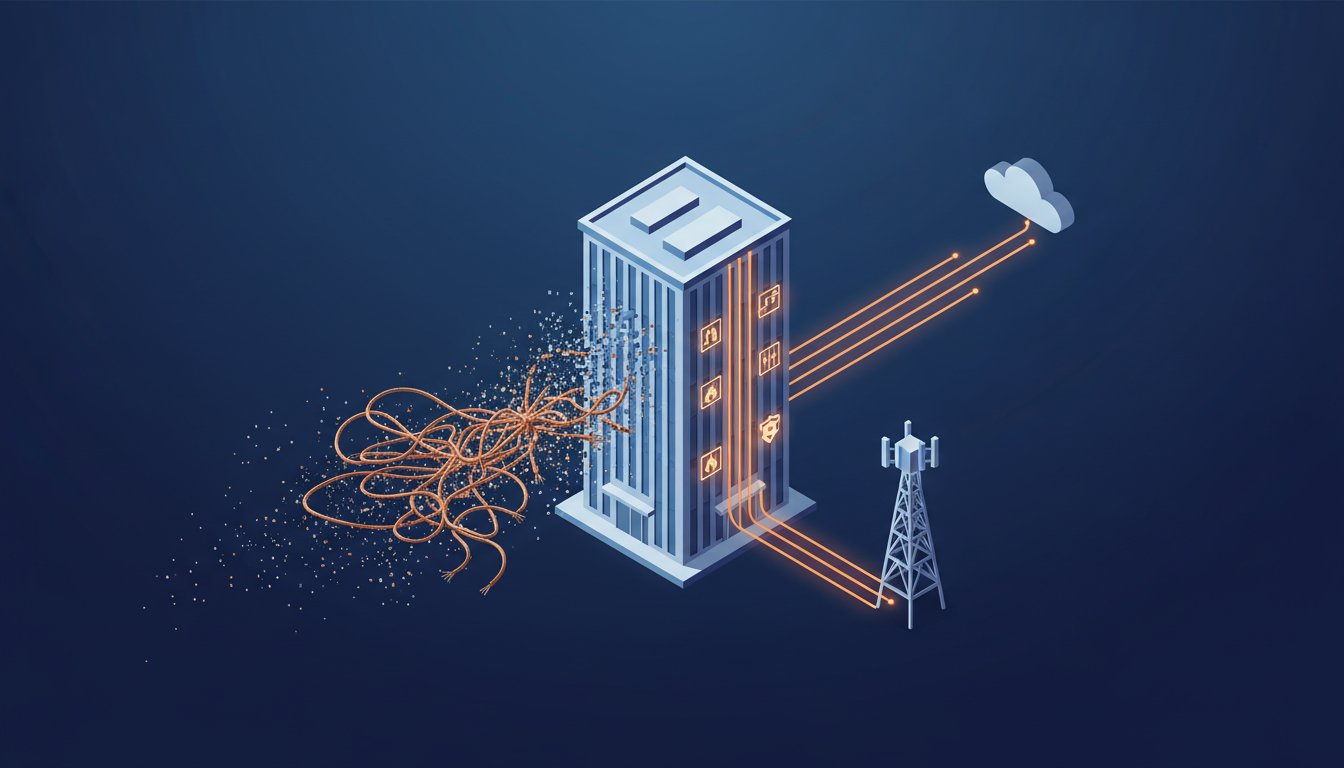
By 2026, the traditional copper wire will no longer represent a functional asset; it’ll be a strategic liability that costs enterprises up to 450% more than it did in 2019 according to FCC price deregulation reports. Developing a robust business continuity plan for pots phase out is no longer a peripheral IT project; it’s a fundamental requirement for protecting life-safety systems and operational integrity. You’ve likely noticed that maintaining these legacy lines has become an exercise in managing diminishing returns. The escalating fees and the threat of service termination are immediate hurdles that demand a proactive, elegant response.
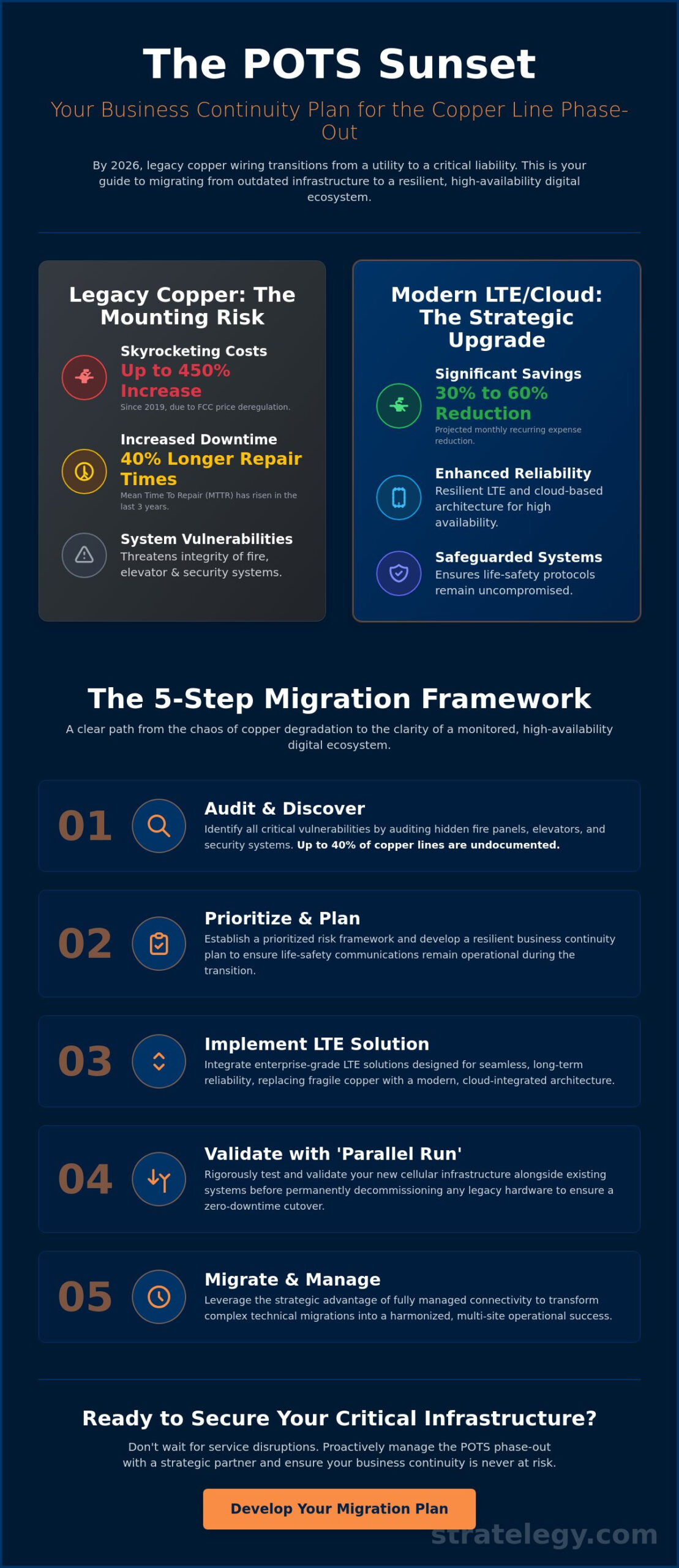
This guide provides a refined framework to replace decaying copper with resilient LTE and cloud-based architectures. We’ll show you how to neutralize the risks of legacy retirement through strategic infrastructure modernization. Our analysis details how to orchestrate a seamless migration that safeguards your critical systems while simultaneously reducing your monthly recurring expenses by a projected 30% to 60%. You’ll discover a clear path from the chaos of copper degradation to the clarity of a monitored, high-availability digital ecosystem.
Key Takeaways
- Identify the critical vulnerabilities within your legacy copper infrastructure by conducting a meticulous audit of hidden fire panels, elevators, and security systems.
- Establish a prioritized risk framework to ensure that life-safety and emergency communications remain operational during the national transition to digital standards.
- Develop a resilient business continuity plan for pots phase out by integrating enterprise-grade LTE solutions designed for seamless, long-term reliability.
- Master the ‘Parallel Run’ methodology to rigorously validate your new cellular infrastructure before permanently decommissioning legacy hardware.
- Leverage the strategic advantage of fully managed connectivity to transform complex technical migrations into a harmonized, multi-site operational success.
The Strategic Necessity of a POTS Phase-Out Continuity Plan
For the modern enterprise, the reliance on century-old copper wiring represents more than a technical debt; it’s a structural vulnerability that compromises organizational resilience. By 2026, the traditional Plain Old Telephone Service (POTS) will no longer serve as a dependable foundation for critical communications. What was once a ubiquitous utility has transformed into a single point of failure, threatening the integrity of fire alarm panels, elevator emergency lines, and security systems. Transitioning away from this aging infrastructure isn’t merely a technical upgrade. It’s a fundamental component of a sophisticated business continuity plan for pots phase out that ensures operational stability in an era of rapid digital migration.
The urgency of this transition is driven by the convergence of physical decay and strategic obsolescence. As enterprises pursue transformative growth, maintaining legacy analog lines creates a friction point that hinders broader digital transformation goals. A well-designed business continuity plan for pots phase out aligns a company’s safety infrastructure with its modern data architecture, replacing fragile copper with resilient, cloud-integrated solutions. This alignment transforms a looming infrastructure crisis into an opportunity to build a more harmonious and well-designed operational framework.
The Economics of Legacy Infrastructure
The financial burden of maintaining copper lines has reached a critical threshold. Major carriers have shifted their capital expenditure away from analog maintenance, leading to price escalations that often exceed 500% in specific metropolitan markets. These rising tariffs aren’t accidental; they’re a deliberate mechanism used by service providers to price copper out of the market. Beyond the monthly service fees, the hidden costs of maintenance degradation are mounting. Because the national network is physically neglected, the mean time to repair (MTTR) for copper outages has increased by over 40% in the last three years, creating unacceptable windows of risk for life-safety systems. The POTS Sunset represents a non-negotiable strategic risk management deadline that demands immediate board-level attention.
Regulatory Catalysts and Compliance
The landscape of telecommunications changed fundamentally with the implementation of FCC Order 19-72. This directive effectively ended the requirement for Tier 1 carriers to provide analog voice services at regulated rates, sparking a national movement toward copper retirement. This federal shift is mirrored by state-level deregulation, where 42 states have already moved to reduce or eliminate carrier-of-last-resort obligations. These regulatory changes mean that by 2026, enterprises may find their service terminated with minimal notice as carriers decommission local exchanges. This date marks a critical inflection point where the cost of inertia far outweighs the investment required for a tailored, modern framework. Proactive organizations are already mapping their transition to avoid the chaos of forced migration, ensuring their compliance and safety protocols remain uncompromised during this national transition.
Phase 1: Conducting a Comprehensive Infrastructure Audit
Precision serves as the cornerstone of any business continuity plan for pots phase out. Organizations frequently operate under the illusion of total visibility, yet data suggests that up to 40% of enterprise copper lines remain undocumented in centralized IT databases as of 2024. These legacy circuits operate quietly in the background, supporting essential functions that modern VoIP systems cannot reach without specific hardware adaptation. A successful transition demands a rigorous inventory that moves beyond digital records into the physical reality of the facility.
The Discovery Process: Where POTS Lines Hide
Identifying every active circuit requires a dual-track approach that aligns financial records with physical infrastructure. Finance teams should begin by scrutinizing utility invoices from the last 24 months to uncover active but “forgotten” accounts that still incur monthly costs. This digital trail often leads to “ghost” lines; circuits that carry no voice traffic but remain vital for emergency response or building automation. The urgency of this task is driven by FCC rules on copper retirement, which have removed the requirement for carriers to maintain these aging networks at regulated rates.
Technical teams must supplement this data with on-site inspections of the Minimum Point of Entry (MPOE) rooms. Mapping the termination points of legacy copper ensures that no “dark” circuit is left behind. This physical audit often reveals critical connections for:
- Out-of-band management: Remote access for IT teams during network outages.
- Building entry systems: Intercoms and gate controllers at loading docks.
- Environmental sensors: Legacy HVAC monitoring systems in older data centers.
Auditing for Life Safety and Compliance
The audit must prioritize systems where failure results in immediate risk or legal liability. Fire alarm communicators, for example, often rely on dual POTS paths to meet the stringent requirements of NFPA 72. Evaluating these signal paths is not merely a technical task; it’s a regulatory necessity. Similarly, emergency elevator phones must adhere to ASME A17.1 safety codes, which dictate specific power and connectivity standards that many digital alternatives fail to meet without specialized backup power.
For healthcare and legal sectors, the audit must also address HIPAA-sensitive fax lines. Transitioning these to virtual faxing requires a tailored framework for infrastructure transition that maintains encryption and audit trails. By categorizing every line based on its criticality to life safety and business operations, leaders can integrate these findings into a robust business continuity plan for pots phase out, ensuring that the migration enhances rather than compromises organizational resilience.
Phase 2: Risk Categorization and Prioritization Framework
A robust business continuity plan for pots phase out requires more than a simple inventory; it demands a rigorous hierarchy of risk. Enterprise leaders must distinguish between mere operational inconvenience and catastrophic safety failure. This framework categorizes legacy lines into three distinct tiers to ensure that capital expenditure aligns with the most critical vulnerabilities first. By applying a structured approach, organizations transform a technical necessity into a strategic realignment of their infrastructure.
- Tier 1: Life-Safety Systems. This includes fire alarm control units (FACUs), medical emergency lines, and elevator emergency phones. These systems are non-negotiable and governed by strict regulatory mandates.
- Tier 2: Security and Access Control. Intrusion alarms, gate entry systems, and perimeter monitoring fall here. A failure in this tier compromises physical assets and personnel safety.
- Tier 3: Operational Support. Legacy fax machines, dial-up modems, and point-of-sale (POS) terminals. While essential for revenue, these are often the easiest to modernize through digital transformation.
Tier 1: Prioritizing Life-Safety Resilience
Fire alarms require the most sophisticated LTE replacement solutions because they operate under the stringent requirements of NFPA 72 and UL 864. These standards dictate that communication paths must be supervised and redundant. For instance, UL 864 10th Edition requires specific timing for signal transmission that standard VoIP often fails to meet. Replacing these with dual-path LTE or 5G solutions ensures that even if one network fails, the life-safety signal reaches the central monitoring station. Local fire marshals increasingly demand proof of battery backup that can sustain 24 hours of standby power, a critical component of any resilient business continuity plan for pots phase out.
Operational Impact Analysis
The financial burden of legacy failure extends beyond simple repair costs. For security systems, the cost of a 24-hour outage can exceed $15,000 in manned guarding fees required to maintain insurance compliance. In the healthcare and legal sectors, the failure of legacy fax lines disrupts critical workflows. Research indicates that 75 percent of medical communication still relies on faxing; a transition failure here delays patient care and risks HIPAA violations. This operational friction presents a natural inflection point for modernization. Organizations should leverage this transition to integrate enterprise UCaaS and CCaaS solutions, effectively turning a forced hardware migration into a strategic advantage for Tier 3 functions. By aligning these upgrades with the 2026 sunset deadlines, firms secure both their safety and their competitive edge through a refined, future-proof architecture.
Phase 3: Implementing the LTE POTS Replacement Roadmap
The execution phase of a business continuity plan for pots phase out demands more than simple hardware swaps. It requires a disciplined alignment of new digital paths with legacy operational requirements. Transitioning from copper to cellular isn’t just an upgrade; it’s a fundamental re-engineering of how your enterprise maintains its pulse. Success depends on a structured migration that prioritizes uptime over convenience.
Selecting Cellular Protocols and Hardware
Enterprise-grade cellular routers must offer more than basic connectivity. For building cores where signal penetration is difficult, LTE-M (Long Term Evolution for Machines) often outperforms standard 5G due to its lower frequency bands, typically around 700MHz, which pass through concrete and steel with greater efficiency. Selecting carrier-agnostic hardware ensures that your infrastructure isn’t tethered to a single provider’s local performance. Dual-SIM configurations provide a critical safety net; if one carrier experiences a local tower outage, the system switches to the secondary path in less than 30 seconds to maintain the link.
The Transition Methodology
A successful LTE POTS replacement relies on the “Parallel Run” strategy. This methodology involves installing the new digital infrastructure alongside the existing copper lines, allowing for a 72-hour validation period where both systems are active. During this window, technicians must verify that fire panels, elevator phones, and security systems communicate correctly with the central monitoring station. It’s a phase where precision outweighs speed.
Once the digital path proves stable, the legacy decommissioning begins. This involves a formal porting process with the local exchange carrier to transfer numbers or terminate service without disrupting site safety. Establishing a 24/7 monitoring loop is the final step. This loop tracks RSRP (Reference Signal Received Power) and RSRQ (Reference Signal Received Quality) metrics, ensuring signal strength remains above -90 dBm for consistent performance. This data-driven oversight transforms a simple hardware installation into a resilient enterprise asset.
Reliability doesn’t stop at the signal. It extends to the very electricity that powers the pulse of the machine. NFPA 72 standards for fire alarm systems require 24 hours of standby power followed by at least 5 minutes of alarm time. Your LTE communicators must include internal battery backups that meet these specific regulatory benchmarks. A robust business continuity plan for pots phase out treats power as a primary dependency, ensuring that when the grid fails, your safety systems don’t.
The Stratelegy Advantage: Sophisticated Managed Connectivity
Transitioning away from copper lines involves more than swapping a box on a wall; it’s a fundamental shift in how your organization maintains its pulse. A robust business continuity plan for pots phase out requires a partner who looks beyond the hardware to the orchestration of the entire ecosystem. Stratelegy provides a fully managed connectivity framework. We ensure that fire panels, elevator phones, and security systems don’t just stay online, they become part of a modern, resilient architecture that withstands the pressures of a digital-first world.
For enterprises managing hundreds of locations, consistency is the primary challenge. Disparate systems across different regions create vulnerabilities that legacy carriers can no longer address. Stratelegy’s national deployment capabilities ensure a uniform strategy across your entire multi-site footprint. We integrate these critical legacy endpoints with your existing enterprise UCaaS and CCaaS platforms, creating a unified communication environment. This alignment eliminates the silos that often lead to communication failures during emergency events, ensuring that your 2026 readiness is absolute.
Elegance in Engineering and Strategy
Chaos often defines the early stages of a forced technology migration. Stratelegy transforms this friction into a streamlined process through meticulous engineering. We don’t just act as a vendor; we serve as a strategic consultant for your long-term infrastructure planning. Our goal is to ensure your communication architecture is both functional and harmonious. By applying a rigorous test-and-validate methodology, we ensure every life-safety line meets the strict 99.999% uptime requirements demanded by modern compliance standards. This isn’t just about survival; it’s about creating a sophisticated foundation for future growth.
Next Steps: Initiating Your Continuity Plan
Securing your infrastructure begins with a comprehensive national assessment. Within the first 30 days of a POTS replacement initiative, Stratelegy delivers:
- A detailed inventory of all existing copper assets across every location
- A risk-prioritized migration roadmap based on local carrier sunset dates
- A technical blueprint for integrating legacy endpoints into your digital core
This proactive approach ensures your business continuity plan for pots phase out is executed well before the looming 2026 deadlines. It’s time to move from reactive maintenance to strategic resilience. Partner with Stratelegy to secure your critical communications and ensure your enterprise remains connected, compliant, and elegantly engineered for the future.
Future-Proofing Your Infrastructure Beyond the 2026 Deadline
The sunset of analog copper lines isn’t just a technical shift; it’s a strategic imperative that demands immediate focus. By conducting a meticulous infrastructure audit and categorizing risks based on life-safety requirements, you transform a potential vulnerability into a distinct competitive advantage. Implementing a comprehensive business continuity plan for pots phase out protects your most critical assets while aligning your communication architecture with modern enterprise standards. It’s the difference between reactive crisis management and proactive strategic alignment.
Stratelegy brings a visionary perspective to this transition, specializing in the modernization of life-safety and fire alarm systems. We manage national enterprise-grade deployments that offer seamless integration with your existing cloud communication platforms, ensuring your 911 and emergency protocols meet 2026 regulatory demands. Our approach creates a harmonious, resilient framework where legacy reliability meets digital agility. Secure your critical infrastructure with Stratelegy’s LTE POTS Replacement. Your path to digital maturity starts with a single, well-executed step toward modernization.
Frequently Asked Questions
What is the primary risk of waiting to replace POTS lines in 2026?
The primary risk involves a compounding cycle of skyrocketing maintenance costs and diminishing technical support as carriers prioritize fiber infrastructure. Since the FCC issued Order 19-72, legacy copper rates have surged by over 300% in specific markets. Organizations that delay their business continuity plan for pots phase out face sudden service termination or 48-hour repair windows that disrupt critical safety systems.
Is LTE POTS replacement as reliable as traditional copper for fire alarms?
LTE replacement solutions exceed the reliability of traditional copper by utilizing dual-path communication and 4G cellular redundancy. These systems comply with NFPA 72 standards, offering 99.99% uptime compared to the physical vulnerability of underground copper lines. Modern gateways provide real-time monitoring and heartbeat signals every 60 seconds, ensuring your life safety systems remain active during localized infrastructure failures.
Does the POTS phase-out impact elevator emergency phones?
The POTS phase-out directly impacts elevator emergency phones, which require a dedicated, reliable connection to meet ASME A17.1 safety codes. Traditional analog lines in elevator shafts are prone to moisture damage and signal degradation. Transitioning to a cellular bridge ensures constant connectivity and provides a clear voice path for emergency dispatchers, maintaining compliance with national safety regulations without the need for expensive rewiring.
Can I use my existing fire alarm panel with an LTE replacement solution?
You can typically retain your existing fire alarm panel by integrating a specialized LTE gateway that converts analog signals into digital packets. Approximately 95% of legacy panels utilize standard RJ11 or tip-and-ring interfaces, making them compatible with modern conversion hardware. This strategic alignment allows for a seamless upgrade without the capital expense of replacing the entire fire control system or altering your current monitoring contract.
How long does a typical enterprise POTS transition take?
A typical enterprise transition spans 4 to 12 weeks, depending on the complexity of the site architecture and the number of lines. The process begins with a comprehensive site audit taking 5 to 10 business days to identify all active circuits. Executing a business continuity plan for pots phase out early ensures that hardware procurement and carrier porting don’t encounter the supply chain bottlenecks expected in late 2025.
What are the battery backup requirements for LTE replacement devices?
LTE replacement devices must provide at least 24 hours of standby power to comply with NFPA 72 and UL 864 life safety standards. Most enterprise-grade gateways include internal 8,000 mAh batteries or external power enclosures to ensure uninterrupted operation during prolonged electrical outages. This hardware redundancy is vital for maintaining the integrity of emergency communication paths when the local power grid fails or during natural disasters.
How much can a business save by switching from copper to LTE?
Businesses often achieve a 20% to 60% reduction in monthly recurring costs by migrating from copper to LTE-based solutions. While traditional POTS lines can cost between $150 and $400 per month depending on the carrier, cellular alternatives offer stabilized pricing models. These savings allow organizations to reallocate capital toward transformative growth initiatives rather than maintaining obsolete infrastructure that offers no path for future scalability.
Is cellular signal strength an issue for basement-level fire panels?
Cellular signal strength can be a challenge for basement-level fire panels, but it’s easily resolved through external high-gain antennas. Technicians typically install 50-foot coaxial extensions or signal boosters to reach optimal reception points near windows or exterior walls. A professional site survey identifies these dead zones early, ensuring that the final installation delivers a robust and consistent connection for emergency transmissions regardless of the building’s structural depth.