
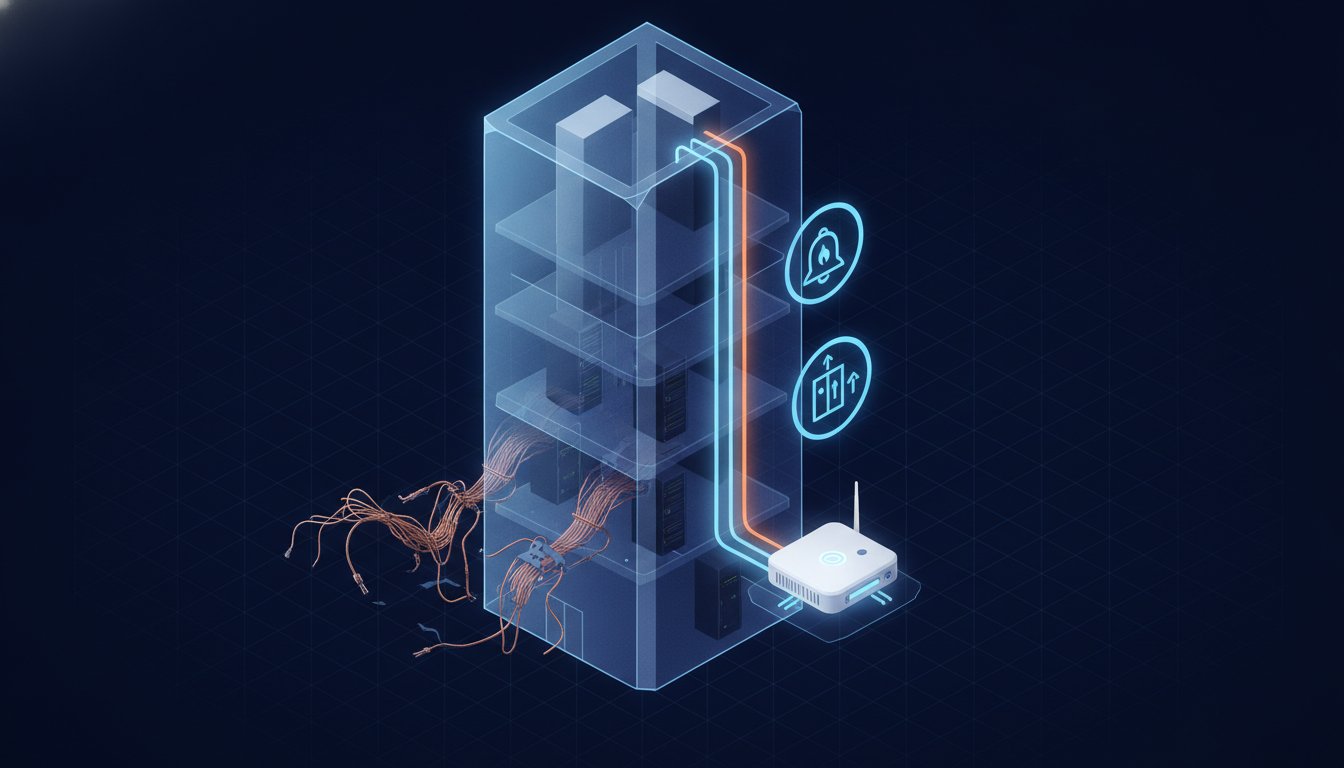
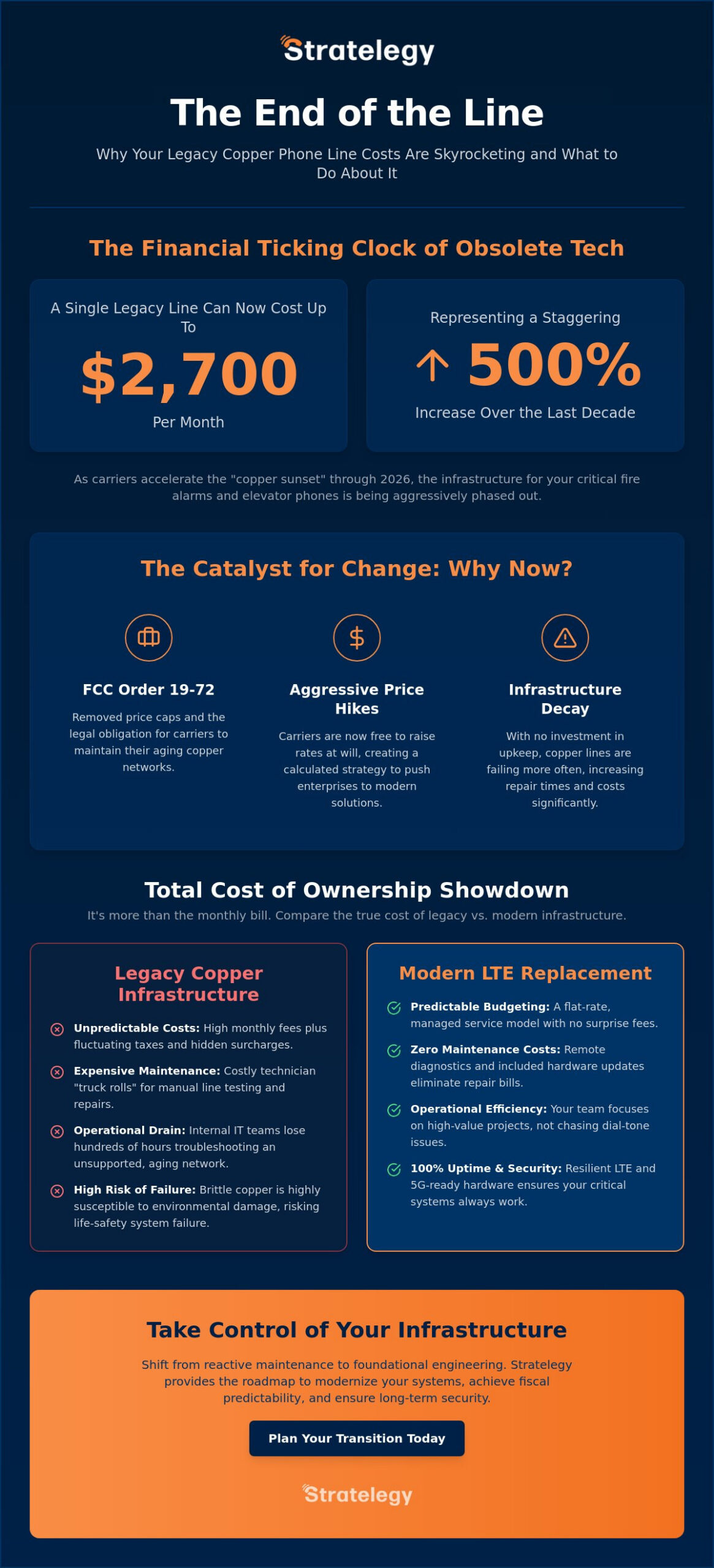
A single legacy copper line now costs some enterprises as much as $2,700 per month, representing a 500% increase over the last decade. As major carriers accelerate their copper sunset throughout 2026, these price hikes aren’t just an inconvenience; they’re a signal that the infrastructure supporting your fire alarms and elevator phones is being phased out. You’re likely facing immense pressure to modernize these systems without risking a life-safety failure or a massive operational disruption. We understand that the unpredictability of ILEC billing makes long-term budgeting nearly impossible for technical leaders who prioritize stability and security.
This pots line replacement cost analysis provides a strategic roadmap to transition from decaying copper to resilient LTE and digital alternatives. You’ll learn how to calculate the total cost of ownership for modern hardware and identify the exact point where your investment pays for itself through reduced monthly service fees. We’ll examine the regulatory landscape following FCC Order 19-72 and detail how to achieve 100% uptime for your critical security systems. This guide moves beyond the technical novelty of modernization to focus on the structural reliability and fiscal predictability your organization requires.
Key Takeaways
- Understand how regulatory shifts like FCC Order 19-72 have removed price protections, leading to the current volatility in legacy copper billing.
- Perform a comprehensive pots line replacement cost analysis that accounts for hidden surcharges and the internal labor hours lost to troubleshooting aging infrastructure.
- Identify the specific break-even point for LTE transitions to justify capital expenditure against skyrocketing monthly recurring charges.
- Evaluate how VoLTE and 5G readiness within your hardware lifecycle management prevents redundant replacement cycles in the near future.
- Shift from reactive maintenance to foundational engineering that prioritizes long-term security and operational governance for critical life-safety systems.
The Economics of Obsolescence: Why POTS Costs are Skyrocketing in 2026
A comprehensive pots line replacement cost analysis is more than a simple bill comparison. It’s a strategic evaluation of legacy copper expenses against modern LTE alternatives, designed to uncover the true fiscal burden of maintaining obsolete technology. For decades, Plain Old Telephone Service (POTS) provided a reliable foundation for critical systems. However, the economic reality has shifted from infrastructure stability to aggressive decommissioning.
The primary catalyst for this change was FCC Order 19-72. This ruling removed the obligation for carriers to maintain their copper infrastructure and eliminated price caps on Incumbent Local Exchange Carriers (ILECs). Without these regulatory protections, carriers are free to raise rates at will to offset the costs of an aging network. This isn’t just a price hike; it’s a calculated move to push enterprise users toward fiber and wireless solutions. Many organizations now find themselves trapped in a sunset period, which is a phase of aggressive price escalation specifically designed to force migration away from legacy systems.
Maintenance de-prioritization is the second half of this economic squeeze. Carriers are no longer investing in the upkeep of copper lines. They’re letting the infrastructure rot in the ground. This leads to increased repair wait times and higher costs for basic service calls. When a line fails, you’re not just paying for a repair; you’re paying for the scarcity of technicians trained in legacy systems.
The “Invisible Tax” of Legacy Infrastructure
Aging copper creates a financial drain that rarely shows up as a single line item. Frequent truck rolls and rising technician hourly rates represent an invisible tax on your operations. These costs spike during critical weather events or power surges, as brittle copper is far more susceptible to environmental damage than modern digital alternatives. Much like how property owners rely on UEC Roofing for preventative maintenance to protect a building’s exterior, proactive infrastructure upgrades are necessary to shield internal communications from similar environmental decay. The downtime associated with these failures can be catastrophic for life-safety systems like fire alarms and elevator phones. A thorough pots line replacement cost analysis must account for these operational risks and the transition from a heavy capital expenditure (CapEx) burden to a predictable operational expenditure (OpEx) model. By moving to managed LTE solutions, you replace unpredictable repair bills with a flat-rate, governed infrastructure.
Total Cost of Ownership (TCO) Framework for POTS Replacement
Developing a strategic pots line replacement cost analysis requires looking beyond the sticker price of a monthly bill. While legacy copper rates are soaring, the true financial impact includes a complex web of direct and indirect expenses. Direct costs are the most visible, encompassing Monthly Recurring Charges (MRC), local taxes, and the regulatory surcharges that ILECs frequently bury in fine print. These fees often fluctuate, making fiscal forecasting a moving target for enterprise leaders who need budgetary certainty.
Indirect costs often represent a larger portion of the TCO than many realize. Internal IT teams lose hundreds of hours annually troubleshooting analog-to-digital handshakes and managing aging hardware that’s no longer supported by the manufacturer. These labor costs, combined with the risks of delaying POTS replacement, create a significant drain on corporate resources. Consolidating dozens of local vendors into a single national LTE provider streamlines your accounts payable and simplifies your support structure, resulting in immediate operational efficiency.
Direct vs. Indirect Cost Comparison
Transitioning to LTE replaces unpredictable maintenance with a managed services model. In this framework, hardware updates and security patches are often included in the service fee, which eliminates the capital burden of periodic equipment cycles. This shift ensures your technical team focuses on high-value projects rather than chasing dial-tone issues on a decaying network.
- Analog Infrastructure: High MRC, variable repair fees, and expensive technician truck rolls for manual line testing.
- LTE Replacement: Predictable flat-rate billing, centralized management, and remote diagnostic capabilities that prevent outages.
Compliance and Liability: The High Cost of Cutting Corners
Failure isn’t just a technical problem; it’s a legal and financial liability. Non-compliance with NFPA 72 for fire alarms or ASME A17.1 for elevator phones can lead to failed inspections, massive fines, or life-safety failures. Modern pots line replacement solutions provide audit-ready compliance logs and real-time monitoring to ensure 100% uptime. This proactive stance ensures you’re always prepared for regulatory scrutiny. If you’re ready to stabilize your infrastructure, our specialists at Stratelegy can help you build a predictable, secure communication foundation.
Strategic Implementation: Evaluating ROI on LTE Modernization
Calculating the ROI for infrastructure modernization requires a multi-dimensional pots line replacement cost analysis. You must look beyond the immediate reduction in monthly recurring charges to find the true break-even point. This calculation includes the elimination of emergency repair fees, the mitigation of potential fire code fines, and the recovery of internal IT bandwidth. When you factor in the rising volatility of copper pricing driven by FCC Order 19-72, the financial justification for a transition becomes clear within the first 12 months of deployment.
Future-proofing is a critical component of this ROI framework. Selecting hardware with VoLTE and 5G readiness ensures your organization won’t face another expensive replacement cycle in three years. We prioritize foundational engineering that anticipates these shifts. This long-term view is essential when you consider how quickly legacy cellular bands are sunsetting. Integrating these robust connections into a broader strategy for unified communications as a service allows for a seamless, full-stack modernization of your entire enterprise voice and data ecosystem.
The Hardware-as-a-Service (HaaS) Advantage
Owning and maintaining proprietary gateways introduces hidden costs that often go unmonitored. A HaaS model eliminates this technical debt by shifting the responsibility of hardware lifecycle management to the provider. Our systematic hardware update policies ensure your devices are always compliant with the latest security protocols and performance standards. This approach converts a massive upfront capital burden into a predictable, manageable operational expense.
Quantifying Uptime in Life-Safety Systems
Reliability is the ultimate metric for fire and elevator systems. Dual-SIM LTE configurations provide a cost-to-reliability ratio that aging copper simply cannot match in 2026. By utilizing two different carrier networks, you ensure that a localized tower outage doesn’t compromise your life-safety infrastructure. This managed monitoring model moves you away from reactive repairs and toward a state of constant, governed uptime. To begin securing your critical systems with a predictable cost structure, partner with the strategic specialists at Stratelegy today.
Stratelegy: Foundational Engineering for Predictable Infrastructure
Stratelegy operates as a strategic specialist in an era of rapid infrastructure decay. We prioritize governance and security over superficial features, ensuring your critical systems remain operational under all conditions. Our approach to pots line replacement cost analysis is rooted in long-term lifecycle management. We don’t just swap hardware; we engineer a stable foundation that eliminates the fear of obsolescence for enterprise leaders.
Our LTE POTS replacement solutions replace the volatility of ILEC billing with predictable, flat-rate costs. This stability allows you to forecast budgets with precision, removing the risk of the 500% price surges seen in legacy copper markets over the last decade. Whether you’re looking to transition to a proactive cloud contact center or simply need to secure your life-safety lines today, we provide the technical oversight necessary for a successful, disciplined migration.
Proprietary Maintenance and Systematic Updates
We view communication infrastructure as a foundational engineering discipline rather than a simple utility. Our proprietary maintenance frameworks ensure that every gateway and connection point is monitored for performance and regulatory compliance. Systematic hardware update policies prevent the accumulation of technical debt, extending the longevity of your investment through managed oversight. This disciplined methodology guarantees that your connectivity remains audit-ready and resilient against future network sunsets.
Next Steps for Enterprise Decommissioning
Securing Your Infrastructure for the Next Decade
Enterprise leaders can’t afford to ignore the escalating risks of legacy copper. The 2026 landscape demands a shift from reactive repairs to a governed, foundational engineering model. By conducting a detailed pots line replacement cost analysis, your organization can replace unpredictable ILEC billing with predictable flat-rate pricing. This transition doesn’t just lower expenses; it secures your critical fire and elevator systems with NFPA 72 and ASME A17.1 compliant solutions.
Stratelegy provides the national enterprise support necessary to manage this transition without disrupting your daily operations. You’ve seen how the economics of obsolescence work against you. Now is the time to leverage modern LTE technology to stabilize your infrastructure and eliminate technical debt. Request a Strategic Infrastructure Assessment from Stratelegy to begin your roadmap toward a secure and predictable communication future. Your legacy hardware doesn’t have to be a liability; it’s simply the starting point for your next phase of operational excellence.
Frequently Asked Questions
How much does a POTS line cost per month in 2026?
Typical monthly costs for a legacy copper line in 2026 range between $100 and $200 per line. However, some enterprise users report bills reaching as high as $2,700 for a single line as carriers aggressively hike prices during the copper sunset. These skyrocketing fees are a direct result of deregulated pricing and the removal of maintenance obligations for major carriers, making legacy infrastructure a significant financial liability.
Is LTE a legal replacement for fire alarm copper lines under NFPA 72?
Yes, LTE is a fully compliant replacement for fire alarm copper lines, provided the solution meets NFPA 72 requirements. Modern cellular adapters must utilize supervised connections and specific signal monitoring protocols to ensure continuous communication with the central station. Our engineering approach prioritizes these regulatory certifications to maintain life-safety integrity while transitioning away from decaying analog infrastructure.
What is the typical ROI period for a POTS line replacement project?
Most organizations realize a full return on investment within 6 to 12 months of deployment. This rapid ROI is driven by the immediate reduction in monthly service fees and the elimination of unpredictable repair costs. A comprehensive pots line replacement cost analysis often reveals that the savings from just 20 lines can exceed $30,000 annually, quickly offsetting any initial hardware or installation expenses.
Can I keep my existing phone numbers when switching to LTE POTS replacement?
Yes, you can port your existing phone numbers to an LTE-based replacement system. This process ensures zero disruption to your business operations or emergency contact protocols. We handle the technical coordination between your current carrier and the new digital network to ensure a seamless handoff of all critical voice and data lines, maintaining your established communication identity.
What happens to my elevator phones if the cellular network goes down?
Managed LTE solutions utilize dual-SIM redundancy to prevent outages if a specific carrier network fails. The system automatically switches to a secondary cellular provider to maintain an active connection for elevator emergency calls. Additionally, these devices include integrated battery backups to ensure functionality during local power failures, meeting all ASME A17.1 safety standards for structural reliability and passenger security.