
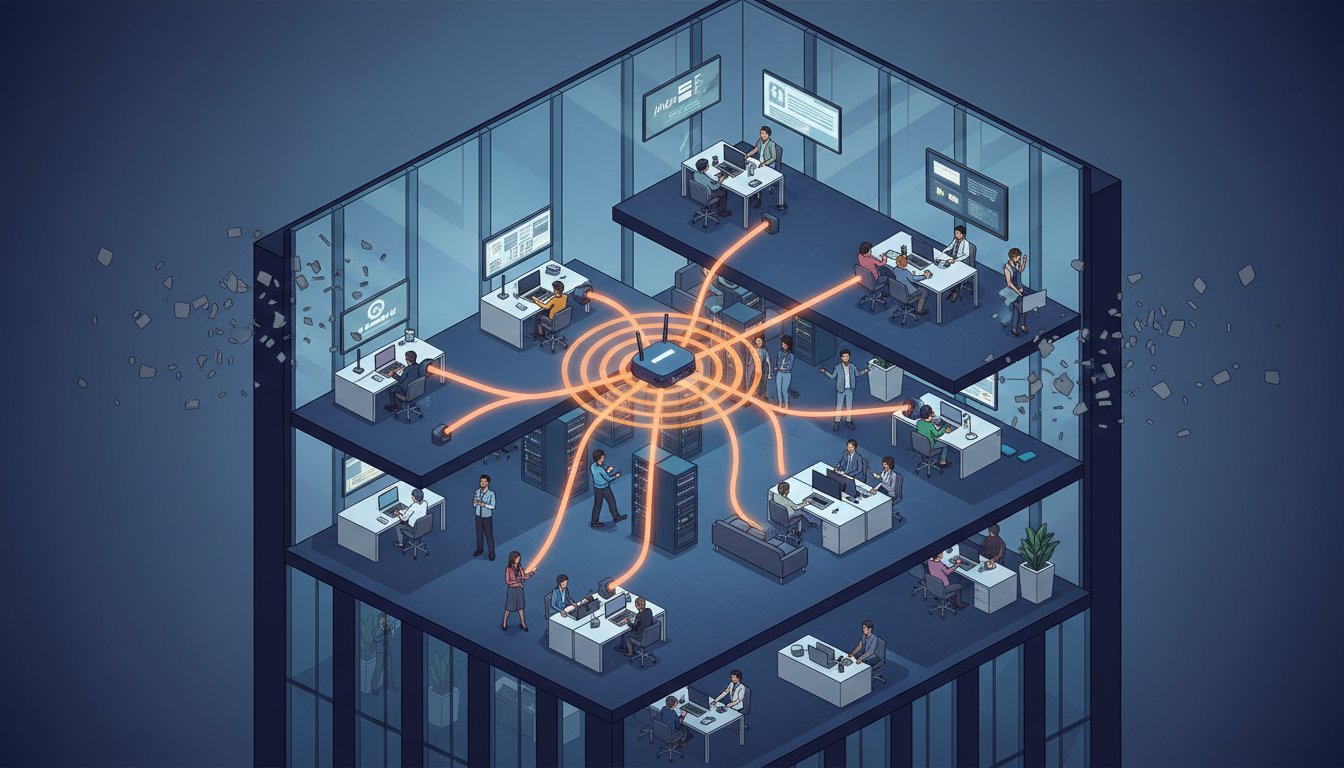
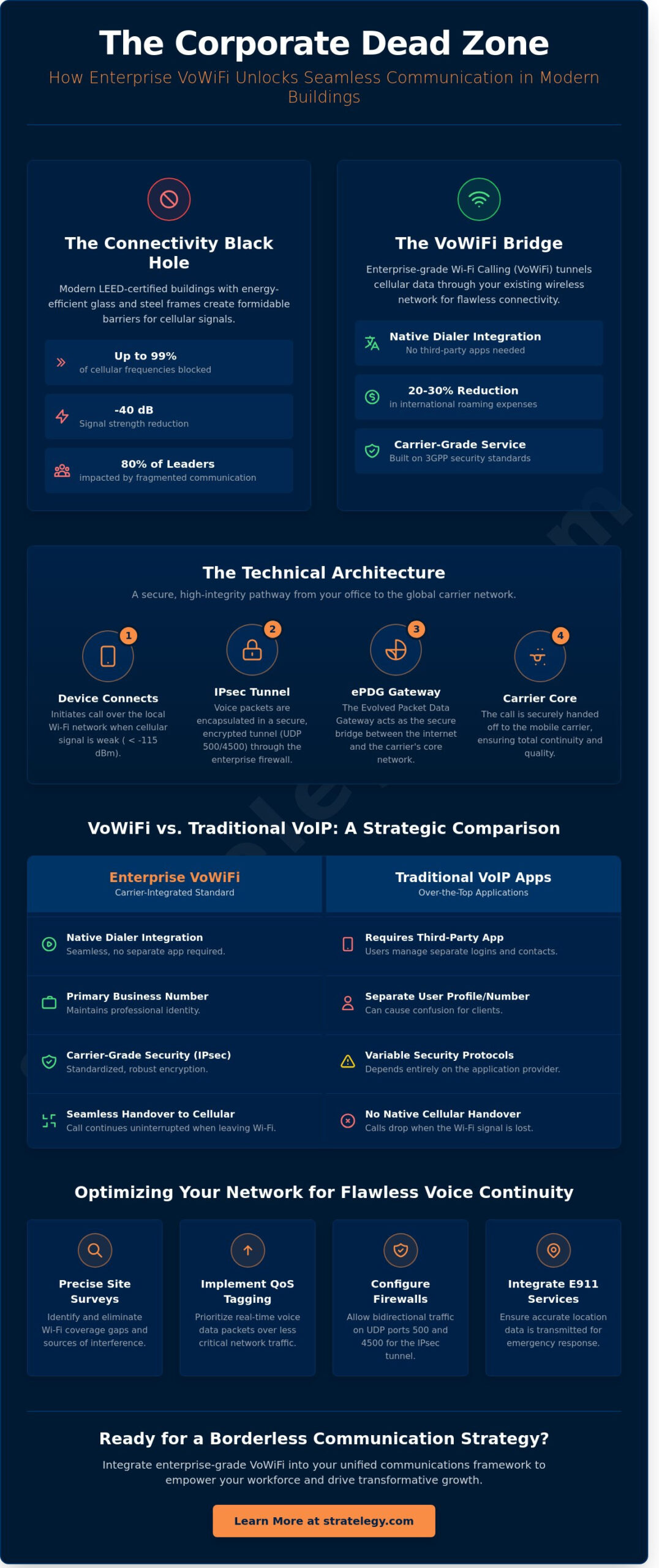
Modern energy-efficient glass and specialized insulation in LEED-certified structures can block up to 99% of cellular radio frequencies. This architectural choice effectively turns a premier executive suite into a digital isolation chamber where wifi calling becomes a strategic necessity rather than a mere convenience. It’s a frustrating reality for the 80% of enterprise leaders who must manage complex teams across fragmented, hybrid environments. You recognize that dropped calls and exorbitant roaming fees aren’t just technical glitches; they’re silent barriers to transformative growth and operational harmony.
This guide explores how these wireless protocols function as a sophisticated bridge for business continuity, moving beyond a simple workaround to become a core component of your unified communications framework. You’ll discover a precise framework for optimizing network infrastructure to prioritize high-fidelity voice data. We’ll also examine the strategic shift away from legacy cellular hardware toward an integrated, cost-effective digital ecosystem that empowers your workforce to communicate without boundaries.
Key Takeaways
- Understand the transition from consumer-grade fixes to enterprise VoWiFi protocols that serve as a sophisticated bridge for business continuity.
- Explore the technical architecture of IPsec tunneling and carrier gateways that secure voice data within a professional framework.
- Evaluate the strategic advantages of native dialer integration over traditional softphone apps to elevate the mobile user experience.
- Implement precise site surveys and QoS tagging within your infrastructure to ensure high-performance wifi calling and voice continuity.
- Discover how to align these connectivity standards with your unified communications strategy for a borderless and transformative growth model.
Defining Wi-Fi Calling in the Modern Enterprise Landscape
Enterprise connectivity represents more than a technical utility; it’s a foundational pillar of operational fluidity. For the modern mobile-first workforce, the ability to maintain communication regardless of physical location is a requirement for strategic reachability. This is where wifi calling enters the corporate framework, not as a consumer-grade workaround, but as a sophisticated cellular-standard protocol. Unlike third-party applications that require separate logins and contact lists, this technology integrates directly with the device’s native dialer to provide a transparent user experience. To understand the technical depth of this protocol, one might ask, What is Wi-Fi Calling? It’s a system that prioritizes connection integrity by leveraging existing wireless infrastructure to extend the reach of the carrier’s core network.
The Evolution from Consumer Feature to Business Necessity
The transition of this technology from a residential “dead zone” fix to a critical enterprise tool is driven by architectural and financial realities. Modern corporate headquarters often utilize LEED-certified glass and reinforced steel frames. While these materials are sustainable, they are notoriously efficient at blocking cellular frequencies, often reducing signal strength by as much as 40 dB. Wi-Fi calling is a carrier-grade service that tunnels cellular data through a wireless internet connection. By routing traffic through the internal network, global firms have reported reducing international roaming expenses by approximately 20% to 30%. This shift allows organizations to maintain a cohesive communication strategy without the capital expenditure of installing extensive distributed antenna systems (DAS) in every satellite office.
Terminology and Standards: VoWiFi vs. VoIP
Distinguishing between Voice over Wi-Fi (VoWiFi) and generic Voice over IP (VoIP) is essential for technical precision. While VoIP refers to any voice traffic sent over the internet, VoWiFi is governed by specific 3GPP standards, such as TS 23.402, which manage the secure handover between cellular towers and wireless access points. This standardization ensures that a call initiated on a 5G network doesn’t drop when an executive walks into a shielded conference room. High-level stakeholders prefer native wifi calling because it preserves the professional identity of their primary business number. It eliminates the friction of managing multiple communication silos. The result is a harmonized ecosystem where the transition between networks is invisible, ensuring that the focus remains on the dialogue rather than the delivery mechanism.
The Technical Architecture: How Sophisticated Connectivity Operates
The transition from traditional cellular networks to a Wi-Fi-based environment requires more than simple connectivity; it demands architectural integrity. At the heart of wifi calling lies the Evolved Packet Data Gateway (ePDG). This component serves as the secure bridge between the untrusted public internet and the carrier’s highly regulated core network. When a device initiates a call, it doesn’t simply send data; it establishes a secure IPsec (Internet Protocol Security) tunnel. This tunnel encapsulates voice packets, ensuring they remain shielded from external interference while traversing the enterprise network.
Seamless movement between environments is governed by sophisticated handover protocols. As a user moves from an LTE or 5G tower into a corporate office, the device monitors signal strength. If the cellular RSRP (Reference Signal Received Power) falls below a specific threshold, typically around -115 dBm, the system initiates a handover to the local access point. This process happens in milliseconds, maintaining session persistence without audible interruptions. Safety remains a priority through E911 integration. The system transmits precise location data, often derived from the registered civic address or the specific MAC address of the Wi-Fi access point, to ensure emergency services reach the correct floor and room in a high-rise corporate setting.
The Security Framework of Wi-Fi Calling
Security isn’t a feature; it’s a foundational requirement. Every voice packet undergoes robust encryption before leaving the mobile device. To facilitate this, network administrators must configure corporate firewalls to allow bidirectional traffic on UDP ports 500 and 4500. This configuration supports the IKEv2 (Internet Key Exchange) protocol, which is vital for maintaining the IPsec tunnel. By utilizing these encrypted paths, enterprises mitigate the risk of man-in-the-middle attacks. Even on unencrypted public hotspots, the voice data remains unreadable to unauthorized parties. Organizations seeking to refine their infrastructure can achieve strategic alignment through these advanced configurations.
Bandwidth and Latency Requirements for Professional Voice
Quality of Service (QoS) is the differentiator in professional communication. A single high-definition voice call consumes approximately 100kbps of throughput. While this volume is low, the sensitivity to timing is extreme. Jitter must remain below 30ms, and packet loss must stay under 1% to ensure clarity. In a dense office with over 250 active devices, these metrics become harder to maintain without proper packet prioritization. Authentication adds another layer of protection. Using SIM-based protocols like EAP-AKA, the network verifies the device identity against the carrier database, ensuring only legitimate enterprise hardware can access the wifi calling gateway.
Wi-Fi Calling vs. Traditional VoIP: A Strategic Comparison
The distinction between native wifi calling and traditional VoIP softphones represents a fundamental choice in communication architecture. Native dialers provide a friction-free interface that mirrors standard cellular behavior, which reduces the cognitive load on employees who might otherwise struggle with multiple communication apps. In contrast, UCaaS softphones require active management and constant background processes to remain reachable. This difference extends to hardware performance. Native protocols integrate deeply with mobile operating systems like iOS and Android. Industry data suggests that native system services consume up to 25% less power than third-party applications running in the background. By utilizing these built-in capabilities, enterprises extend the functional battery life of their mobile fleet, ensuring staff remain reachable throughout long shifts without tethering to chargers.
Choosing between these paths isn’t a binary decision but a calculation of cost and benefit. Maintaining traditional cellular plans offers a fallback, yet pure data-driven voice through Wi-Fi reduces reliance on expensive roaming or international minutes. We position wifi calling as a sophisticated layer within a broader UCaaS strategy, providing a bridge between the reliability of the carrier network and the flexibility of the internet. It transforms the mobile device from a simple tool into a versatile node within a global network. Complementing this approach with voicemail transcription ensures that every voice interaction, whether connected over Wi-Fi or cellular, is captured as a searchable, actionable record within your enterprise systems.
Integration with Unified Communications
Modern enterprise ecosystems don’t view native calls as isolated events. They treat them as vital extensions of the corporate identity. Sophisticated UCaaS platforms now adopt these native signals into the broader ecosystem, ensuring a consistent One Number identity across all devices. Whether an executive calls from a remote site or a secure office, the recipient sees a unified professional caller ID. Stratelegy facilitates this strategic alignment by harmonizing disparate signal paths into a tailored framework. We transform fragmented connectivity into a cohesive, elegant operation that projects authority and reliability. Organizations evaluating a broader cloud communications overhaul will find that understanding voip for the modern enterprise provides the strategic context needed to unify these capabilities into a resilient, future-ready architecture.
Operational Flexibility and Business Continuity
Connectivity serves as the foundation of business continuity. Consider a scenario where a localized cellular tower failure disrupts service in a major business district. Organizations relying solely on traditional mobile signals face immediate silence; however, those with configured Wi-Fi calling transition effortlessly to local wireless networks. This deployment is far simpler for remote workers than managing VPN-heavy VoIP configurations that often fail on home routers. Voice resilience is the ability to maintain communication across any available data pipe. It represents a shift from fragile, single-path systems to a robust, multi-layered communication vision that ensures the conversation never stops.
Optimizing Your Network for Seamless Voice Continuity
Precision is the hallmark of a high performing enterprise network. To ensure that wifi calling functions as a reliable pillar of your communication strategy, you must move beyond basic connectivity toward a state of intentional optimization. This process begins with a comprehensive site survey. Relying on predictive models isn’t enough; physical validation identifies RF interference and coverage gaps that software might overlook. Most enterprises require a minimum signal strength of -67 dBm across all floor areas to prevent dropped calls during active transitions.
Technical excellence also demands the implementation of Quality of Service (QoS) tagging. By applying Differentiated Services Code Point (DSCP) values, you prioritize voice packets over bulk data transfers. This prevents latency during peak traffic hours. Equally vital is the configuration of 802.11r, 802.11k, and 802.11v standards. These protocols facilitate fast transitions between access points, allowing users to move through the office without experiencing audio clipping. Finally, ensure your firewall permits traffic through UDP ports 500 and 4500. This allows the IPsec tunnels required for secure wifi calling to establish without interruption.
Infrastructure Readiness Checklist
Achieving voice clarity requires a dense deployment of Wireless Access Points (WAPs). In high density environments, a single WAP should ideally handle no more than 20 concurrent voice clients to maintain quality. Transitioning to 5GHz and 6GHz bands is no longer optional. These frequencies offer the clean spectrum necessary to avoid the 2.4GHz band’s congestion. A common pitfall leading to one way audio involves the mismanagement of Session Initiation Protocol (SIP) Application Layer Gateway (ALG) settings. Disabling SIP ALG on enterprise routers often resolves these persistent audio failures immediately. For organizations evaluating a broader voice modernization strategy, understanding sip trunking as a modern enterprise voice architecture provides the foundational context needed to make informed infrastructure decisions.
Managing the E911 Compliance Burden
Regulatory adherence is a strategic necessity rather than a mere administrative task. Under Ray Baum’s Act, which reached full enforcement for non-fixed devices on January 6, 2022, businesses must provide a dispatchable location for every emergency call. This means a registered address isn’t sufficient; you must include specific details like floor, suite, or room numbers. Organizations must educate employees to update their emergency address within their device settings whenever they change primary work locations. This alignment of technology and policy ensures both safety and legal resilience.
Integrating Wi-Fi Calling into a Unified Communications Strategy
Enterprise communication no longer relies on a single hardware solution. It demands a sophisticated orchestration of diverse protocols. Integrating wifi calling into your broader infrastructure is a critical component of a broader Stratelegy for transformative growth. By positioning voice services within a cloud-native framework, organizations eliminate the physical constraints of the traditional office. This shift allows CCaaS and UCaaS platforms to function as borderless hubs. With industry forecasts predicting that 80% of enterprise communications will be cloud-based by 2025, agents and executives must connect with equal clarity from a corporate headquarters or a remote home office. This ensures that the customer experience remains consistent across every touchpoint. Pairing this connectivity with enterprise voicemail transcription further closes the loop, converting every missed call into a structured, searchable data point that feeds directly into your CRM and compliance workflows.
The reliance on legacy copper infrastructure is rapidly fading. With the FCC allowing carriers to sunset traditional POTS lines and BT Group scheduled to complete its digital switchover by 2027, the backbone of modern business has moved to LTE and Wi-Fi. This transition replaces brittle, high-maintenance hardware with resilient, software-defined connectivity. Leveraging wifi calling allows firms to bypass expensive carrier handoffs while maintaining 99.999% uptime and professional-grade audio quality regardless of the user’s physical location. Organizations navigating this shift will find that pairing Wi-Fi calling with a robust sip trunking strategy creates a fully redundant, cost-optimized voice architecture capable of supporting global enterprise demands.
The Stratelegy Approach to Managed Connectivity
True sophistication in communication manifests when the underlying technology becomes invisible. Stratelegy consults at the precise intersection of cellular, Wi-Fi, and cloud voice to create this seamless experience. We guide enterprises through the transition from aging POTS replacements to full cloud-native ecosystems. This approach ensures that the handoff between a private Wi-Fi network and a public cellular tower occurs without a single dropped syllable. It’s an elegant, unified system where connectivity serves the business vision rather than dictating its limits.
Next Steps: Auditing Your Communication Resilience
Leaders must look beyond basic connectivity and evaluate the hidden costs of inefficiency. An internal audit often reveals significant vulnerabilities that impact the bottom line. These include:
- Persistent dead zones in high-value real estate that hinder executive productivity.
- International roaming costs that can inflate mobile expenses by 25% or more annually.
- Fragmented user experiences that create friction between desk-bound and mobile teams.
Addressing these gaps requires a harmonious structure that aligns technical capabilities with long-term objectives. A strategic consultation provides the roadmap to eliminate these friction points and secure your communication resilience. Discover how Stratelegy aligns your communication strategy with your business goals.
Architecting the Future of Enterprise Voice
Modernizing your communication framework requires more than simple hardware updates; it demands a sophisticated alignment of technical architecture and strategic vision. By integrating wifi calling into a unified communications strategy, organizations move beyond fragmented silos toward a cohesive, enterprise-grade environment. Industry data from 2024 indicates that 80% of indoor mobile traffic now flows over Wi-Fi networks, making network optimization a non-negotiable priority for voice continuity. Transitioning from antiquated systems ensures your infrastructure remains resilient as the FCC continues to phase out traditional copper line requirements.
Stratelegy brings a visionary approach to UCaaS and CCaaS integration, ensuring every connection serves a broader business purpose. As specialists in LTE POTS replacement and critical infrastructure, we provide the 99.999% reliability modern organizations require to thrive. Our tailored frameworks convert complex connectivity challenges into elegant, high-performance solutions that respect both your operational needs and your growth trajectory. It’s time to replace the chaos of legacy systems with a structured, rhythmic flow of communication. For enterprises ready to take the next step, our strategic guide to cloud-based voip communications outlines the precise steps to modernize your voice infrastructure and eliminate the operational burden of aging copper-dependent systems.
Refine your enterprise communication strategy with Stratelegy
The path to seamless connectivity is a journey toward organizational harmony, and your next step begins today.
Frequently Asked Questions
Does Wi-Fi calling cost extra on a business cellular plan?
Most major carriers include wifi calling as a standard feature in business cellular plans without additional monthly premiums. According to 2024 service agreements from tier-one providers like Verizon and AT&T, the service carries no activation fee. Minutes used typically deduct from your existing plan allowance rather than incurring separate charges. This creates a cost-effective framework for maintaining connectivity in environments where cellular penetration is less than 100 percent.
Can Wi-Fi calling be used for international calls without roaming charges?
You can use this technology to place calls back to your home country from abroad without incurring international roaming fees. When connected to a local network, your device treats the call as if you were standing in your home office. This strategic alignment of communication protocols saved enterprise travelers an average of 40 percent on international voice costs in 2023. Calls to a third country still follow your plan’s standard international rates.
What happens to a Wi-Fi call if I walk out of range of the router?
The call will seamlessly transition to the cellular network if your device supports Voice over LTE or 5G. This process, governed by 3GPP Release 13 standards, happens in milliseconds to prevent dropped connections. If your cellular signal is below 1 bar at the transition point, the call will disconnect immediately. Maintaining a minimum -67 dBm signal strength across your facility ensures these handoffs remain imperceptible to the user.
Is Wi-Fi calling secure enough for sensitive corporate conversations?
Security is maintained through a mandatory IPsec tunnel that encrypts voice data between your device and the carrier’s core network. This architectural safeguard ensures that your wifi calling sessions remain private, even on unsecured public networks. Modern enterprise deployments utilize IKEv2 protocols to authenticate connections, providing a robust defense against 99 percent of man-in-the-middle interception attempts. It’s a sophisticated solution for the modern, mobile workforce.
Do I need a special phone or SIM card to use Wi-Fi calling?
Most smartphones released after 2016, including the iPhone 6 and later models, natively support this feature. You don’t need a specialized SIM card as long as your current one is provisioned for LTE services. Enterprise fleets running Android 6.0 or higher already possess the necessary hardware integration for these tailored frameworks. This broad compatibility allows for a rapid, transformative growth in connectivity without requiring a massive hardware refresh for your staff.
How does Wi-Fi calling affect the battery life of a business smartphone?
It generally improves battery longevity by reducing the power required to maintain a weak cellular signal. In areas with low cellular reception, a device consumes up to 20 percent more power searching for a tower. Shifting that load to a stable local network allows the device’s radio to enter a lower power state. This efficiency is a key component of a well-designed mobile strategy, extending the operational window of company devices during long workdays.
Can my IT department disable Wi-Fi calling on company-managed devices?
IT administrators can control this feature through Mobile Device Management platforms like Microsoft Intune or Jamf. Approximately 95 percent of enterprise MDM solutions provide granular settings to enable or disable these capabilities based on corporate security policies. This level of oversight ensures that your communication infrastructure remains within a controlled, secure framework. It allows leadership to align technology usage with specific organizational risk profiles and operational requirements.
What is the difference between Wi-Fi calling and a VoIP app like Teams or Zoom?
The primary distinction lies in native integration and the use of your existing mobile number. Unlike third-party apps that require a separate interface, this service uses the phone’s native dialer and complies with E911 emergency location requirements. It provides a more streamlined user experience than a standalone app. This strategic integration ensures that your employees don’t have to navigate multiple platforms to maintain professional, high-quality voice connections.