
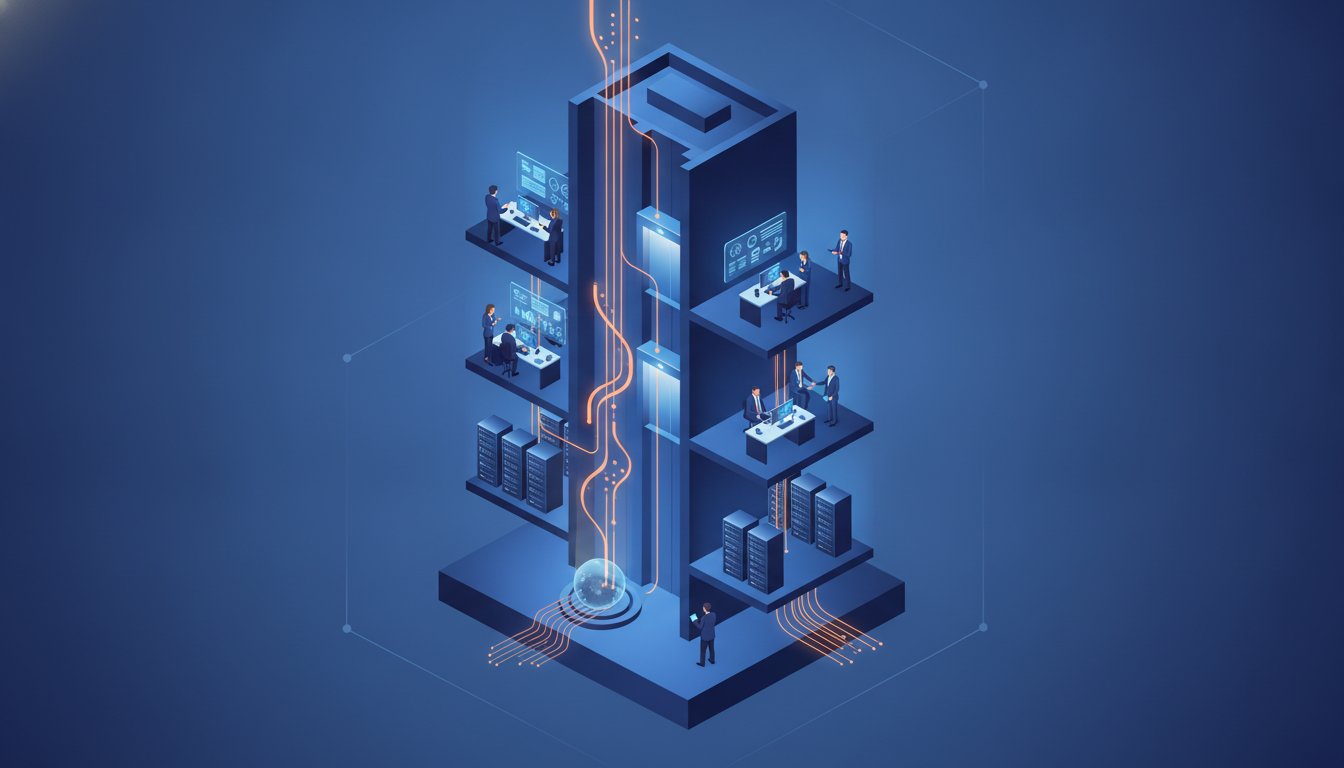
What if the greatest risk to your 2026 communication upgrade isn’t the cloud software itself, but the legacy elevator phone it leaves behind? Business owners often face a silent anxiety when migrating to modern UCaaS and CCaaS platforms. You worry about system downtime during the cutover and whether your critical fire alarms or emergency lines will fail after the switch. It’s a valid concern, especially when 78% of employees already feel overwhelmed by digital notifications. A successful change management for new communication platform strategy must treat the transition as an engineering discipline rather than just a software update.
Key Takeaways
- Understand why the sunsetting of copper lines makes strategic change management for new communication platform rollouts a requirement for business continuity.
- Learn how to execute a comprehensive infrastructure audit that identifies every endpoint to ensure critical devices like mechanical room phones remain functional.
- Establish a robust governance and security architecture that meets 2026 regulatory standards before your first user logs in.
- Discover how to mitigate employee resistance by focusing on core workflows first rather than overwhelming the team with feature fatigue.
- Calculate the concrete ROI of your transition by tracking platform utilization rates and the elimination of legacy copper line fees.
Why Strategic Change Management for New Communication Platforms is Mandatory in 2026
Successful communication rollouts require more than a software license. In the context of UCaaS and CCaaS, change management for new communication platform initiatives represents the systematic alignment of technology, people, and critical physical infrastructure. It is an engineering discipline. Organizational change management ensures that the shift from legacy hardware to cloud-based agility doesn’t leave gaps in your operational logic. Without this structured approach, the transition risks becoming a series of expensive technical patches rather than a cohesive solution.
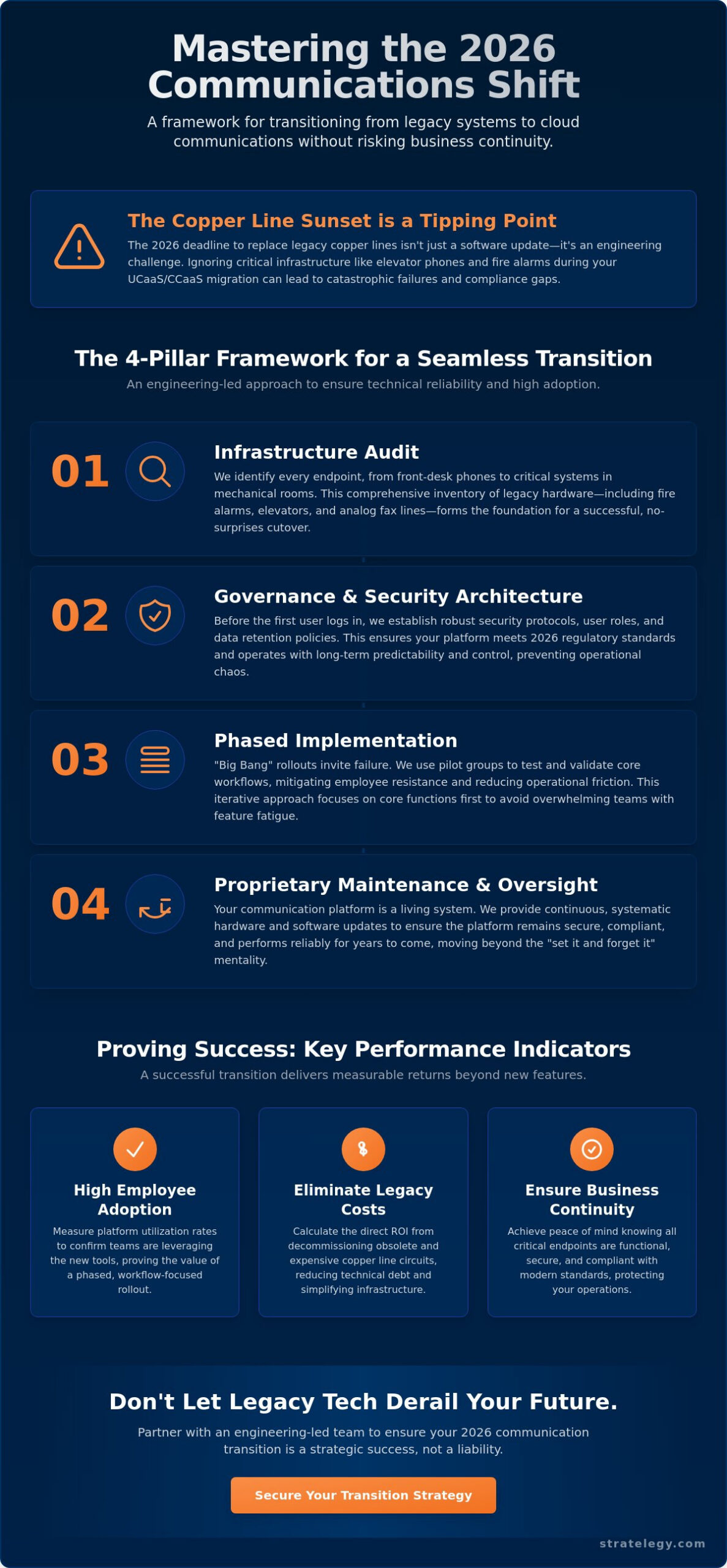
The year 2026 marks a definitive tipping point for enterprise connectivity. The sunsetting of copper lines has transformed platform transitions from a convenience into a matter of business continuity. Failing to manage this change creates more than just a temporary drop in productivity. It opens the door to security vulnerabilities and significant compliance gaps. When you achieve high adoption rates, you aren’t just checking a box. You’re actively eliminating technical debt and reducing legacy maintenance costs by decommissioning obsolete circuits.
The Risk of Ignoring Critical Infrastructure
Your fire alarms and elevator phones cannot be an afterthought. These endpoints often rely on legacy analog connections that modern UCaaS platforms don’t natively support. Integrating pots line replacement into your rollout strategy is essential for life safety uptime. Neglecting these foundational elements during a transition invites catastrophic failure in an emergency. Engineering-led change management accounts for every endpoint, ensuring that your safety systems are as modern and reliable as your desktop apps.
Shifting from Vendor to Strategic Partner
A software-only approach often fails in complex enterprise environments. You need a partner who understands foundational engineering, not just seat licenses. Strategic partners anticipate problems before they occur. They focus on structural reliability, security, and governance to ensure your infrastructure remains predictable and stable for years to come. For mid-size companies, integrating this technical stability with high-level growth objectives is where Carter Strategies adds significant value by aligning business strategy with technology. This partnership model moves the conversation away from superficial features and toward long-term operational health.
The 4-Pillar Framework for a Seamless Communication Transition
Successful change management for new communication platform rollouts treats deployment as a structural lifecycle. We move away from the “set it and forget it” mentality that plagues many software-only implementations. This framework ensures your transition is grounded in engineering precision and long-term stability. By following a disciplined approach, you eliminate the unpredictability often associated with cloud migrations.
- Step 1: Infrastructure Audit. We identify every endpoint. This includes everything from the front desk reception to the mechanical room phone.
- Step 2: Governance & Security Architecture. We build a platform that meets 2026 regulatory standards before the first user logs in.
- Step 3: Phased Implementation. The “Big Bang” rollout is a relic of the past. We advocate for pilot groups to validate workflows and reduce operational friction.
- Step 4: Proprietary Maintenance & Oversight. We ensure the platform stays current through systematic hardware and software updates.
Auditing Beyond the Desk Phone
A comprehensive inventory of legacy systems is the foundation of a successful cutover. Many organizations overlook specialized hardware that relies on the communication backbone. A modern audit must also account for document exchange workflows. Integrating virtual faxing into your digital backbone ensures that no legacy paper-trail process is left behind during the migration to UCaaS or CCaaS.
Establishing Governance Standards
Defining user roles and access controls early in the process provides peace of mind. Governance isn’t just about security; it’s about operational predictability. We establish data retention policies and communication protocols that align with your financial and regulatory requirements. This proactive discipline prevents the platform from becoming a chaotic environment of unmanaged features. If you’re ready to secure your infrastructure, consider how our UCaaS and CCaaS solutions provide the structural reliability your business requires.
Overcoming Resistance: Solving the Human and Technical Friction
Employee resistance is the most common point of failure during a technology transition. The most frequent objection is simple: “The old system worked fine.” While legacy hardware might provide a reliable dial tone, it often carries hidden technical debt and operational silos. Effective change management for new communication platform rollouts requires countering this mindset with evidence of obsolescence. You must demonstrate that staying with legacy systems is a risk to business continuity, not a safe choice.
Avoid the “Feature Fatigue” trap. Launching 100 new features on the first day is a strategic error. Instead, focus on core workflows that provide immediate efficiency gains. Leveraging unified communications as a service allows you to simplify the user experience by consolidating disparate tools into a single, managed interface. By pacing the introduction of advanced features, you protect your team from burnout and ensure higher long-term adoption rates.
Addressing the Legacy Mindset
Educate your workforce on why a simple dial tone is no longer the benchmark for success. Modern business requires integrated data, mobility, and secure collaboration. We recommend building a “Champion Network” of internal influencers who can drive peer-to-peer training. These champions help connect the new platform to individual growth and daily productivity, making the transition feel like an upgrade rather than a burden. This methodical approach transforms skeptics into advocates.
Technical Reliability as a Trust Builder
Zero-downtime migrations are your most effective change management tool. If the system fails during the initial cutover, you lose the trust of your users instantly. We utilize LTE failover to provide a critical safety net, ensuring that communication remains uninterrupted even if the primary circuit encounters issues. This technical discipline reinforces the sense of peace of mind we promise. If you want to eliminate the friction of your next rollout, contact our technical experts today to discuss a managed transition strategy.
Measuring Success: Metrics That Prove Adoption and ROI
Quantifiable data must drive your evaluation of a new rollout. We prioritize hard engineering metrics over superficial engagement numbers like email open rates. Effective change management for new communication platform initiatives is validated through specific platform utilization rates and the systematic decommissioning of legacy circuits. If your organization still pays for active copper lines six months after a cutover, the transition is incomplete. We track the physical removal of technical debt to ensure your ROI is realized in full.
Financial impact is found in the elimination of redundant maintenance contracts and high analog line fees. These savings provide immediate relief to your operational budget. Beyond direct costs, we measure success through the reduction of IT support tickets. A stable, well-governed platform results in fewer system-wide disruptions and a more confident workforce. Stratelegy delivers these measurable outcomes through managed cloud contact center and UCaaS solutions that prioritize structural reliability over novelty.
The Long-Term Value of Predictability
Systematic hardware updates prevent the destructive “obsolescence cycle” that plagued legacy environments. Our approach includes ongoing oversight to maintain a high-performance communication environment. This proactive lifecycle management ensures that your infrastructure remains secure and compliant as regulatory standards evolve. By treating your communication stack as a managed asset, you gain the predictability needed for long-term financial planning.
Conclusion: Building for the Next Decade
Your business needs more than a new software tool; it requires a disciplined engineering transition. A successful rollout secures your infrastructure against failure and empowers your team to communicate without friction. Don’t leave your business continuity to chance. Partner with experts who understand the intersection of cloud innovation and infrastructure stability. Change management is the proactive elimination of technical and operational friction.
Secure Your Communication Infrastructure for 2026
Modernizing your enterprise communication stack is a structural necessity rather than a simple software upgrade. We have discussed how a disciplined framework ensures that critical endpoints remain online while your team adopts new digital tools. By decommissioning legacy technical debt and establishing clear governance, you move your business toward long-term operational predictability. A comprehensive change management for new communication platform strategy is the only way to guarantee that your infrastructure remains a source of peace of mind.
Stratelegy offers the specialized technical niche expertise required to bridge the gap between legacy reliability and cloud innovation. We utilize proprietary maintenance frameworks and LTE-based POTS replacement solutions to provide 100% uptime for your most critical life-safety lines. You don’t have to face the transition alone. Our engineering-first approach prioritizes structural stability and security to ensure your business stays connected through every phase of the rollout.
Consult with a Stratelegy Engineer to Plan Your Seamless Transition today. It’s time to build a high-performance communication environment that is engineered for the next decade.
Frequently Asked Questions
What is the most common mistake in change management for new communication platforms?
The most common mistake is treating the rollout as a simple software update rather than a comprehensive infrastructure shift. Organizations often overlook critical non-desk endpoints like warehouse phones, paging systems, or mechanical room lines. This oversight leads to technical failures during the cutover. A successful change management for new communication platform strategy must account for every physical connection to prevent operational gaps and ensure long-term stability.
How long does a typical enterprise UCaaS transition take?
A typical enterprise UCaaS transition generally spans three to six months. This timeline accounts for the initial infrastructure audit, governance configuration, and phased pilot rollouts. Larger organizations with complex multi-site requirements may require additional time for LTE failover testing and full legacy circuit decommissioning. Rushing this process often results in poor adoption and technical instability that compromises your ROI.
Can we keep our existing fire and life safety systems when moving to a new cloud platform?
You can maintain your existing fire and life safety systems by utilizing LTE POTS replacement technology. Modern cloud platforms don’t natively support analog safety lines, so a dedicated hardware bridge is necessary. This approach ensures your fire alarms and elevator phones remain compliant with local regulations while providing the reliability of a digital backbone. It’s a critical component of any technical transition that prioritizes safety and compliance.
How do we handle employees who refuse to use new communication features?
Address employee resistance by focusing on core workflows that provide immediate efficiency gains. If users feel overwhelmed by feature fatigue, they’ll often retreat to legacy habits. We recommend identifying internal influencers to serve as a “Champion Network” for peer-to-peer support. Demonstrating how the new platform solves specific daily frustrations is more effective than mandatory training sessions or high-level corporate announcements.
What are the key KPIs for measuring a successful communication platform rollout?
Key performance indicators should focus on platform utilization rates and the successful decommissioning of legacy circuits. Tracking the reduction in IT support tickets following the cutover provides a clear measure of technical stability. Additionally, measuring the financial impact of eliminated copper line fees offers a concrete ROI. These metrics provide a data-driven view of your change management for new communication platform success beyond simple user login counts.