
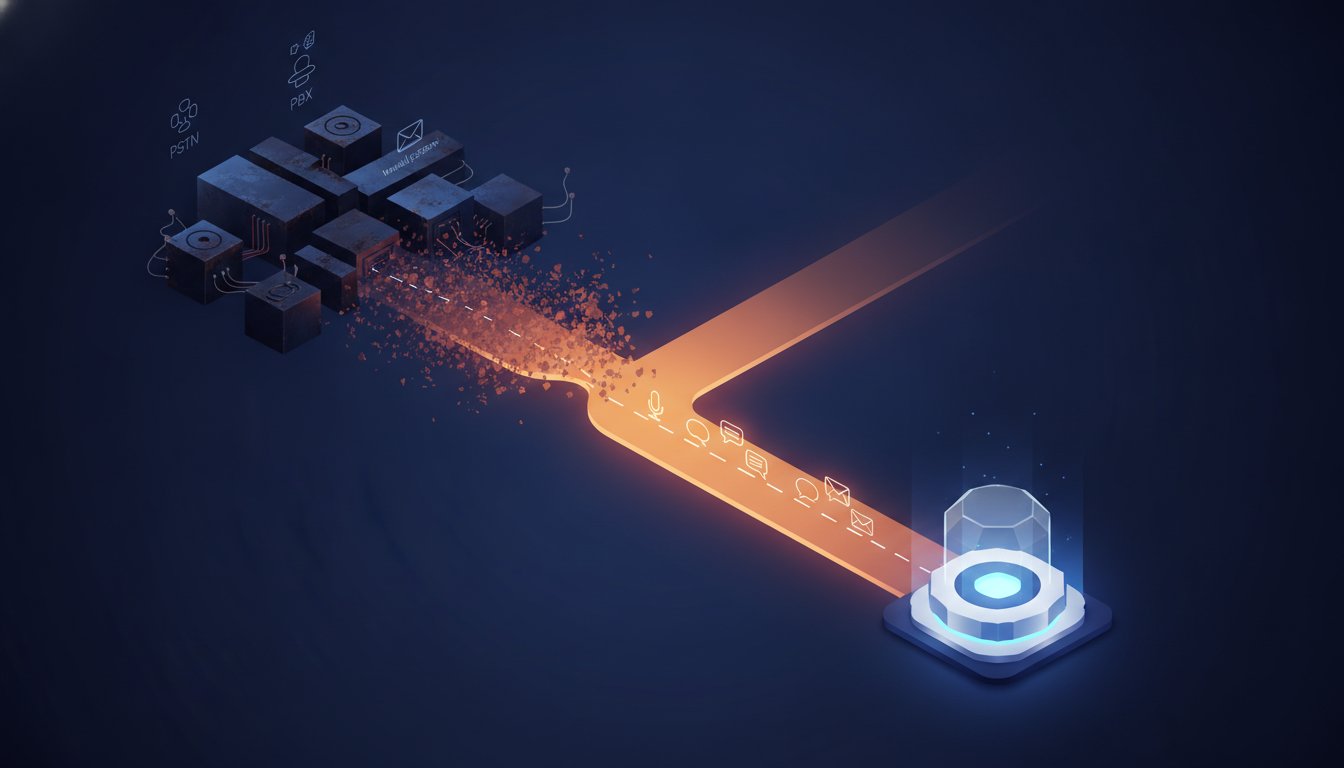
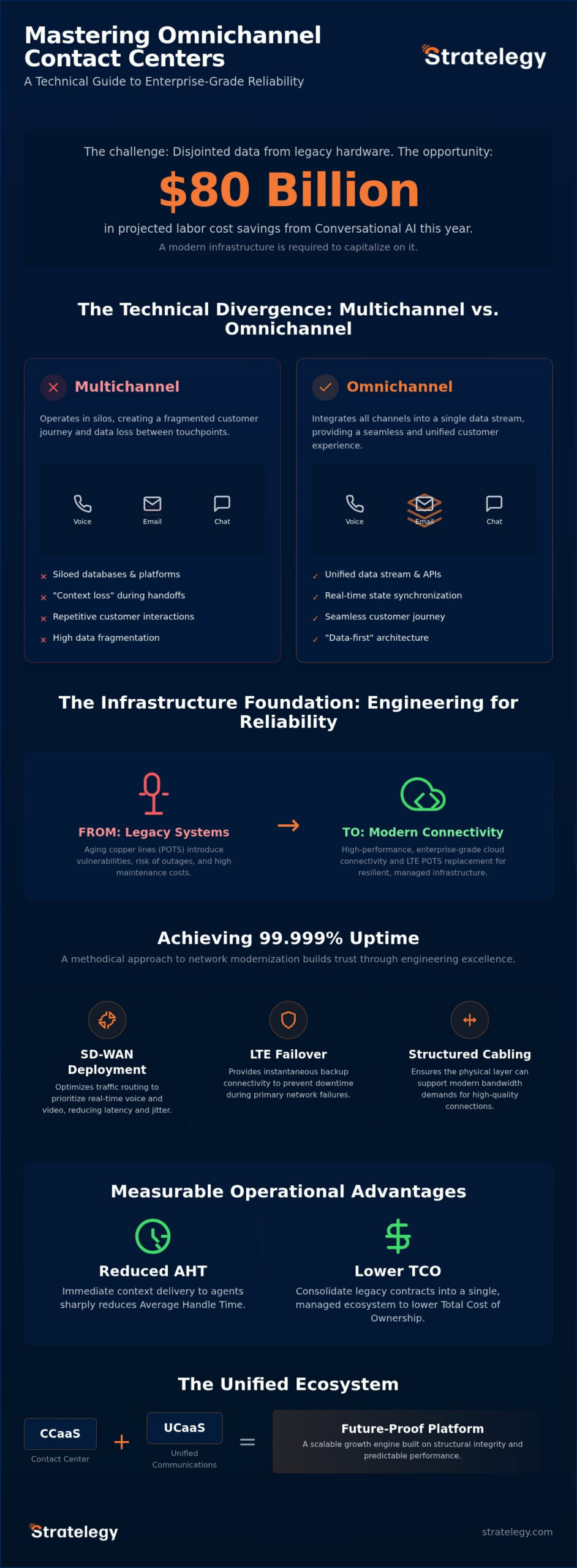
In 2026, a seamless customer experience isn’t a software feature; it’s a foundational engineering requirement. You’re likely managing the rising costs of legacy hardware while facing the persistent friction of disjointed data across voice and digital channels. It’s a frustrating balance between maintaining stability and keeping pace with a market where conversational AI is forecasted to save $80 billion in labor costs this year alone.
This guide helps you master the technical architecture of omnichannel contact center solutions to ensure enterprise-grade reliability. We’ll show you how to move beyond the fear of service outages during cloud transitions by building a future-proof platform grounded in infrastructure stability. You’ll learn to replace aging systems with a predictable, high-uptime environment that satisfies both regulatory compliance and modern customer expectations. We’ll examine the specific hardware update policies and maintenance frameworks necessary to transform your communication silos into a unified, high-performance ecosystem.
Key Takeaways
- Distinguish between siloed multichannel systems and true omnichannel integration to ensure seamless data continuity across every customer touchpoint.
- Engineer foundational reliability into your omnichannel contact center solutions by replacing aging copper lines with high-performance, enterprise-grade cloud connectivity.
- Follow a systematic framework for auditing existing communication silos and evaluating CCaaS vendors based on rigorous security and governance standards.
- Unify your CCaaS and UCaaS platforms to create a scalable, future-proof ecosystem that prioritizes structural integrity and predictable operational performance.
Defining Omnichannel Contact Center Solutions in the 2026 Enterprise Landscape
Communication infrastructure is undergoing a fundamental shift. Modern Omnichannel strategies represent more than just adding communication options. It’s the technical integration of voice, SMS, email, and social messaging into a single, unified data stream. Leading omnichannel contact center solutions have transitioned from “interface-first” designs to “data-first” architectures. This ensures the underlying data remains the primary source of truth, regardless of which channel a customer uses. Enterprise-grade reliability now depends on state persistence, which maintains the customer’s journey across every transition.
Omnichannel vs. Multichannel: The Technical Divergence
Multichannel setups often rely on siloed databases. This creates “context loss” during agent handoffs because each platform operates independently. In contrast, omnichannel state management prevents repetitive customer interactions by synchronizing the conversation history across all digital and voice touchpoints in real time. Unified APIs act as the essential bridge, translating disparate communication protocols into a coherent record. This architectural discipline eliminates the friction of customers having to repeat their account details when moving from a chatbot to a live agent. It’s an engineering solution to a data fragmentation problem.
Strategic Benefits for Enterprise Growth
These omnichannel contact center solutions yield measurable operational advantages. Enterprises see a sharp reduction in Average Handle Time (AHT) through immediate context delivery to the agent’s desktop. You can also lower your Total Cost of Ownership (TCO) by consolidating fragmented legacy vendor contracts into a single, managed ecosystem. This infrastructure serves as a natural extension of unified communications as a service, providing a broader growth engine for organizations that prioritize structural reliability over superficial features.
The Infrastructure Foundation: Engineering Reliability into Customer Engagement
Modern contact center performance is only as reliable as the underlying network infrastructure. Organizations often prioritize the user interface while ignoring the physical connectivity that powers it. Running omnichannel contact center solutions on aging copper lines introduces systemic vulnerabilities that software cannot fix. This technical debt creates a persistent risk of service outages and high maintenance costs. Addressing the fear of obsolescence requires a shift from superficial software updates to foundational engineering modernization.
LTE POTS Replacement as a Contact Center Prerequisite
Transitioning to cellular-based LTE connectivity provides a redundant failover that legacy systems simply cannot offer. This move is essential for maintaining fire, life safety, and critical voice paths during primary network failures. A strategic POTS line replacement ensures that high-volume contact centers remain stable even when traditional circuits fail. It’s a proactive step toward lifecycle management that replaces fragile hardware with resilient, managed connectivity.
Predictable Performance through Network Modernization
Latency and jitter are the silent killers of omnichannel voice quality. When data packets drop, synchronized state management fails, leading to disjointed customer experiences. To achieve 99.999% uptime, enterprises must integrate advanced network protocols:
- SD-WAN Deployment: Optimizes traffic routing to prioritize real-time voice and video data.
- LTE Failover: Provides instantaneous backup connectivity to prevent downtime during fiber cuts.
- Structured Cabling: Ensures the physical layer can support 2026 bandwidth demands.
This methodical approach ensures that your omnichannel contact center solutions operate within a high-uptime environment, building trust through engineering excellence rather than just sales promises. If you’re looking to stabilize your environment, you can consult with our technical specialists to evaluate your current network health.
Evaluating and Implementing Omnichannel Frameworks for Global Scale
Implementing omnichannel contact center solutions at an enterprise scale requires a disciplined, four-step methodology. First, audit existing communication silos and data leakage points to identify where context is lost during channel shifts. Second, evaluate CCaaS vendors based on rigorous security, governance, and deep integration capabilities. Third, execute a phased migration from legacy hardware to cloud-native platforms to prevent service outages. Finally, establish proprietary maintenance frameworks to manage ongoing hardware and software updates, ensuring your omnichannel contact center solutions remain resilient. This methodical approach builds the necessary structural integrity for high-volume environments and helps you navigate the complexity of lifecycle management.
Avoiding Common Integration Gaps
Many organizations settle for “bolted-on” digital channels that don’t share a common data schema. This creates fragmented customer profiles and reporting blind spots. Real-time reporting in omnichannel contact center reporting software is essential for providing immediate visibility into cross-channel performance metrics. You must also ensure strict compliance with PCI-DSS v4.0.1 and GDPR during every stage of the migration to protect sensitive enterprise data.
The Role of Technical Partnership
Complex enterprise migrations demand more than a standard vendor-client relationship. You need a strategic specialist who understands the foundational engineering required for global scale. Selecting a partner that prioritizes structural reliability ensures your cloud contact center framework is built for longevity. This approach helps you anticipate vulnerabilities before they impact operations. If you’re ready to modernize, contact our engineering team for a technical assessment.
Stratelegy’s CCaaS Approach: Governance, Maintenance, and Predictable Performance
Stratelegy approaches omnichannel contact center solutions with a disciplined engineering mindset. We prioritize structural reliability over superficial software features. Our methodology integrates CCaaS and UCaaS into a single, scalable platform designed for modern enterprise demands. By deploying these omnichannel contact center solutions within a managed ecosystem, we utilize proprietary maintenance frameworks to anticipate infrastructure vulnerabilities before they disrupt your daily operations. This proactive stance eliminates the fear of obsolescence through systematic hardware and firmware update policies that protect your long-term investment.
Foundational Engineering for Communication Excellence
We bridge the gap between legacy systems and cloud-based connectivity through rigorous technical oversight. LTE POTS replacement remains a critical component of this transition. It maintains essential life safety and fire system connectivity while you modernize your broader voice paths. By securing the physical layer first, we ensure your cloud migration doesn’t compromise foundational security or regulatory compliance. Our engineers act as strategic advisors who have already anticipated the problems you haven’t encountered yet.
Achieving Predictability in a Volatile Market
Predictability is the cornerstone of enterprise-grade customer engagement. Our focus on security and governance provides the peace of mind required to manage global support teams effectively. We emphasize long-term lifecycle management rather than short-term fixes. This approach aligns your contact center with your broader unified communications and collaboration strategy. By treating communication as a structural asset, we deliver a stable environment where agents and customers interact without friction. Excellence is achieved through engineering discipline rather than simple software deployment.
Securing Your Communication Infrastructure for 2026 and Beyond
Modernizing your communication environment requires more than a software upgrade. It demands a foundational shift in how you view structural reliability and data continuity. We’ve explored how omnichannel contact center solutions depend on synchronized state management and resilient network layers to eliminate customer friction. By replacing aging copper with enterprise-grade LTE POTS alternatives, you secure critical life safety systems while preparing for global scale.
Stratelegy serves as your technical advisor in this transition. We utilize proprietary maintenance and hardware update frameworks to ensure your platform remains future-proof. As specialists in critical infrastructure modernization, we prioritize security and governance over superficial features. Achieving excellence through engineering discipline provides the peace of mind your organization needs to thrive. Schedule a Strategic Infrastructure Audit with Stratelegy to begin your modernization journey. Your path to a predictable, high-uptime environment starts with a solid foundation.
Frequently Asked Questions
What is the difference between multichannel and omnichannel contact center solutions?
Multichannel systems operate in silos, meaning customer data doesn’t move between email and voice calls. True omnichannel contact center solutions synchronize state management across every touchpoint to provide a unified data stream. This integration prevents repetitive interactions by maintaining context during channel handoffs. It’s a structural shift from managing disconnected platforms to engineering a single, coherent customer journey.
Can omnichannel contact center software integrate with my existing legacy hardware?
Modern omnichannel contact center solutions often utilize hybrid frameworks to bridge the gap with legacy hardware. Strategic specialists use unified APIs and specialized gateways to integrate existing on-premise components into cloud-native environments. This approach protects your current capital investments while enabling a transition to modern digital protocols. It requires a disciplined audit to ensure that hardware update policies align with the new software architecture.
How does LTE POTS replacement impact my contact center’s reliability?
LTE POTS replacement significantly enhances reliability by providing a cellular-based failover for critical voice and life safety paths. Legacy copper lines are increasingly prone to failure and high maintenance costs. Transitioning to LTE-based alternatives ensures your contact center remains operational during primary network outages. This modernization step is essential for maintaining the high-uptime environment required for enterprise-grade communication and regulatory compliance.
What are the key security requirements for cloud-based omnichannel solutions in 2026?
In 2026, security mandates focus on rigorous data governance and encryption. You must comply with PCI-DSS v4.0.1 for payment processing and the latest GDPR standards regarding the “right to erasure.” Organizations handling health data must also align with the February 2026 HIPAA compliance deadlines. These requirements demand a foundational engineering approach to security that prioritizes structural integrity over superficial software patches.
How much downtime should I expect during a transition to an omnichannel CCaaS platform?
Systemic downtime is minimized through a phased migration strategy rather than a “rip and replace” approach. Technical experts use parallel testing and real-time failover protocols to ensure continuity during the transition to a cloud-native platform. While minor maintenance windows are planned, a disciplined implementation framework typically prevents major service outages. This methodical process builds the predictability needed for a seamless shift to modern infrastructure.