

By December 2025, the final sunset of legacy PSTN networks will render traditional copper-based infrastructure not just obsolete, but a genuine liability for the modern enterprise. Selecting the right unified communications providers is no longer a simple procurement exercise; it’s a high-stakes decision that dictates your organization’s structural resilience for the next decade. You likely feel the friction of fragmented communication silos and the mounting risk of legacy failures daily. These aren’t just technical hurdles; they’re barriers to the strategic alignment your leadership demands.
We’ll provide you with a sophisticated framework to evaluate UCaaS partners through the lens of 2026 requirements, focusing on critical life-safety system migration and long-term infrastructure longevity. You’ll learn how to consolidate voice and data into a single, elegant platform that reduces operational overhead while fostering transformative growth. This article outlines the essential checklist for transitioning from chaotic legacy systems to a harmonized, future-proofed digital environment that serves as a foundation for your business vision.
Key Takeaways
- Navigate the critical 2026 transition by evolving from fragmented legacy tools toward a unified strategic ecosystem designed for long-term resilience.
- Identify the essential criteria for selecting unified communications providers that bridge the gap between standard omnichannel tools and critical life-safety infrastructure.
- Move beyond basic service level agreements to demand geographic redundancy and true architectural resilience against regional network disruptions.
- Implement a sophisticated migration framework that utilizes comprehensive audits and phased rollouts to transform your enterprise communication without operational friction.
The Evolution of Unified Communications Providers in 2026
The year 2026 marks a definitive shift in how enterprises nationwide perceive their digital architecture. The era of managing fragmented voice tools and disconnected messaging apps has ended; it’s been replaced by a demand for unified strategic ecosystems. Modern unified communications providers no longer just sell dial tones. They architect environments where communication flows with intellectual elegance, transforming standard operations into a source of competitive advantage. This transition represents a move from mere utility to a tailored framework that supports transformative growth.
Strategic alignment is the priority for high-performing organizations. Business leaders now recognize that the gap between a generic software vendor and a strategic partner determines the speed of their market response. While a vendor offers a product, a partner delivers a vision that turns communication data into actionable intelligence. This clarity of purpose allows firms to move away from the chaos of legacy systems toward a more disciplined, harmonized operational model.
The Death of the Copper Line
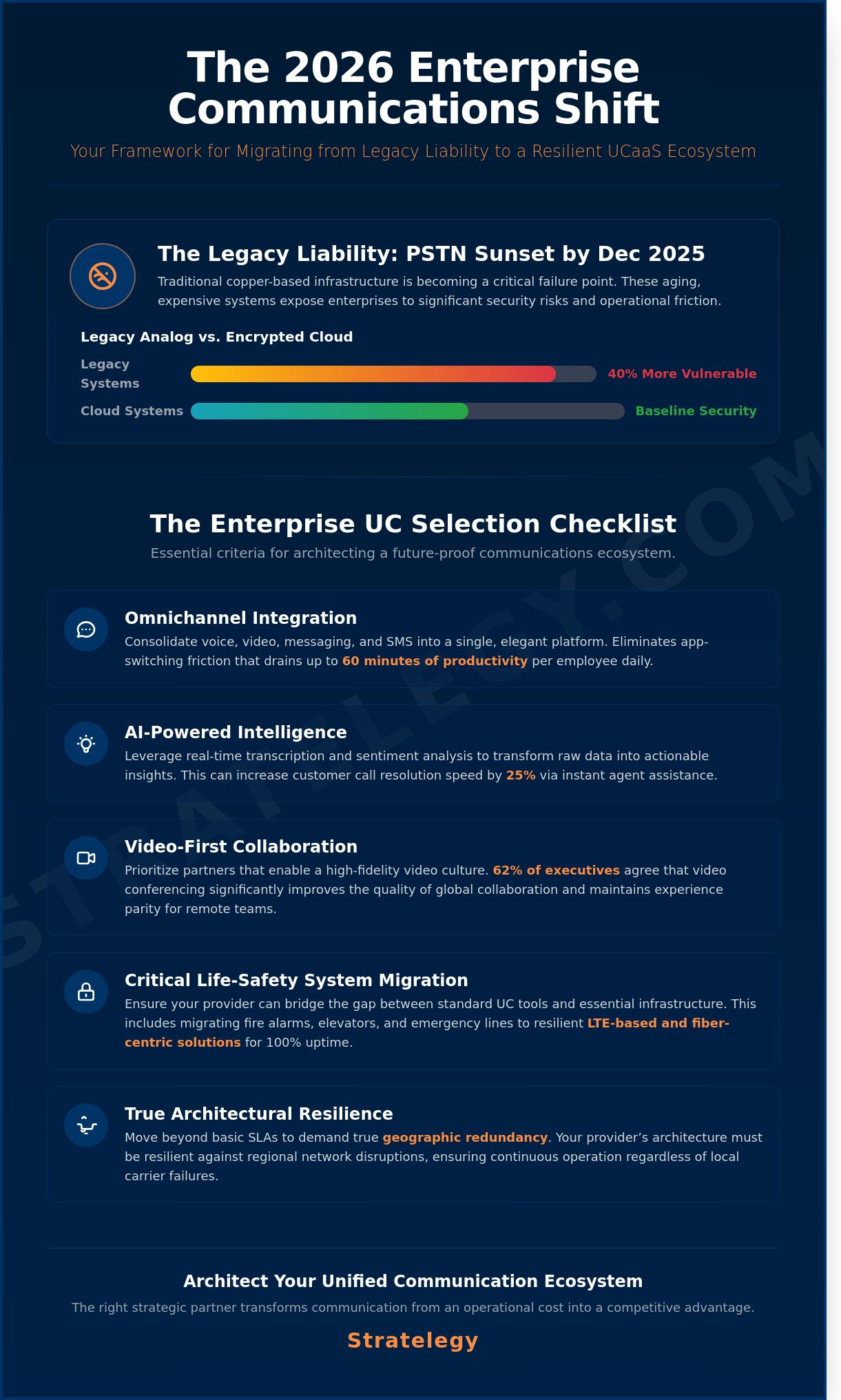
The retirement of legacy copper infrastructure has reached a critical tipping point. Major carriers like AT&T and Verizon have accelerated their phase-out of traditional Plain Old Telephone Service (POTS) lines, leaving businesses that rely on them in a precarious position. These aging lines aren’t just expensive to maintain; they’re a liability for enterprise security. Statistics from 2025 industry reports indicate that legacy analog systems are 40% more vulnerable to interception than their encrypted cloud counterparts. Organizations nationwide are rapidly adopting LTE-based and fiber-centric critical infrastructure solutions to ensure 100% uptime for life-safety systems and emergency communications.
From Tools to Platforms
True operational harmony occurs when the distinction between internal collaboration and external customer service vanishes. Integrating Unified Communications (UC) with Contact Center as a Service (CCaaS) creates a single pane of glass for the entire organization. This convergence isn’t just about convenience; it’s about the ROI of a synchronized environment. When unified communications providers deliver a fully integrated platform, firms see a measurable increase in employee productivity and a 25% improvement in customer resolution times.
- Data-Driven Insights: Modern platforms capture every interaction, allowing leaders to analyze patterns and predict market shifts.
- Experience Parity: Ensuring that remote employees and in-office staff utilize the same high-fidelity tools maintains culture and professional standards.
- Structural Harmony: A well-designed communication strategy reduces the cognitive load on staff, allowing them to focus on high-value creative tasks.
Choosing the right partner in this landscape requires a focus on long-term scalability. The goal is to build a system that doesn’t just work, but thrives under the pressure of modern business demands. It’s about finding a consultant who views your communication stack as a masterpiece of engineering rather than a collection of hardware.
The Enterprise UC Selection Checklist: Core Capabilities
Selecting a communications partner is an architectural decision that defines an organization’s operational rhythm. Modern enterprises require a cohesive ecosystem where voice, video, messaging, and SMS converge into a single, intuitive interface. This omnichannel integration eliminates the friction of switching between disparate applications; a process that can drain up to 60 minutes of productivity per employee daily. Making effective choices in unified communications providers involves looking beyond basic connectivity to find partners that prioritize video-first cultures. According to a 2023 industry report, 62% of executives agree that video conferencing significantly improves the quality of communication during global collaboration.
Sophisticated unified communications providers now leverage AI to transform passive data into actionable intelligence. Real-time transcription and sentiment analysis provide a 25% increase in call resolution speed for customer-facing teams by offering instant agent assist capabilities. Scalability must be frictionless. A visionary provider ensures that expanding to 50 national locations requires zero additional hardware investments, relying instead on cloud-native elastic infrastructure that adapts to your growth trajectory.
Collaboration and Engagement Essentials
The elegance of the user interface directly correlates with workforce adoption rates. A cluttered desktop or mobile experience leads to shadow IT and fragmented workflows. High-definition video protocols must be paired with robust security, ensuring that sensitive boardroom discussions remain private and uninterrupted. Presence management allows leaders to see real-time availability across the organization. This visibility reduces digital fatigue and fosters deeper engagement by ensuring that communication occurs at the most opportune moments. Organizations looking to reduce attrition and maximize talent retention should also consider how a rigorous workforce engagement management framework complements their unified communications strategy.
Critical Safety and Security Integration
Resilience is a non-negotiable pillar of enterprise strategy. As traditional copper lines are retired, organizations must transition to LTE POTS replacement solutions for emergency elevator and fire phones to maintain 100% uptime. Compliance with Kari’s Law and the RAY BAUM’S Act requires precise E911 location tracking for every device in a distributed workforce. Your checklist for unified communications providers should prioritize the following standards:
- Regulatory Compliance: Automated E911 dispatchable location services for all remote and on-site endpoints.
- Infrastructure Transition: Reliable LTE-based replacement for life-safety systems and fire panels.
- Security Frameworks: Adherence to SOC2 Type II and HIPAA standards to protect sensitive data.
- Data Integrity: End-to-end encryption for all voice and video traffic to prevent unauthorized interception.
Establishing this level of structural harmony requires a partner who understands the nuance of enterprise architecture. Organizations seeking to refine their digital footprint can explore a tailored communication framework designed for long-term stability and transformative growth.
Assessing Provider Reliability: Beyond the Service Level Agreement
Most unified communications providers present a standard Service Level Agreement (SLA) of 99.999% uptime as a definitive mark of quality. While this metric is a necessary baseline, it often fails to capture the distinction between simple uptime and true enterprise resilience. Uptime measures the moments a system stays active; resilience defines how that system recovers, adapts, and maintains performance during a localized fiber cut or a regional power failure. For a business operating in Lake Mary, a provider’s ability to reroute traffic instantly is more valuable than a theoretical percentage on a contract.
Choosing a low-tier provider frequently introduces the hidden burden of technical debt. While a budget-focused service might offer a 15% lower monthly rate, the long-term costs are often staggering. Data from industry analysts suggests that businesses using legacy-heavy infrastructures experience a 40% higher rate of ticket escalations compared to those on modern, cloud-native platforms. These disruptions represent a significant drain on internal productivity and strategic focus. True reliability requires a provider that has already invested in the future, ensuring your communication framework doesn’t become a bottleneck for growth. Leaders who want a deeper foundation for evaluating these decisions can benefit from understanding what is unified communications in the context of 2026 enterprise architecture before committing to a long-term partner.
Network Architecture and Redundancy
Sophisticated network design relies on Tier-1 carrier relationships that ensure direct access to the internet backbone. This level of connectivity minimizes latency and prevents the “hop-heavy” routing that degrades voice quality. Industry standards championed by the Cloud Communications Alliance highlight that geographic redundancy must be active-active, meaning traffic is distributed across multiple data centers simultaneously. When evaluating unified communications providers, ask for a map of their data center distribution. A resilient framework should include:
- SD-WAN integration to prioritize voice and video traffic over standard data.
- LTE/5G failover capabilities that maintain connectivity during primary ISP outages.
- Redundant points of presence (PoPs) to ensure regional disasters don’t disrupt local operations.
The Partnership Model vs. The Vendor Model
A vendor sells a product, but a partner orchestrates a solution. For enterprise-grade communications, a dedicated account manager isn’t a luxury; it’s a strategic necessity. This individual ensures that your onboarding process is a structured transition rather than a chaotic migration. They provide a clear roadmap for technological alignment, ensuring your tools evolve alongside your business objectives. A partner understands that the goal isn’t just to install hardware, but to create a harmonious environment where technology empowers human connection. This proactive support structure transforms technical support from a reactive help desk into a visionary consultancy that anticipates challenges before they impact your bottom line.
Strategic Migration: A Checklist for Seamless Implementation
Transitioning to a modern communication ecosystem is far more than a mere technical upgrade; it’s a structural evolution that demands precision. Leading unified communications providers understand that the difference between a disruptive transition and a seamless integration lies in the rigor of the initial planning. We view migration as an opportunity to harmonize your technical infrastructure with your long-term business vision, ensuring that every digital touchpoint serves a specific strategic purpose.
Pre-Migration Infrastructure Audit
The first stage involves a forensic examination of your current environment. It’s a common oversight to focus solely on handsets while ignoring the hidden dependencies of legacy architecture. Our audit process prioritizes three critical areas:
- Legacy Line Mapping: We identify all existing POTS lines, specifically those dedicated to fire alarms, elevator emergency phones, and security systems. Industry data suggests that 15% of migration delays occur because these life-safety lines were not accounted for in the initial cloud design.
- Network Readiness: We evaluate your local network bandwidth and Power over Ethernet (PoE) capabilities. Modern systems typically require IEEE 802.3at standards to ensure consistent power delivery and voice quality without jitter.
- System Integration: We map the essential connections between your communication tools and existing CRM or ERP platforms. Seamless data flow between these systems is what transforms a simple dialer into a powerful engine for client intelligence.
The Implementation Roadmap
A binary “on/off” approach to migration often invites operational friction. Instead, we advocate for a phased rollout that allows for real-time adjustments and minimizes downtime. This roadmap establishes clear milestones, moving from a controlled pilot environment to a full-scale enterprise deployment. We prioritize the testing of emergency systems and cellular failover protocols well before the final cutover date to ensure 100% uptime during the transition.
High adoption rates aren’t accidental; they’re the result of intentional change management. In a 2023 analysis of Lake Mary business expansions, firms that utilized a structured pilot phase with a dedicated feedback loop saw a 40% reduction in internal support tickets during the first month of operation. By engaging end-users early, we transform them from passive recipients of new technology into active participants in the company’s growth.
Post-migration, the focus shifts to optimization. We leverage usage analytics to identify bottlenecks and refine workflows. This data-driven approach ensures your investment in unified communications providers continues to yield dividends as your operational needs evolve. Strategic success isn’t just about reaching the finish line; it’s about building a platform that remains harmonious and efficient long after the initial implementation.
Ready to elevate your business connectivity with a tailored, professional framework? Explore how our expertise can drive your transformative growth through strategic communication.
Stratelegy: Architecting Your Unified Communication Ecosystem
True business success requires more than just connectivity; it demands a structural harmony between technology and intent. At Stratelegy, we don’t view communication as a utility. We treat it as a strategic asset. While many unified communications providers offer generic templates, we build customized frameworks designed to solve specific enterprise complexities. Our philosophy centers on the idea that a refined communication ecosystem should be as elegant as it is functional. We bridge the gap between high-level UCaaS performance and the non-negotiable requirements of critical safety infrastructure.
We don’t believe in one-size-fits-all communication. Every Lake Mary enterprise possesses a unique rhythm and a distinct set of challenges. Our approach involves a deep architectural analysis of your current workflows to ensure that every tool we implement serves a broader strategic vision. This isn’t just about upgrading software; it’s about the strategic alignment of your human capital and your digital assets to create a frictionless environment for growth.
Enterprise-Grade UCaaS and CCaaS
Our integrated platform merges voice, video, and contact center capabilities into a single, cohesive interface. This integration is vital for maintaining brand consistency and operational fluidity. Data from the 2023 Customer Experience Report indicates that businesses using integrated CCaaS solutions see a 14% average increase in Net Promoter Scores (NPS). By aligning every touchpoint in the customer journey, we help you transition from reactive service to proactive excellence.
- Voice and Video: High-definition clarity that supports executive-level collaboration.
- Contact Center Excellence: Advanced analytics and omni-channel support to drive customer loyalty, enhanced by agent assist technology that reduces average handle time and elevates first call resolution.
- Strategic Mapping: We invite you to schedule a consultation to map your transformative communication journey and identify specific efficiency gains.
Modernizing Critical Infrastructure
Security and safety cannot rely on decaying foundations. Following the FCC Order 19-72, which accelerated the retirement of traditional copper lines, many Florida businesses face the risk of sudden failure in life safety systems. As one of the few unified communications providers with a dedicated focus on infrastructure resilience, we offer specialized LTE POTS replacement solutions. We replace brittle, expensive copper with resilient 4G and 5G cellular technology to secure your building’s fire alarms, elevators, and emergency lines.
Our solution eliminates the risk of copper line failure while often reducing monthly recurring costs by 20% or more compared to legacy analog lines. This approach ensures that your most critical communication pathways remain open, even when the public switched telephone network fails. You can contact our team today to secure your building’s critical infrastructure and ensure full compliance with modern safety standards. Aligning your communications with your strategic vision starts with a foundation that you can trust implicitly.
Mastering the Future of Enterprise Connectivity
Success in 2026 requires a decisive shift from simple procurement to intentional architecture. Selecting the right unified communications providers isn’t just about comparing feature lists. It’s about securing a partner who understands that true reliability stems from sophisticated LTE POTS replacement and seamless UCaaS and CCaaS integration across national networks. Current industry trajectories show that high-touch strategic support has become the primary differentiator for enterprise resilience, moving far beyond the static limitations of traditional service level agreements. Your organization’s transformative growth depends on this precise strategic alignment between technological capability and long-term vision. It’s time to move past the chaos of fragmented systems. You deserve an elegant, cohesive ecosystem that drives performance through rhythmic, well-designed workflows. By prioritizing a framework that balances innovation with structural harmony, you position your brand as a leader in the modern digital landscape.
Architect your strategic communication framework with Stratelegy today.
Your journey toward a more harmonious and resilient enterprise starts with a single, well-planned step.
Frequently Asked Questions
What is the difference between a UCaaS vendor and a strategic communications provider?
A UCaaS vendor provides standard software access, while a strategic communications provider delivers a tailored framework that aligns technology with specific business objectives. Vendors focus on the transaction of features; strategic partners focus on the architecture of long-term growth. Choosing the right unified communications providers involves evaluating whether they offer a simple tool or a comprehensive roadmap for operational excellence and transformative results.
How does LTE POTS replacement work with existing fire alarm and elevator systems?
LTE POTS replacement devices convert analog signals from fire and elevator panels into digital packets for transmission over cellular networks. These systems comply with NFPA 72 standards for fire alarm signaling and ASME A17.1 for elevator safety. By utilizing dual-SIM hardware and 24-hour battery backups, these solutions maintain 99.99% uptime even when physical copper lines fail or are decommissioned by major carriers.
Can I keep my existing phone numbers when migrating to a new UC provider?
You can retain your existing phone numbers through a process called Local Number Portability mandated by the FCC since the Telecommunications Act of 1996. This legal framework ensures that businesses don’t lose their established brand identity when migrating to new unified communications providers. The transition typically requires a Letter of Agency and a recent billing statement to verify ownership and facilitate the secure transfer of assets.
What security certifications should I look for in a unified communications provider?
Look for SOC2 Type II compliance and HIPAA certification to ensure the provider adheres to rigorous data protection standards. These audits verify that the infrastructure handles sensitive information with integrity and confidentiality. Providers should also support AES 256-bit encryption for data at rest and TLS 1.2 or higher for data in transit, meeting the security benchmarks established by the National Institute of Standards and Technology.
How does unified communications impact remote and hybrid workforce productivity?
Unified communications platforms increase productivity by consolidating disparate tools into a single, cohesive interface. A 2023 study by Frost & Sullivan found that integrated communication tools can save employees up to 30 minutes of daily context-switching time. This structural harmony allows remote teams to collaborate with the same fluidity as in-office staff, ensuring that geographical distance doesn’t hinder the rhythm of strategic execution. Contact centers seeking to further reduce turnover and improve staff retention can benefit from implementing a structured workforce engagement management strategy designed for hybrid environments.
What happens to my emergency lines if the primary internet connection fails?
Emergency lines remain functional during internet outages through the implementation of Always-On LTE failover and SD-WAN technology. These systems detect a primary link failure within 300 milliseconds and automatically reroute critical traffic to a secondary cellular or satellite connection. This redundancy ensures that life-safety systems and E911 services remain active, providing a resilient safety net for your facility during unforeseen disruptions.
How do I calculate the total cost of ownership (TCO) for a UCaaS platform?
Calculate the total cost of ownership by aggregating monthly subscription fees, hardware amortization, and the reduction in legacy maintenance expenses. You must also factor in the productivity gains and the elimination of separate conferencing or messaging bills. Research from Gartner indicates that organizations typically see a 20% reduction in overall telecom spending within the first 24 months after transitioning to a cloud-based architecture.