
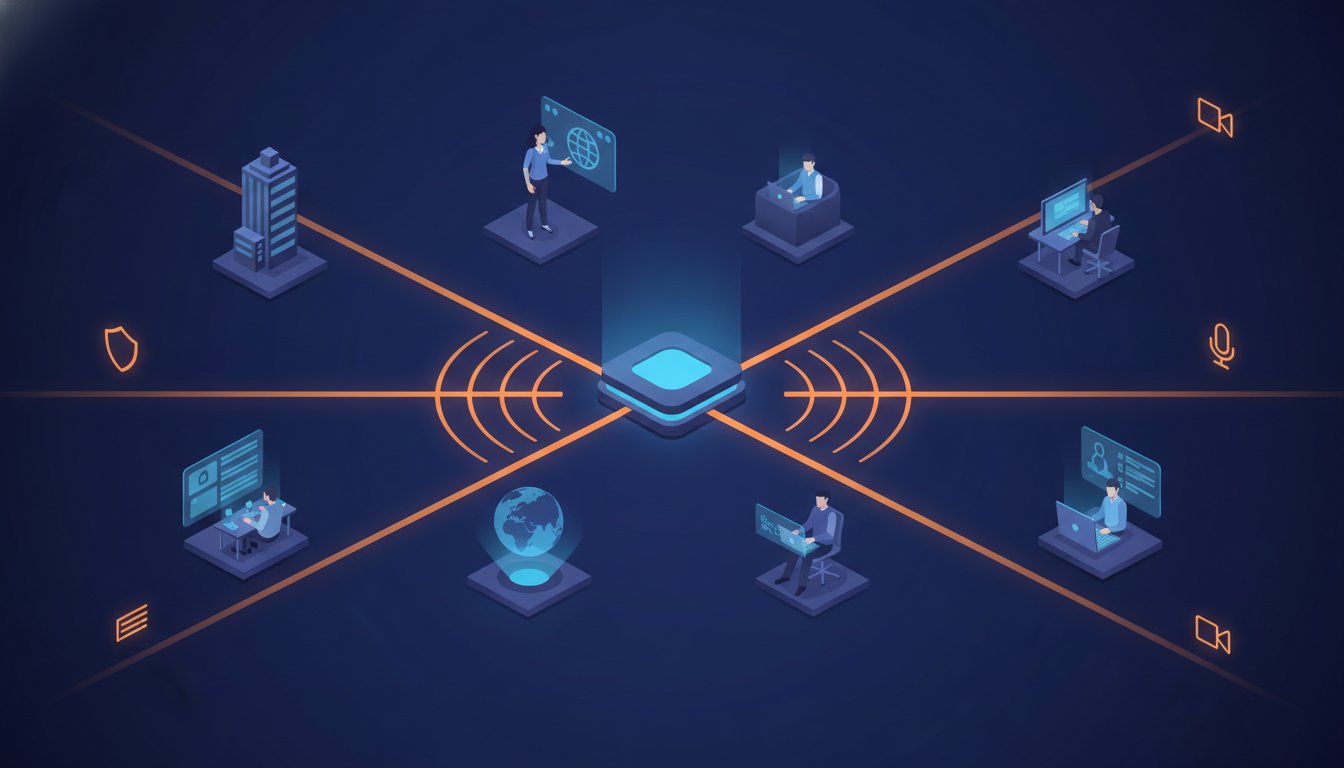
A fragmented communication stack is no longer just an inconvenience; it’s a structural vulnerability. Many leaders feel the constant friction of siloed messaging, dropped video calls, and the lingering fear that home-office setups are exposing the company to cyber threats. It’s frustrating to watch your professional image suffer because of inconsistent call quality or technical lag. You likely agree that managing a fragmented business phone system for remote workforce operations has become an operational burden rather than a competitive advantage.
This guide moves beyond superficial features to help you build a high-performance, secure unified infrastructure designed for the modern distributed enterprise. We’ll show you how to transition to a single platform for voice, video, and messaging that prioritizes enterprise-grade security and long-term stability. You’ll learn how to implement UCaaS and CCaaS solutions that offer predictable operational costs and the structural reliability your business demands. We’re going to break down the technical frameworks required to ensure your communications infrastructure remains robust and compliant through 2026 and beyond.
Key Takeaways
- Modernize your infrastructure by replacing legacy PBX hardware with a unified UCaaS ecosystem built for long-term stability.
- Maintain a professional client image using high-definition voice and video as your foundational communication standards.
- Secure your business phone system for remote workforce by implementing end-to-end encryption and multi-factor authentication to protect home-office networks.
- Simplify IT oversight through centralized management consoles that provide total visibility into every endpoint of your distributed team.
- Build a roadmap for success by conducting a comprehensive network audit to eliminate performance bottlenecks and ensure predictable growth.
Beyond the App: What Is a Business Phone System for Remote Workforce in 2026?
Modern communication requires more than a simple software download. In 2026, a business phone system for remote workforce operations is defined as a Unified Communications as a Service (UCaaS) ecosystem. This architecture replaces the rigid, physical PBX hardware of the past with a resilient cloud-based infrastructure. It’s no longer just about making calls; it’s about establishing a stable foundation for your entire business identity. Implementing a robust business phone system for remote workforce management ensures that every employee has access to the same professional tools as their office-based counterparts, regardless of their physical location.
UCaaS is the strategic convergence of enterprise communication into a managed cloud environment. By centralizing voice, video, and messaging, businesses eliminate the technical debt associated with maintaining legacy on-premise systems. This transition shifts the focus from managing hardware to overseeing a high-performance digital environment that supports growth and operational continuity.
The Evolution from Legacy VoIP to UCaaS
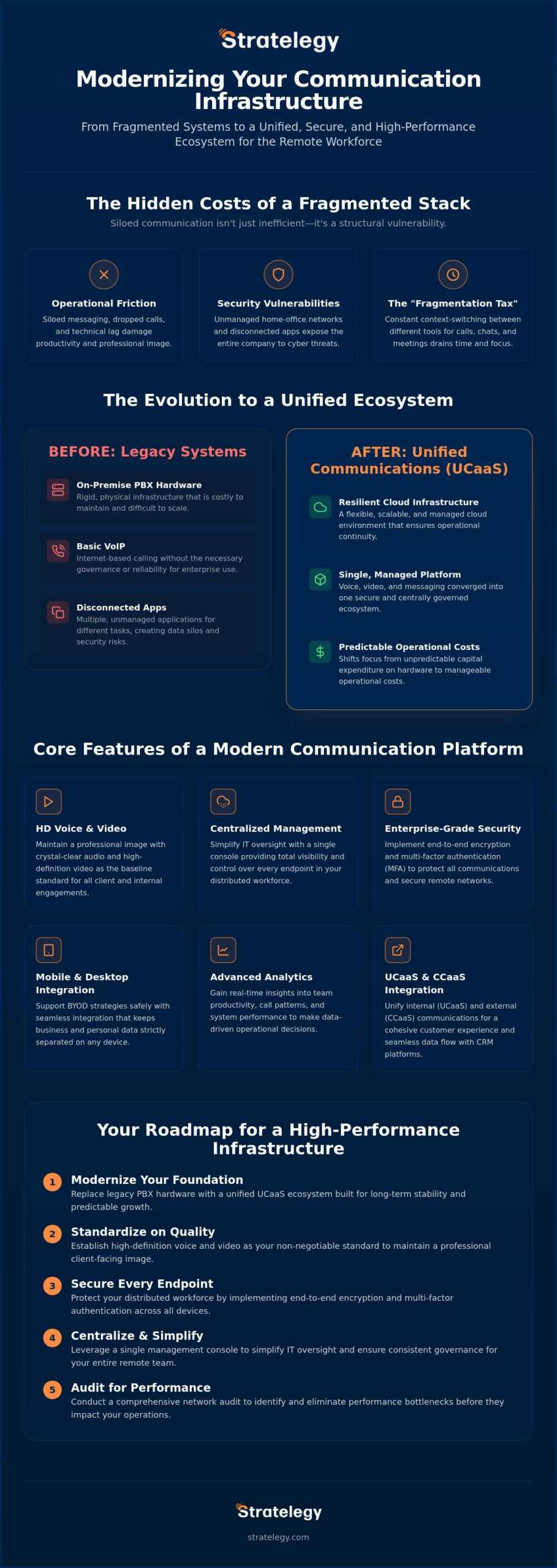
Standard Voice over IP (VoIP) was once the gold standard for digital telephony. However, basic VoIP is no longer sufficient for the complexities of an enterprise-grade remote workforce. Modern teams need more than just internet-based calling; they require high-level technical governance and structural reliability. Relying on disconnected apps creates a “fragmentation tax” that drains productivity and introduces security vulnerabilities through unmanaged endpoints.
Transitioning to unified communications as a service streamlines your operations by merging disparate channels into a single, managed platform. This approach eliminates the friction of switching between siloed applications for meetings, chats, and calls. It’s a move toward operational excellence that prioritizes lifecycle management and long-term infrastructure health over superficial features. By treating your communication stack as foundational engineering, you ensure your business remains agile and secure as it scales.
Essential Features for Enterprise-Grade Remote Communication
High-performance communication isn’t a luxury; it’s the standard for 2026. To maintain a professional image, your business phone system for remote workforce must provide high-definition voice and video as a baseline. Poor audio quality or pixelated video feeds erode trust during client engagements. Beyond the user experience, enterprise-grade systems require centralized management consoles. These tools allow IT administrators to oversee a distributed workforce from a single interface, ensuring consistency and governance across every remote endpoint.
Modern platforms must also support Bring Your Own Device (BYOD) strategies without compromising employee privacy. Seamless mobile and desktop integration allows staff to use personal hardware while keeping business and personal data strictly separated. Advanced reporting and analytics further enhance this by providing real-time data on team productivity and engagement levels. When evaluating these platforms, consulting NIST security considerations ensures your feature set aligns with federal standards for infrastructure protection and reliability.
The Strategic Value of UCaaS and CCaaS Integration
Unifying your communication tools creates a more cohesive environment for customer-facing teams. A cloud contact center framework allows remote support agents to access the same high-level features as an in-office team. Native integrations with enterprise CRM platforms and productivity suites ensure that data flows freely between departments. Additionally, presence indicators mimic office-floor awareness, showing who is available or in a meeting, which reduces the friction of remote collaboration.
Predictability and Lifecycle Management
Reliability is rooted in disciplined engineering, not just software features. You should prioritize providers that offer proprietary maintenance frameworks and systematic hardware update policies for remote workers. This methodical approach ensures that endpoints remain functional and secure over the long term. If you’re ready to stabilize your communication foundation, you can explore our infrastructure solutions designed for the modern enterprise. Regular software updates and structured hardware lifecycles prevent the technical obsolescence that often plagues rapidly scaling organizations.
Mitigating Risks: Security, Compliance, and Legacy Obsolescence
Securing a business phone system for remote workforce deployment requires addressing the inherent vulnerabilities of home-office environments. Most residential networks lack the enterprise-grade firewalls and intrusion detection systems found in corporate offices. This “security gap” makes end-to-end encryption and multi-factor authentication (MFA) non-negotiable standards for 2026. Without these protocols, your voice and data streams are susceptible to interception and unauthorized access. High-level technical governance ensures that every remote endpoint adheres to the same rigorous security posture as your central hub.
Structural reliability also depends on eliminating dependencies on aging infrastructure. Many organizations overlook the hidden danger of keeping critical systems on legacy copper lines while modernizing their digital apps. Implementing pots line replacement is a prerequisite for a truly modern communication strategy. This transition ensures that even your secondary or safety-related channels benefit from the same uptime and security standards as your primary UCaaS platform.
Regulatory Compliance in a Distributed World
Maintaining HIPAA, SOC2, or PCI-DSS standards becomes significantly more complex when your team is distributed. You need predictable oversight to reduce institutional risk and ensure data privacy across all locations. A managed approach to communication infrastructure provides the audit trails and administrative controls necessary for ongoing compliance. This disciplined framework eliminates the guesswork often associated with remote work security and provides peace of mind for business owners in regulated industries.
Modernizing Infrastructure with LTE POTS Replacement
Critical life safety and security systems, such as fire alarms and elevator phones, must move away from degrading copper networks. LTE-based solutions provide the structural reliability that standard residential internet connections often lack. These managed pathways offer a dedicated connection that bypasses the congestion and vulnerabilities of public Wi-Fi. If you’re concerned about systemic vulnerabilities, schedule a comprehensive security audit to identify and close infrastructure gaps. Prioritizing these foundational upgrades protects your professional identity and ensures operational longevity through engineering excellence.
Implementing Your Remote Communication Strategy
Successful deployment of a business phone system for remote workforce operations depends on meticulous planning rather than rapid adoption. It begins with a comprehensive audit of your existing network infrastructure and bandwidth capacity. You must ensure that remote endpoints can support the high-definition throughput required for enterprise-grade communication. Without this baseline assessment, even the most advanced software will fail to deliver the professional image your clients expect. It’s a matter of engineering the environment before installing the tools.
Next, define specific user personas to match technical features to operational needs. A support agent requires deep CCaaS integration and robust reporting; an executive might prioritize secure, high-fidelity mobile access. Matching capabilities to specific roles prevents over-provisioning and ensures every team member has the exact tools required for their daily workflows. A phased migration plan is also essential to maintain operational continuity. By transitioning departments in stages, you ensure zero downtime and allow for systematic oversight during the transition. This disciplined approach reflects a commitment to structural reliability over quick, superficial fixes.
Evaluating the Best UCaaS Partners for 2026
Move beyond traditional vendor relationships. You need a technical advisor who prioritizes foundational engineering and long-term oversight. Evaluate potential partners based on their security certifications, proprietary maintenance frameworks, and the proven reliability of their voip infrastructure. A true partner anticipates the problems you haven’t encountered yet. They provide a proactive defense against technical obsolescence and ensure your governance standards remain intact across a distributed landscape.
Ensuring Long-Term ROI and Scalability
A managed solution, such as the IT support and cybersecurity services offered by SpaceCenter Systems, significantly reduces the burden on internal IT teams by outsourcing lifecycle management and security updates. This allows your internal staff to focus on strategic initiatives rather than hardware troubleshooting or software patches. A scalable, cloud-native architecture ensures your business phone system for remote workforce can expand alongside your headcount. This provides predictable operational costs and ensures your infrastructure remains robust as the modern distributed enterprise evolves. Prioritizing excellence through engineering ensures your communication stack remains an asset rather than a liability.
Securing Your Communication Future through Engineering Excellence
Transitioning from fragmented tools to a unified infrastructure is a strategic necessity for the modern enterprise. You’ve seen that a high-performance business phone system for remote workforce management requires more than just a software license; it demands a foundation rooted in security, compliance, and structural reliability. By prioritizing end-to-end encryption and modernizing legacy copper lines, you eliminate the technical vulnerabilities that threaten your professional identity and operational continuity.
Stratelegy stands as your trusted technical advisor in this evolution. As an enterprise-grade UCaaS and CCaaS specialist, we provide the disciplined engineering required for long-term stability. We are a leader in LTE POTS replacement for critical safety and utilize proprietary maintenance frameworks to deliver 99.999% reliability for your distributed team. It’s time to move beyond superficial features and invest in a system built for longevity and growth. Partner with Stratelegy to engineer your resilient remote workforce infrastructure today. You can lead your team with total confidence, knowing your communications are anchored in excellence.
Frequently Asked Questions
How does a remote phone system differ from a personal cell phone?
A remote phone system provides a professional identity and centralized governance that personal devices lack. Personal cell phones don’t offer the administrative control, call recording, or security protocols required for enterprise-grade operations. Using a dedicated system ensures that client calls display the corporate number while keeping all communication data within the company’s secure ecosystem. This separation protects employee privacy and ensures your professional image remains consistent across the entire distributed team.
Can I keep my existing business phone numbers when switching to a remote system?
You can keep your existing business phone numbers through a process known as porting. This ensures your professional identity remains intact during the transition to a modern cloud-based infrastructure. Most providers handle the technical coordination with your current carrier to ensure a seamless migration without any disruption to your incoming call traffic. It’s a standard procedure that allows you to modernize your communications without losing the established contact points your clients rely on.
What internet speed is required for a reliable business phone system for remote workforce?
A reliable business phone system for remote workforce typically requires a minimum of 100 Kbps of bandwidth per concurrent voice call. However, for high-definition video conferencing and seamless UCaaS performance, we recommend a stable connection with at least 5 to 10 Mbps of upload and download speed. To ensure your team has the necessary infrastructure, you can discover TekSavvy for reliable business-grade connectivity. Quality of Service (QoS) settings on your router can further prioritize voice traffic to ensure crystal-clear audio during periods of high network usage.
Is a remote phone system secure enough for sensitive industries like finance or healthcare?
Modern platforms are engineered to meet the stringent security requirements of the finance and healthcare sectors. A business phone system for remote workforce deployment ensures compliance with regulations like HIPAA and SOC2 through end-to-end encryption and multi-factor authentication. It’s essential to partner with a technical specialist that prioritizes these certifications to protect sensitive data across every distributed endpoint. This methodical approach to security provides peace of mind for business owners in highly regulated industries.
What happens to my phone system if the office internet goes down?
Your communication remains operational even if the physical office internet fails because the system resides in the cloud. Calls are automatically routed to mobile applications, home offices, or secondary locations based on your pre-configured failover rules. This decentralized architecture provides the structural reliability that legacy on-premise hardware simply cannot match during a local network disruption. It ensures that your business remains reachable and productive regardless of local infrastructure challenges.