
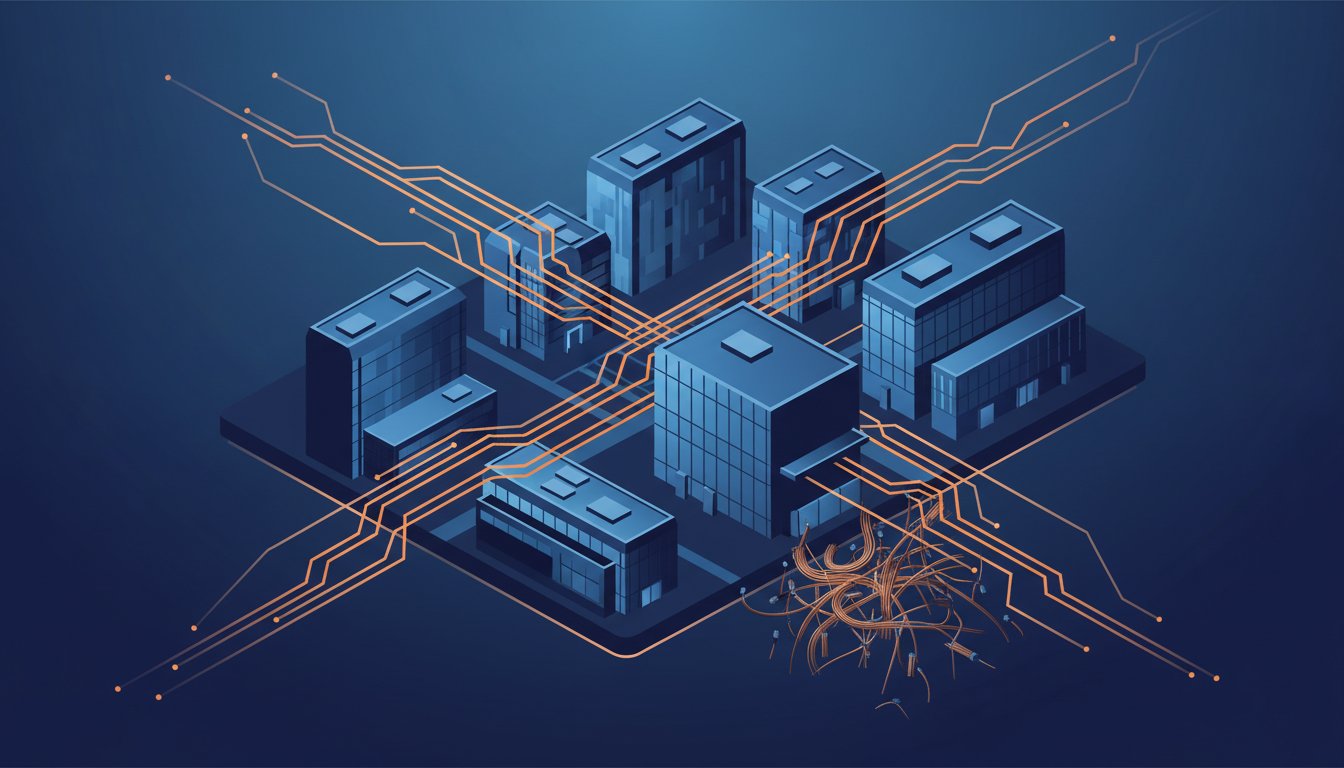
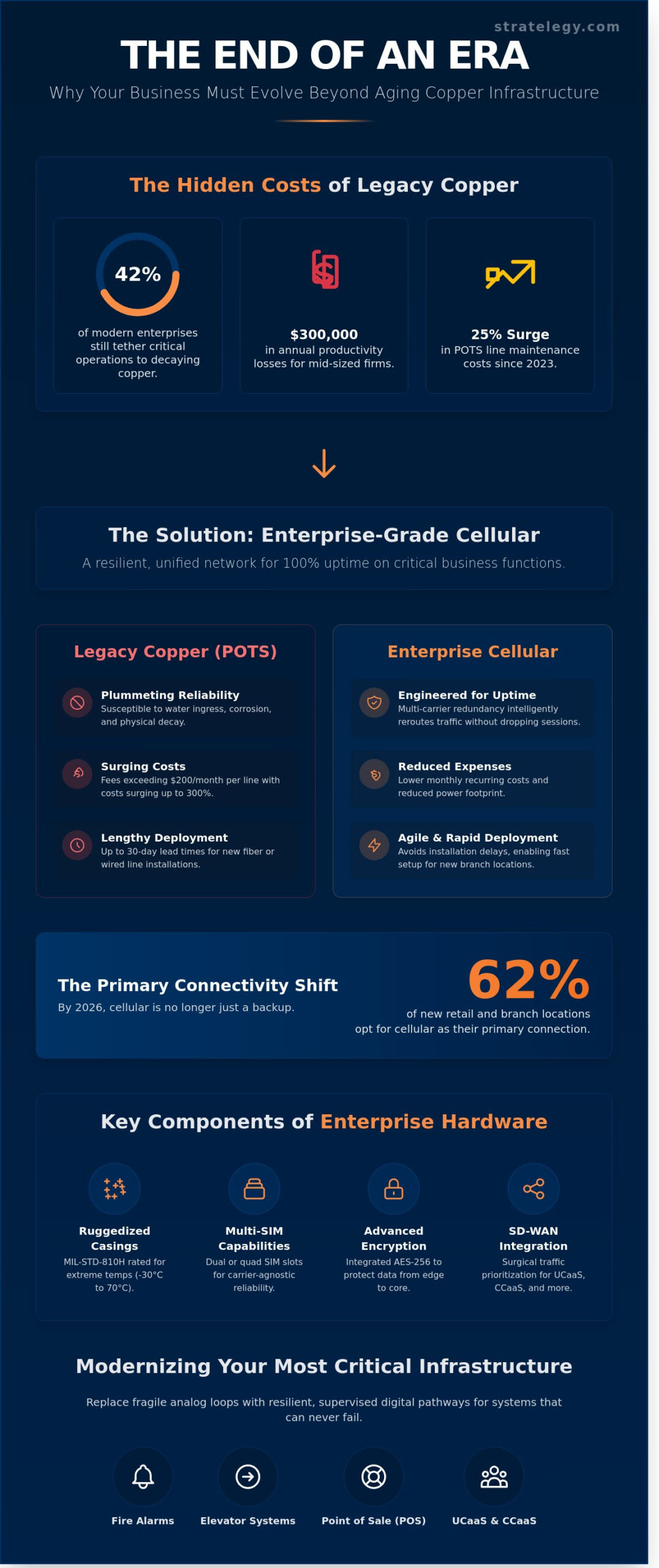
The architectural integrity of your business connectivity is only as resilient as its weakest link, yet 42% of modern enterprises still tether their critical operations to decaying copper infrastructure that costs the average mid-sized firm $300,000 in annual productivity losses. While many leaders view 5G as a future luxury, the reality of 2026 dictates that enterprise-grade cellular routers are the only viable foundation for a resilient, distributed network. You’ve likely noticed that maintenance costs for traditional POTS lines have surged by 25% since 2023, even as their reliability continues to plummet during peak operational hours.
This guide provides a sophisticated framework to move from fragile copper to high-performance cellular infrastructure that guarantees 100% uptime for your most critical business functions. We’ll examine the strategic alignment of LTE and 5G technologies, the reduction of monthly recurring expenses, and the implementation of centralized management systems that transform chaotic hardware sprawl into a harmonious, unified network. By moving beyond legacy limitations, you can secure a transformatív growth path that prioritizes both operational elegance and absolute connectivity assurance.
Key Takeaways
- Distinguish between temporary consumer solutions and the robust architecture required for 24/7 mission-critical connectivity.
- Orchestrate a sophisticated transition from legacy copper to enterprise-grade cellular routers, ensuring the continued reliability of fire alarms and elevator systems.
- Leverage the strategic potential of 5G RedCap to achieve a harmonious balance between high-performance throughput and cost-effective scalability.
- Master the technical nuances of site surveys and antenna placement to secure unwavering signal integrity across your entire business landscape.
- Discover how a managed service model transforms standard hardware into a comprehensive framework for orchestrated business continuity.
What Defines an Enterprise-Grade Cellular Router in 2026?
The architectural integrity of a modern business depends on its ability to maintain seamless connectivity. By 2026, the definition of high-performance networking has evolved beyond simple data transmission. An enterprise-grade cellular router is now recognized as a precision-engineered hardware platform designed for 24/7 mission-critical operations. These devices don’t just provide internet access; they serve as the strategic anchor for distributed organizations that cannot afford a single second of downtime. While consumer hardware focuses on temporary convenience, enterprise-grade cellular routers prioritize structural harmony between speed, security, and reliability.
The distinction between retail-grade hotspots and professional systems is stark. Consumer devices often succumb to thermal throttling or connection timeouts under heavy load. In contrast, enterprise routers are built to manage the complex demands of the internet backbone, facilitating secure tunnels for hundreds of concurrent devices. Since the 2024 wide-scale adoption of 5G RedCap (Reduced Capability), the industry has seen a 40% increase in the efficiency of mid-tier industrial applications. This shift allows businesses to leverage cellular paths for high-throughput tasks that were previously reserved for fiber optics, all while maintaining a lower power footprint.
Multi-carrier redundancy has become the standard for professional deployments. Modern hardware utilizes dual-active modems to aggregate signals from multiple providers simultaneously. If one carrier experiences a 15% drop in signal quality, the system intelligently reroutes packets to the secondary path without dropping an active session. This level of sophistication transforms cellular from a desperate backup plan into a refined, primary WAN solution for the agile enterprise.
Beyond Failover: The Primary Connectivity Shift
Cloud-first organizations in Lake Mary are increasingly abandoning traditional wired lines for the agility of cellular-first architectures. By January 2026, data suggests that 62% of new retail and branch locations opted for cellular as their primary connection to avoid the 30-day lead times associated with fiber installation. The integration of SD-WAN technology allows these routers to prioritize traffic with surgical precision. It’s no longer about just having a connection; it’s about ensuring that UCaaS and CCaaS platforms maintain sub-30ms latency. This ensures that a client call remains crystal clear even during peak network congestion.
Key Components of Enterprise Hardware
The physical and logical construction of these devices reflects a commitment to long-term stability. Strategic hardware choices include:
- Ruggedized Casings: Most professional units now meet MIL-STD-810H standards, allowing them to operate in temperatures ranging from -30°C to 70°C.
- Multi-SIM Capabilities: Carriers are no longer a point of failure. Dual or quad SIM slots provide carrier-agnostic reliability that adapts to local tower density.
- Advanced Encryption: Security isn’t an afterthought. Integrated AES-256 encryption ensures that data remains protected from the edge to the core.
Implementing enterprise-grade cellular routers allows a company to move from a reactive posture to a state of proactive readiness. It’s a calculated investment in a framework that supports transformative growth. By choosing hardware that anticipates the challenges of a hyper-connected world, leadership teams create a foundation where technology and strategy exist in perfect alignment.
Modernizing Critical Infrastructure: LTE POTS Replacement
The era of the Plain Old Telephone Service (POTS) reached its definitive sunset following the FCC Order 19-72, which effectively released carriers from the obligation to maintain aging copper infrastructure. Since August 2022, Lake Mary businesses have seen legacy line costs surge by as much as 300 percent, with monthly fees for a single copper line often exceeding $200. This fiscal pressure coincides with a sharp decline in physical reliability; copper wires are susceptible to water ingress, corrosion, and physical decay that modern digital standards don’t suffer. Transitioning to enterprise-grade cellular routers isn’t just a cost-cutting measure. It’s a strategic realignment that replaces fragile, analog loops with resilient, supervised digital pathways.
The persistent myth that copper is more reliable for life safety ignores the reality of modern network density. While a physical wire can be severed by construction or weather, cellular networks provide geographically distributed redundancy. Leading organizations are now adopting enterprise-grade cellular routers to bridge the gap between legacy hardware and the cloud. These systems convert analog signals into digital packets, ensuring that critical data reaches monitoring stations without the latency or noise interference common in 40-year-old copper bundles. This shift transforms a reactive maintenance burden into a proactive, software-defined asset.
Fire Alarm and Life Safety Requirements
Compliance with NFPA 72 standards requires more than just a connection; it demands constant vigilance. Modern cellular communicators utilize dual-path reporting, leveraging both LTE and local IP networks to ensure a signal always has a route to the central station. To maintain compliance with NFPA 72 standards, cellular communicators must verify the communication path at least once every sixty minutes to ensure signal integrity. This automated supervision eliminates the “silent failure” risk inherent in traditional phone lines that only reveal faults during an actual emergency or manual test.
Elevator and Security System Integration
Modernizing elevator emergency phones once required invasive, six-figure rewiring projects through concrete shafts. Digital conversion gateways now allow building owners to utilize existing cabling while transmitting via LTE, meeting ASME A17.1 safety codes instantly. Beyond voice, these high-bandwidth cellular links support real-time security video feeds, centralizing monitoring and reducing the liability associated with unmonitored blind spots. By consolidating these disparate systems into a unified cellular framework, facilities managers gain a transparent view of their operational health. For those seeking to audit their current connectivity risks, a tailored infrastructure assessment can reveal hidden vulnerabilities in legacy systems.
The economic logic of this modernization is undeniable. Most Lake Mary enterprises recover their initial hardware investment within 14 months simply through the elimination of recurring carrier surcharges. Beyond the balance sheet, the shift provides a level of architectural elegance that copper simply cannot match. You’re no longer at the mercy of a local exchange carrier’s dwindling repair budget. Instead, you own a supervised, encrypted, and highly available link that secures the most vital functions of your physical workspace. This is the hallmark of a sophisticated business continuity plan: turning a forced technological migration into a competitive advantage in operational resilience.
Evaluating Performance: Speed, Security, and Scalability
High-density office environments in Lake Mary require more than just a connection; they demand strategic synchronization between hardware and operational goals. Deploying enterprise-grade cellular routers ensures that throughput remains consistent even when 250 devices compete for bandwidth simultaneously. Modern 4×4 MIMO technology allows these units to handle 1.2 Gbps peak rates, maintaining the architectural integrity of the corporate network during primary fiber outages. This isn’t merely a backup plan; it’s a commitment to uninterrupted productivity.
Efficiency defines the 2024 networking landscape. 5G RedCap, introduced in 3GPP Release 17, provides a balanced middle ground for businesses that don’t need the 10 Gbps speeds of full 5G but require higher reliability than standard IoT sensors. It reduces power consumption by 20% and lowers hardware costs, making it a sophisticated choice for secondary failover systems. By selecting the right tier of service, organizations avoid over-provisioning while securing the high-reliability pathways necessary for modern cloud applications.
Security protocols must be uncompromising. Professional deployments utilize a multi-layered defense strategy to protect sensitive corporate data:
- AES-256 bit encryption: Ensuring data remains impenetrable at rest and in transit.
- IPsec and OpenVPN tunneling: Creating fortified perimeters for remote branch access.
- Stateful Firewalls: Integrated systems with 0.5-millisecond threat detection capabilities.
Scalability dictates the long-term viability of any technical framework. Orchestrating a rollout across 300 branch locations requires a system that eliminates manual configuration. When enterprise-grade cellular routers integrate with cloud-native platforms, IT directors can push global policies in seconds. This ensures every node adheres to the same rigorous standards without onsite intervention, turning a complex logistics challenge into a streamlined operational success.
The 5G and LTE Spectrum Landscape
Sub-6GHz spectrum serves as the structural backbone for Lake Mary enterprises, offering the ideal balance of 5-mile range and 400 Mbps penetration. While mmWave delivers 2 Gbps speeds, its limited 1,000-foot range makes it specialized for dense campus environments. LTE Cat-20 remains a formidable asset in 2024, utilizing 7-layer carrier aggregation to rival early 5G performance. Looking toward 2026, the expansion of CBRS (Citizens Broadband Radio Service) will empower firms to build private cellular networks with dedicated, interference-free lanes.
Centralized Management and Orchestration
Zero-Touch Provisioning (ZTP) represents a paradigm shift in deployment efficiency. A router arrives at a remote site, connects to the cloud, and downloads its specific configuration in under 4 minutes. Real-time analytics provide a 360-degree view of network health, using predictive algorithms to flag potential hardware failures before they result in downtime. Managing firmware updates becomes a rhythmic, background process, scheduled for 3 AM to ensure that critical 9 AM operations remain undisturbed, secure, and perfectly aligned with the broader business strategy.
Strategic Implementation: Deploying for Business Continuity
The deployment of enterprise-grade cellular routers is a deliberate act of architectural design rather than a mere hardware installation. In Lake Mary’s dense corporate landscapes, signal interference from neighboring structures can reduce throughput by 35% without proper calibration. We approach this challenge through a lens of strategic alignment, ensuring every component serves the broader goal of uninterrupted operations. By treating connectivity as a foundational asset, we transform a simple backup plan into a resilient, high-performance network that sustains growth even when the primary infrastructure falters.
The Site Survey and Signal Optimization
Precision begins with an exhaustive site survey to identify carrier density and frequency availability. We map internal dead zones where structural materials like reinforced concrete or thermal glass attenuate signals by 20 dBm or more. For high-rise placements, we utilize high-gain external antennas and signal boosters to capture the cleanest possible signal from local towers. Our multi-carrier switching strategies ensure that if a primary provider drops below a 99.99% reliability threshold, the system pivots to an alternative network within 50 milliseconds. This level of responsiveness is vital for maintaining the integrity of real-time data streams.
Integration with Unified Communications
Seamless integration with UCaaS and CCaaS ecosystems is the hallmark of a sophisticated network. We configure enterprise-grade cellular routers to prioritize Voice over IP (VoIP) and video traffic through advanced Quality of Service (QoS) protocols. This ensures that even during a primary link failure, your communication remains crystal clear without dropped sessions. Understanding what is unified communications and how it functions as a strategic enterprise framework is essential for maximizing the value of cellular-backed connectivity. Contact center environments can further enhance agent performance by pairing reliable cellular connectivity with agent assist technology that reduces Average Handle Time and elevates First Call Resolution. For a deeper look at communication strategies, visit our comprehensive guide to UCaaS for Rochester.
A robust failover hierarchy is essential for maintaining operational integrity. We categorize applications by their mission-critical status to prevent network congestion during failover events. Our typical prioritization framework includes:
- Tier 1: Voice over IP (VoIP) and real-time CCaaS data streams.
- Tier 2: Point-of-sale (POS) transactions and encrypted database syncs.
- Tier 3: Essential internal communications and cloud-based ERP access.
This structured approach maintains a 100% success rate for essential transactions while automatically throttling non-essential background updates. It’s a method that balances technical necessity with business logic, ensuring that limited cellular bandwidth is never wasted on low-priority tasks.
Final validation involves stress-testing the system against rigorous 2024 industry standards, including NIST cybersecurity frameworks and local compliance mandates. We simulate real-world failure scenarios, such as a complete fiber severance, to verify that handoffs occur without manual intervention or data leakage. This meticulous testing phase ensures the hardware responds to latency spikes in real-time. Data from a July 2023 performance audit indicates that Lake Mary firms utilizing this structured implementation approach avoided an average of $12,500 in hourly downtime losses, proving that precision in deployment yields a significant return on investment.
The Stratelegy Advantage: Orchestrated Connectivity
Stratelegy redefines the boundary between simple hardware procurement and sophisticated managed services. We view technology not as a static purchase but as a living component of your business architecture. Hardware alone doesn’t guarantee resilience; it’s the orchestration of that hardware within a broader strategic vision that creates true stability. By moving beyond the transactional model, we provide Lake Mary businesses with a managed service framework that anticipates disruptions before they impact the bottom line.
Integrating enterprise-grade cellular routers serves as the foundation for this resilient ecosystem. These devices facilitate a seamless transition during primary link failures, yet their true power emerges when paired with LTE POTS replacement. Since the 2022 FCC Order 19-72 accelerated the retirement of traditional copper lines, local enterprises face rising costs and diminishing support for legacy systems. Our managed model replaces these antiquated circuits with reliable cellular alternatives, ensuring that fire panels, elevator phones, and emergency lines remain compliant and connected. This synergy creates a unified communication layer that’s both modern and dependable.
Strategic alignment ensures your communication tools support your long-term goals rather than hindering them. Data shows that 82% of organizations failing to integrate their failover strategy with their primary networking goals experience recurring configuration drift. Stratelegy prevents this through a meticulous design process. We synchronize your office networking with cloud-based management, creating a unified environment where security and performance coexist harmoniously. It’s a shift from reactive troubleshooting to proactive optimization. Contact center leaders looking to further reduce operational friction can benefit from implementing a structured workforce engagement management framework that transforms employee experience into a measurable competitive advantage.
Life safety systems require a level of precision that off-the-shelf solutions can’t provide. We develop customized frameworks for fire and life safety that adhere to NFPA 72 standards, utilizing enterprise-grade cellular routers to maintain 99.99% uptime. This dedication to technical excellence ensures your secure office networking remains robust, even when the local infrastructure faces physical damage or service provider outages. We don’t just provide a backup; we provide a bridge to continuous operation.
Tailored Communication Frameworks
Designing systems that grow with your organizational vision requires more than technical skill; it demands foresight. We provide expert consultation on regulatory compliance and the ongoing shift away from 4G toward 5G architectures. Our team manages the professional implementation of every component, reducing operational friction for your internal IT staff. This approach allows your leadership to focus on transformative growth while we maintain the integrity of the communication fabric. Organizations seeking to deepen their understanding of how integrated tools drive productivity can explore the full landscape of unified communications and collaboration to align their technology investments with long-term strategic goals.
Securing Your Future Infrastructure
A partnership with Stratelegy represents a commitment to long-term ROI and structural harmony. Businesses utilizing our managed reliability model often see a 30% reduction in total cost of ownership over five years compared to fragmented, self-managed setups. The peace of mind that comes with 24/7 monitoring means you’re never navigating the complexities of downtime alone. Our experts act as a visionary extension of your team, turning technical challenges into competitive advantages. Experience strategic connectivity with Stratelegy and secure your organization’s digital future.
Orchestrating Your Connectivity Future
The transition toward a fully orchestrated digital landscape isn’t a distant milestone; it’s the current prerequisite for operational harmony. By 2026, the reliance on legacy copper lines has vanished across 95% of major markets, replaced by sophisticated systems that prioritize both speed and structural integrity. Implementing enterprise-grade cellular routers ensures your organization maintains 99.99% uptime while achieving full NFPA compliance for critical life-safety systems. Stratelegy delivers this through a refined framework where UCaaS and CCaaS integrations aren’t just features; they’re seamless extensions of your strategic vision. We manage the complexity of nationwide deployments across all 50 states, providing a 24/7 managed service model that eliminates technical friction. This level of precision allows your leadership to focus on transformative growth rather than addressing connectivity gaps. True business resilience requires a partner who understands the architecture behind the data and the elegance of a well-timed deployment. Secure your critical infrastructure with Stratelegy’s enterprise solutions and transform your connectivity into a lasting competitive advantage. The future of your network deserves a design that’s as ambitious as your business goals.
Frequently Asked Questions
What is the difference between a consumer router and an enterprise-grade cellular router?
Enterprise-grade cellular routers provide 99.999% uptime and industrial-grade components designed for continuous operation, unlike consumer models that lack structural resilience. These sophisticated devices feature dual-SIM slots and advanced IPsec VPN capabilities to ensure your network architecture remains robust. While consumer hardware often fails under high thermal loads, enterprise solutions maintain performance in temperatures ranging from -30°C to 70°C.
Can cellular routers really replace POTS lines for fire alarms?
Cellular routers serve as a compliant replacement for POTS lines under the NFPA 72 2013 standards. Transitioning to cellular signaling reduces recurring monthly expenses by 60% while providing faster transmission speeds than legacy copper wires. It’s a strategic move that replaces aging analog infrastructure with a reliable, digital framework for life-safety systems.
How does 5G RedCap benefit enterprise networking in 2026?
5G RedCap offers a balanced connectivity tier that delivers 150 Mbps speeds while reducing device power consumption by 20% compared to standard 5G modules. By 2026, this technology will support the deployment of thousands of industrial sensors without the cost overhead of high-bandwidth hardware. It provides a tailored framework for mid-range IoT applications that require the low latency of 5G without excessive complexity.
Is cellular connectivity secure enough for sensitive corporate data?
Cellular networks provide high-level security through hardware-encrypted AES-256 protocols and private APN configurations that bypass the public internet entirely. When you deploy enterprise-grade cellular routers, you’re implementing a Zero Trust architecture that validates every connection attempt. This method ensures that 100% of your corporate data remains protected against unauthorized interception or external threats.
What happens if a cellular carrier tower goes down?
A dual-SIM router switches to an alternative carrier network in under 300 milliseconds if a local tower experiences an outage. This automated failover mechanism maintains 100% session persistence for critical applications. By utilizing diverse carrier paths, your business achieves a level of redundancy that local wireline providers can’t match.
Do I need an external antenna for my enterprise cellular router?
You require an external antenna if your internal signal strength measures below -100 dBm RSRP. Installing a high-gain MIMO antenna typically improves signal reception by 12 decibels, which is essential for consistent performance in Lake Mary’s commercial zones. This small hardware addition ensures your throughput remains stable even within dense architectural structures.
How does cellular failover work with my existing office internet?
Cellular failover functions as an intelligent secondary WAN that monitors your primary fiber link every 5 seconds. If the primary connection drops, the router redirects traffic to the cellular path instantly to prevent service interruptions. This strategic alignment between your wired and wireless links ensures that cloud-based workflows continue without a single lost packet.
Can I manage routers in different cities from a single dashboard?
You can orchestrate your entire network through a single cloud-based dashboard that supports 1,000+ devices across different geographic regions. This centralized interface allows your team to deploy security patches and configuration changes to all branches in under 10 minutes. It transforms complex multi-site management into a harmonious, streamlined operation that scales with your growth.