
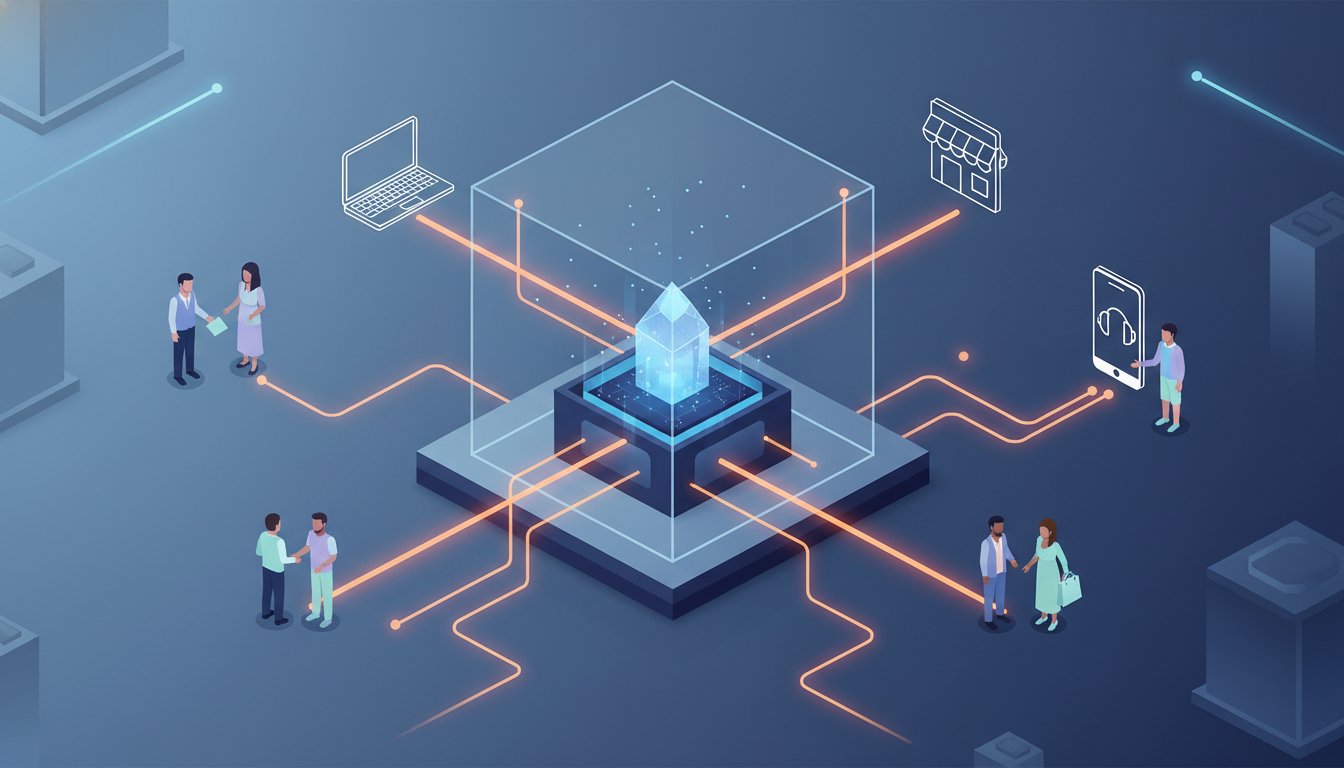
Omnichannel excellence is an engineering challenge first and a marketing strategy second. While 90% of customers now expect consistent experiences across every touchpoint, many organizations remain tethered to legacy hardware that cannot support modern API integrations. You likely feel the strain of data silos preventing a unified view of your operations, which leads to high friction for both your agents and your clients. Successfully executing a modern omnichannel customer experience strategy requires moving beyond superficial features to focus on structural reliability and deep systems integration.
We understand that the fear of obsolescence is a significant concern, especially with twenty US states now enforcing comprehensive data privacy laws as of May 2026. This guide provides a clear roadmap for infrastructure modernization, shifting your focus from reactive maintenance to proactive, managed connectivity. You’ll learn how to unify your communication pillars to reduce resolution times and improve satisfaction scores across the board. We’ll explore the technical requirements for integrating UCaaS and CCaaS, the impact of AI-powered predictive routing, and the lifecycle management necessary to maintain a seamless engagement engine for the long term.
Key Takeaways
- Transition from reactive support to a synchronized engagement ecosystem that prioritizes proactive relationship management across every touchpoint.
- Build a high-performance omnichannel customer experience strategy by establishing a Single Source of Truth through API-first architectures and seamless CRM integration.
- Identify how legacy copper infrastructure acts as a primary point of failure and why the POTS sunset necessitates a shift to LTE-backed reliability.
- Follow a disciplined five-step roadmap to audit your current hardware and map customer journeys for a friction-free engagement engine.
- Future-proof your operations by integrating UCaaS and CCaaS solutions that prioritize structural stability and long-term lifecycle management.
Defining the 2026 Omnichannel Customer Experience Strategy
Excellence in 2026 isn’t about presence; it’s about synchronization. An effective omnichannel customer experience strategy functions as a unified engagement ecosystem where every touchpoint informs the next. It moves beyond simple availability to prioritize contextual continuity across every digital and physical device. This means a customer can initiate a query via a mobile app and conclude it via a voice call without losing a single data point. To achieve this, your strategy must remain platform-agnostic. Relying on specific vendor features creates a risk of obsolescence. Instead, focus on an architectural framework that survives technology cycles by prioritizing data portability and infrastructure stability.
We are seeing a definitive shift in how businesses interact with their audience. Brands no longer wait for a support ticket to arrive. They anticipate needs through proactive relationship management. This transition requires a move away from reactive, siloed responses toward a model of ongoing oversight. By leveraging real-time analytics and integrated communication pillars, organizations can address systemic vulnerabilities before they impact the end user. This proactive stance builds the peace of mind that modern business owners require to remain competitive.
Omnichannel vs. Multichannel: Why the Distinction Matters
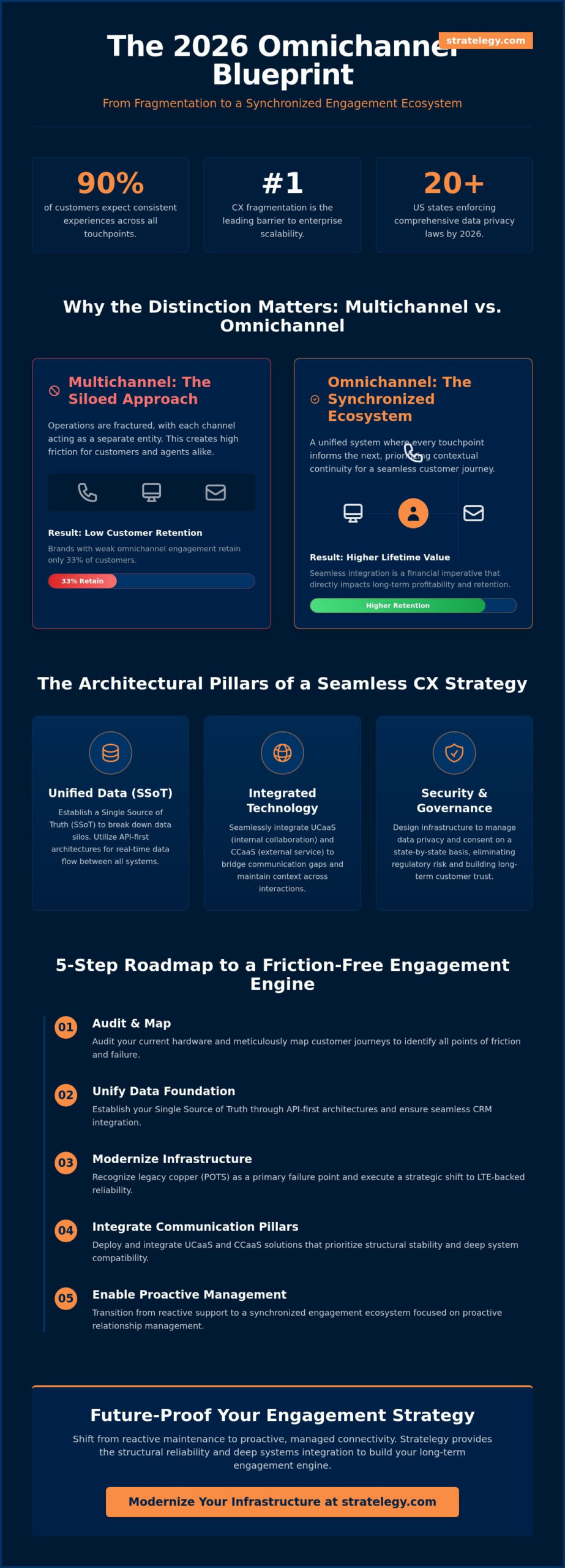
Multichannel strategies often result in siloed operations where the left hand doesn’t know what the right is doing. In contrast, an integrated omnichannel customer experience uses context as the bridge between touchpoints. Context ensures that an agent already knows the customer’s history, previous purchases, and current frustration levels. Fractured journeys aren’t just annoying; they’re expensive. Research shows that brands with weak omnichannel engagement retain only 33% of their customers. High-performance organizations recognize that seamless integration is a financial imperative that directly impacts lifecycle management and long-term profitability.
The Cost of Fragmentation in a Hyper-Connected Market
Disjointed systems lead to a cascade of operational failures. Customers churn when they’re forced to repeat information across different departments. Agents suffer from burnout when they must navigate multiple disparate windows to solve a single problem. Maintaining legacy silos in 2026 creates hidden costs in the form of increased resolution times and higher turnover rates. These inefficiencies drain your bottom line and stifle your ability to innovate. CX fragmentation is the #1 barrier to enterprise scalability.
The Architectural Pillars of a Seamless CX Strategy
Infrastructure is the silent engine of engagement. A high-performance omnichannel customer experience strategy relies on a rigid architectural framework rather than a collection of disconnected apps. You must prioritize data centralization to establish a Single Source of Truth (SSoT). When sales, marketing, and support teams operate from different datasets, the customer experience inevitably fractures. By utilizing API-first architectures, you ensure that your Contact Center as a Service (CCaaS) integrates seamlessly with existing CRM systems. This structural alignment allows for real-time data flow, which is essential for maintaining context as a customer moves from a chat window to a voice call.
Security and governance serve as the bedrock of this architecture. With twenty US states now enforcing comprehensive data privacy laws, including new 2026 mandates in Indiana, Kentucky, and Rhode Island, compliance cannot be an afterthought. Your infrastructure must be designed to manage consent and data protection on a state-by-state basis. This level of technical discipline eliminates the risk of regulatory penalties and builds long-term trust with your audience. For those currently designing the roadmap for their digital transformation, prioritizing these foundational pillars is the only way to ensure operational longevity.
Centralizing Customer Data for a 360-Degree View
Data silos are the primary enemy of a unified customer view. To break them down, you must synchronize information across all communication pillars in real time. Unified Communications as a Service (UCaaS) plays a critical role here by bridging the gap between internal collaboration and external service. When your internal teams share the same customer context through a converged platform, they can resolve issues faster and with greater accuracy. This synchronization is why many enterprises are moving toward unified communication solutions that blend CCaaS and UCaaS into a single pane of glass.
Integrating AI and Predictive Analytics into the Loop
The role of AI has evolved from basic automation to sophisticated orchestration. As of 2026, 95.4% of B2C marketers have integrated AI into their omnichannel efforts. We’ve entered the era of Predictive CX, where systems anticipate customer needs based on sentiment analysis and interaction history before the customer even articulates a problem. Modern CCaaS platforms now use predictive routing to match callers with the agent best suited to their emotional state and technical requirements. This level of foresight transforms customer service from a cost center into a high-performance engagement engine.
Legacy Hurdles: Why Infrastructure Throttles Your CX Strategy
Software cannot outperform the hardware it runs on. Many organizations attempt to deploy a sophisticated omnichannel customer experience strategy while still relying on aging copper infrastructure. This is a fundamental engineering error. Legacy copper lines represent a critical point of failure that prevents the high-speed data throughput required for modern engagement. If your physical layer is unstable, your customer-facing applications will struggle with latency and synchronization issues. You can’t expect a seamless digital journey if the underlying wires are literally decaying in the ground.
The ongoing POTS sunset is no longer a future threat. It’s a current operational reality. Carriers are rapidly decommissioning analog support, which leads to skyrocketing maintenance costs and diminishing reliability for those who fail to adapt. Disparate, aging hardware prevents the adoption of advanced omnichannel features like real-time sentiment analysis or seamless channel switching. Infrastructure stability is the absolute prerequisite for software performance. Without it, your digital transformation will likely stall before it delivers any measurable ROI.
The Vulnerability of Legacy Copper and Disparate Systems
Analog lines weren’t designed for the data-heavy demands of 2026 customer experience. They lack the bandwidth to support high-definition voice and simultaneous data synchronization across multiple platforms. Relying on these systems creates significant vulnerabilities, particularly for life-safety and security links. System outages during a digital transition can be catastrophic for enterprise reputation and operational safety. Implementing a POTS line replacement is a strategic necessity to ensure your physical infrastructure matches your digital ambitions. It provides the peace of mind that your critical communication pillars are secure and modern.
Transitioning from Siloed Hardware to Cloud-Based CCaaS
Moving to the cloud represents a shift toward a resilient, managed environment. Adopting a cloud contact center allows you to bypass the limitations of physical hardware silos. By utilizing LTE-based replacements for critical links, you can ensure 100% uptime even if primary wired connections fail. This approach requires a foundational engineering mindset. You aren’t just buying a service; you’re re-engineering your business for structural reliability. This proactive oversight eliminates the fear of obsolescence and guarantees that your communication pillars remain operational through any tech cycle. Excellence is achieved through engineering rather than superficial features.
Designing the Roadmap: 5 Steps to Implementation
Implementation is a disciplined engineering process. A successful omnichannel customer experience strategy begins with a rigorous audit of your existing infrastructure. You must identify legacy bottlenecks, such as aging copper lines or unsupported API versions, before layering on new software. Transitioning without a technical baseline is a recipe for operational instability. Once you understand your technical limitations, you can select a unified communications and collaboration partner that prioritizes reliability over superficial features.
Execution must be methodical. We recommend a phased migration to minimize operational downtime and protect your revenue streams. This controlled approach allows you to validate each communication pillar before fully decommissioning legacy systems. Following the technical rollout, focus on agent adoption. Training staff on a unified interface ensures they can leverage the full power of your new ecosystem. It’s the only way to turn technical capabilities into long-term operational benefits.
Mapping the Customer Journey Across All Touchpoints
Friction occurs where systems fail to communicate. You need to map every touchpoint to identify exactly where customers drop off due to channel disconnects. Aligning internal workflows with external customer touchpoints ensures that agents have the resources they need to maintain context across the lifecycle. Even traditional processes like document exchange benefit from modernization. Integrating virtual faxing into the modern journey ensures that secure, regulated communications don’t become a siloed dead end in an otherwise digital ecosystem.
Establishing KPIs for Omnichannel Success
Metrics must evolve with your technology. High-performance organizations move beyond basic satisfaction scores to prioritize First Contact Resolution (FCR) across all channels. You should also measure Customer Effort Score (CES) as a primary indicator of system efficiency. These metrics provide a clearer picture of how well your integrated channels are performing in real-time. Tracking the ROI of infrastructure modernization allows you to justify the ongoing oversight and maintenance necessary for long-term health. Excellence requires a technical partner who understands both the physical and digital layers of your business. Contact us to discuss infrastructure modernization strategies for your enterprise.
Future-Proofing Engagement with Stratelegy’s CCaaS Solutions
Stratelegy operates as your engineering-first partner. While many providers focus solely on the user interface, we prioritize the structural reliability of your enterprise engagement engine. A high-performance omnichannel customer experience strategy is only as strong as the infrastructure supporting it. We combine CCaaS sophistication with the physical certainty of LTE-backed connectivity. This holistic approach ensures that your communication pillars remain upright even when local wired networks fail. Transitioning with us means moving from legacy-based operational risk toward a future of predictable, cloud-based growth.
Our commitment to security and governance is absolute. We provide the technical discipline required to navigate complex regulatory environments without compromising on performance. By integrating UCaaS and CCaaS into a single, managed ecosystem, we eliminate the friction of disparate systems. You gain a partner who anticipates infrastructure obsolescence before it impacts your bottom line. This level of proactive oversight provides the peace of mind that comes from knowing your business is built on a stable foundation.
Engineering Reliability into Customer Engagement
Connectivity failures shouldn’t dictate your customer satisfaction scores. We engineer reliability directly into your engagement workflows by ensuring your software layers are never throttled by underlying hardware issues. As a managed partner, we provide ongoing oversight and lifecycle management for your entire communication stack. This includes the strategic deployment of voip solutions that serve as the backbone of the modern enterprise. We focus on the long-term health of your infrastructure so you can focus on scaling your operations.
Scaling with a Unified Communications Partner
Complexity is the enemy of scalability. Partnering with a single provider for your UCaaS, CCaaS, and LTE POTS replacement needs simplifies your operational footprint. Our model offers several distinct advantages for the growing enterprise:
- Predictable Cost Models: Eliminate the financial volatility of maintaining legacy silos and disparate vendor contracts.
- Systematic Maintenance: Benefit from proprietary frameworks that ensure your hardware and software are always current.
- Unified Governance: Centralize your security and compliance protocols across all communication channels.
Achieving excellence requires more than just a software subscription; it requires engineering. We invite you to move beyond superficial features and invest in the structural reliability of your business. Schedule a strategic CX infrastructure audit with Stratelegy to begin your transition to a unified, high-performance engagement engine.
Secure Your Competitive Edge Through Infrastructure Excellence
Excellence is an engineering outcome rather than a marketing choice. Transitioning to a modern omnichannel customer experience strategy requires moving beyond fragmented legacy systems toward a unified, managed architecture. We have addressed how data centralization and API-first design provide the stability your enterprise needs to thrive. Stratelegy provides specialized LTE POTS replacement to ensure critical uptime for life-safety links, alongside seamless enterprise-grade UCaaS and CCaaS integration. Our technical experts prioritize security, governance, and predictable performance to ensure your operations remain compliant with the complex regulatory landscape of 2026. Don’t let aging hardware or data silos throttle your growth potential.
Establishing a resilient communication foundation eliminates the fear of obsolescence and protects your long-term ROI. We’re ready to serve as your strategic partner in this digital transformation. Modernize your CX infrastructure with Stratelegy’s enterprise solutions. The path to predictable, high-performance engagement begins with structural reliability. Your business deserves the peace of mind that comes from professional lifecycle management and expert oversight. Build for the future today.
Frequently Asked Questions
What is the difference between omnichannel and multichannel customer experience?
Multichannel strategies provide multiple ways to contact a business, but these channels often operate in silos. An omnichannel customer experience strategy prioritizes the seamless synchronization of these touchpoints so that context travels with the customer. This ensures a customer can move from a chat session to a voice call without repeating their information or losing progress.
How does a CCaaS platform improve omnichannel strategy?
CCaaS platforms serve as the centralized orchestration engine for all external engagement. They provide agents with a single pane of glass that integrates voice, digital messaging, and CRM data into one interface. This technical alignment is essential for maintaining the real-time data flow required to resolve complex issues across different communication pillars.
Can I implement an omnichannel strategy with legacy POTS lines?
No, legacy copper lines lack the bandwidth and API compatibility necessary for modern digital integration. Analog infrastructure cannot support the high-speed data throughput required for real-time synchronization between channels. Transitioning to LTE-based POTS replacement is a critical prerequisite to ensure your physical layer can handle 2026 engagement demands.
What are the most important KPIs for an omnichannel customer experience?
First Contact Resolution (FCR) and Customer Effort Score (CES) are the primary indicators of success. While traditional satisfaction scores remain useful, CES specifically measures the friction within your cross-channel journey. High-performance organizations also track the ROI of infrastructure modernization to ensure their technical foundation supports long-term operational benefits.
How does AI enhance omnichannel customer service in 2026?
AI transforms reactive support into proactive engagement through predictive routing and real-time sentiment analysis. As of 2026, 95.4% of B2C marketers use AI to anticipate customer needs based on their interaction history. This technology automatically matches customers with the agent best suited to their specific emotional state and technical requirements.
What is the first step in transitioning to an omnichannel CX model?
The transition begins with a comprehensive technical audit of your existing communication hardware and software. You must identify legacy bottlenecks and systemic vulnerabilities before attempting to deploy new digital features. Establishing this baseline ensures that your roadmap is built on structural reliability rather than superficial software additions.
How does UCaaS support an omnichannel customer experience strategy?
UCaaS bridges the gap between internal collaboration and external service by unifying your entire workforce on a single platform. When back-office experts and front-line agents share the same customer context, resolution times drop significantly. This internal alignment is a foundational component of a high-performance omnichannel customer experience strategy.
Why is infrastructure reliability critical for omnichannel success?
Software cannot outperform the network it runs on. If your underlying connectivity is unstable, the seamless experience promised by omnichannel will inevitably fracture. Investing in managed infrastructure and LTE failover ensures 100% uptime, which is necessary to maintain customer trust and prevent the operational costs associated with system downtime.